Week 27: Hosanna in the Highest!
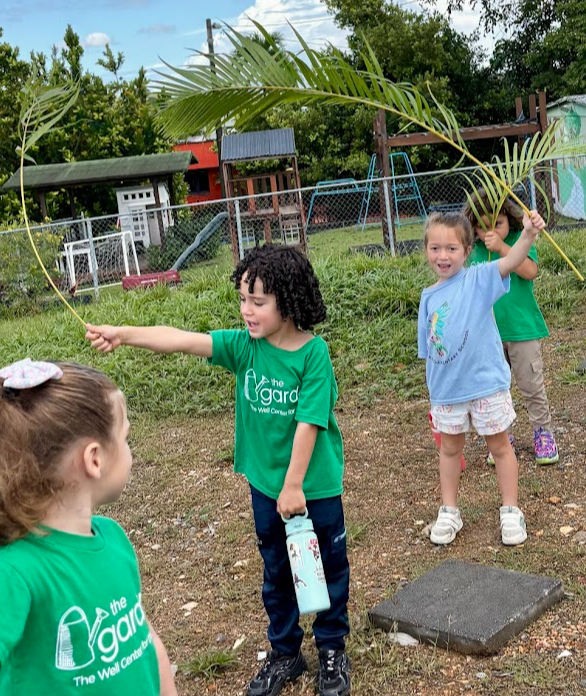
We spent the week before our break talking with the students about why we celebrate what is known as Holy Week. Jesus came into Jerusalem and even though he was cheered on by crowds, a few days later, he was crucified. But we can still celebrate and shout “Hosanna” because he didn’t stay dead. He is ALIVE and our HOPE is in the eternal life that is promised to those who have placed their faith in Him.
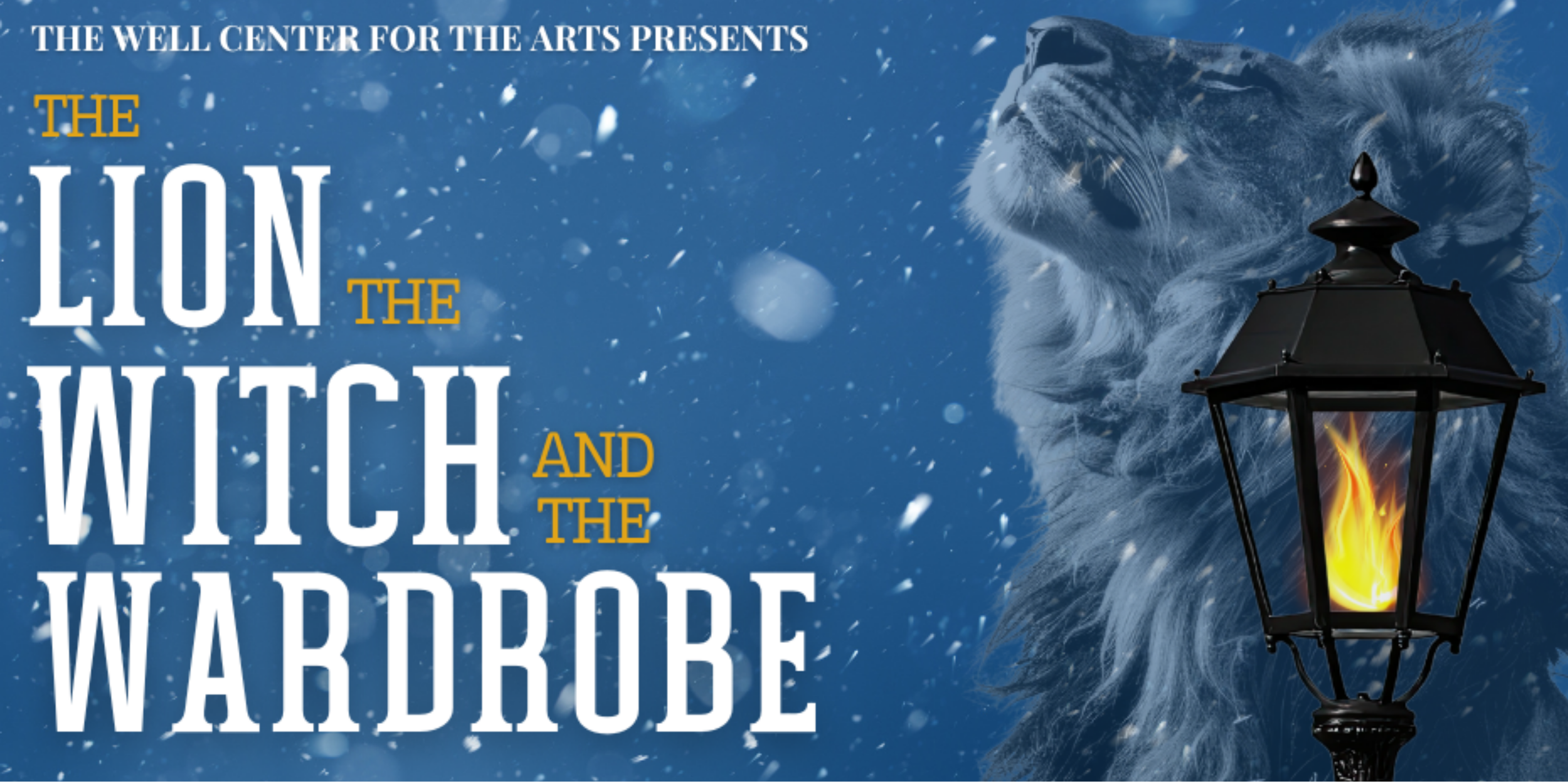
Come see a play about a King who rescues the lost and defeats death!
The Lion, the Witch and the Wardrobe. April 23 and 24.
TICKETS ON SALE NOW!
The Garden
During worship time this week, we heard two beautiful stories.
“The Triumphal Entry” about how long ago Jesus was traveling to a big city called Jerusalem. The people knew He was the special King God had promised to send. He arrived riding a donkey to show that He was a humble and kind King who loved His people.
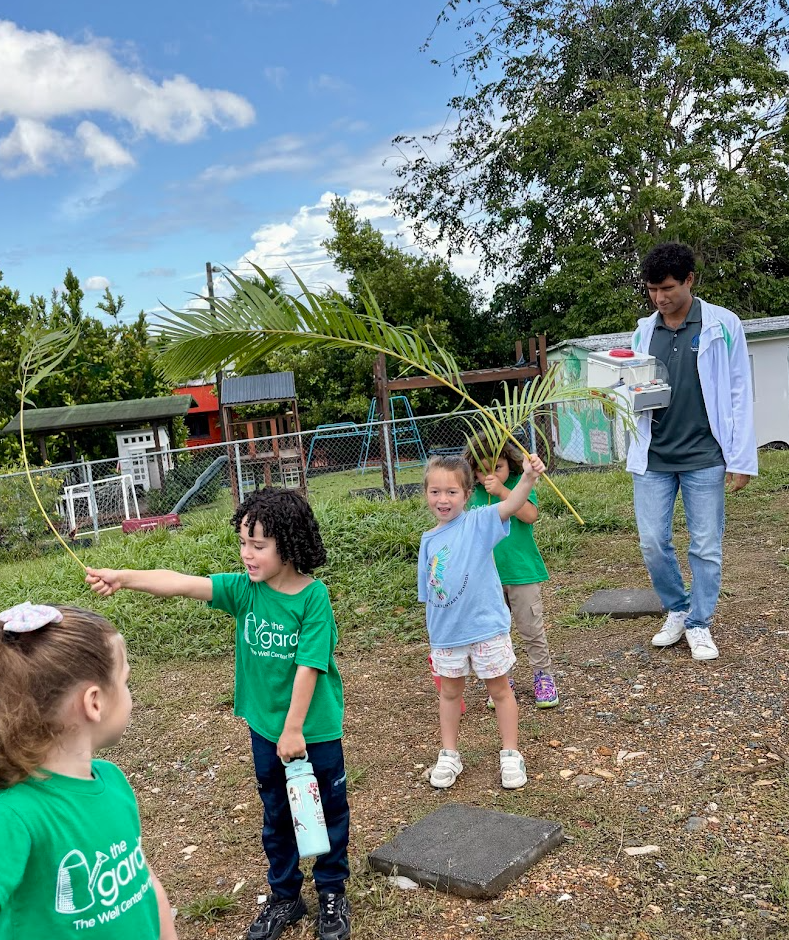
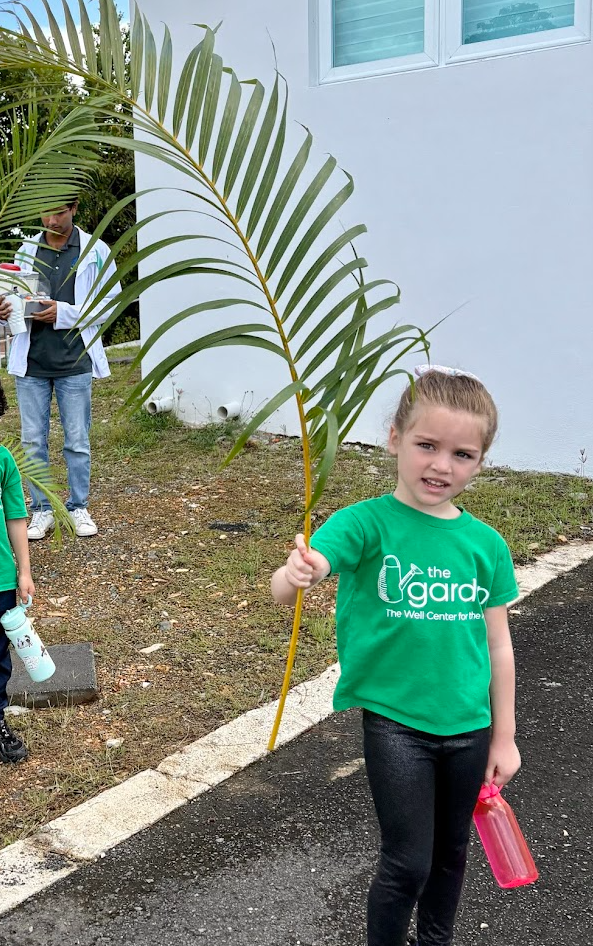
As Jesus rode into the city, a huge crowd of people came to see Him! They took their coats and laid them on the ground like a blanket to show honor, and others cut green branches from palm trees and waved them in the air, shouting, “Hosanna!” which means, “Save us, rescue us.” Matthew 21:1-11
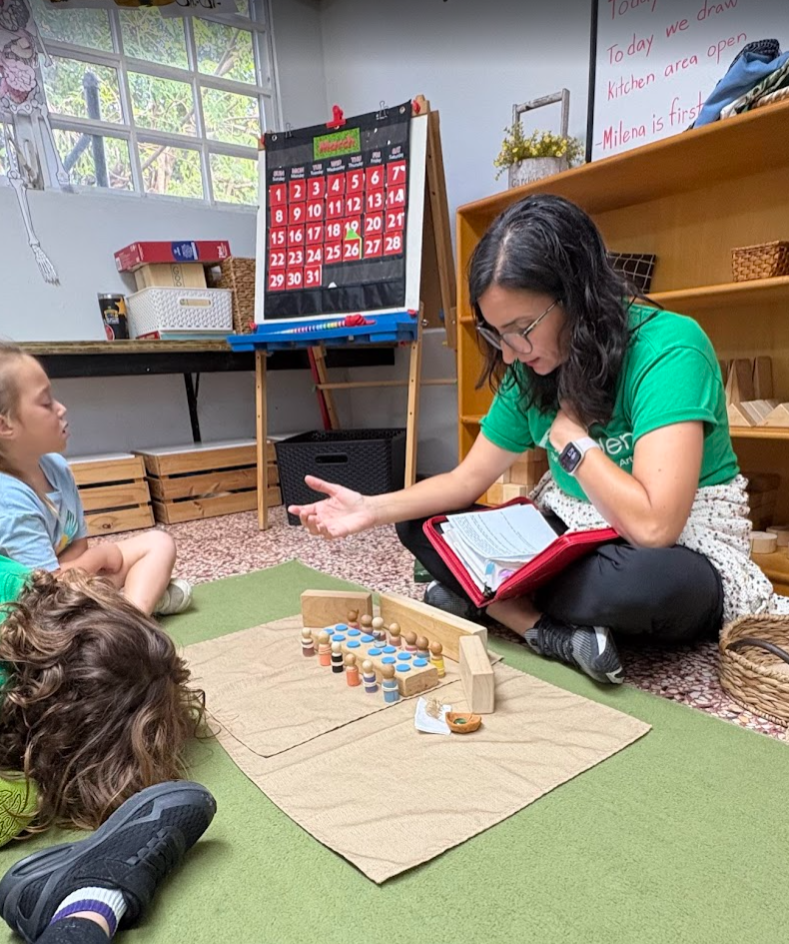
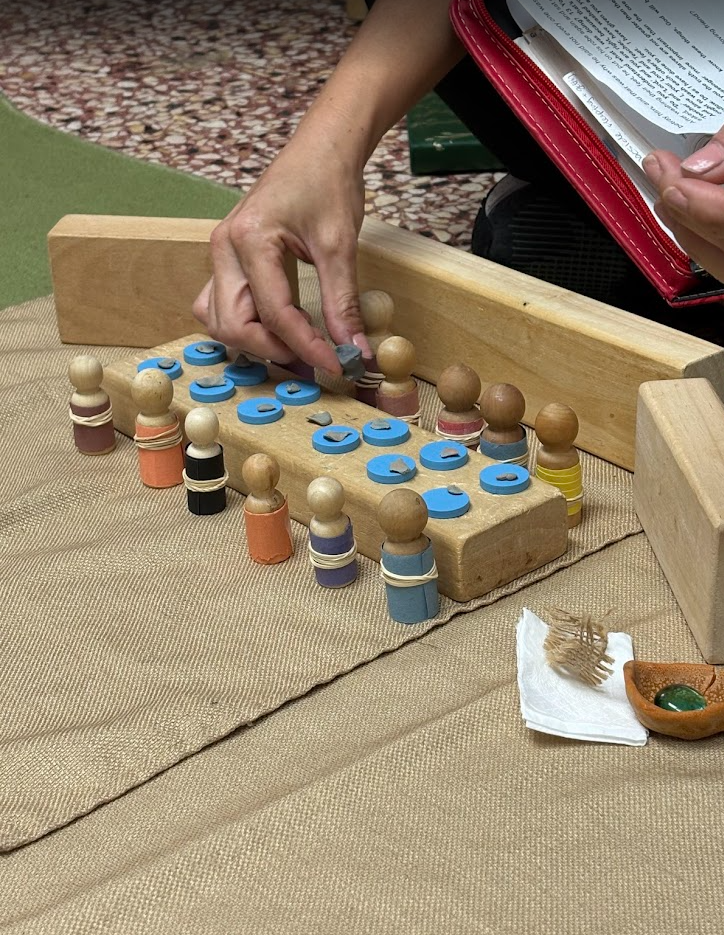
We also learned about the Last Supper, a special meal Jesus shared with His friends, the disciples, before He died. During this meal, He used bread and juice to teach them to remember His love. He promised that He would always be with them.
Jesus also washed His disciples’ feet to show them that being kind, humble, and helpful to others is the most important thing we can do. This is why He came—to be with us and to teach us how to love and care for one another.
(Matthew 26:26–29; John 13:3–17)
Songs: “The Kingdom of God Is Like a Mustard Seed,” “Jesús es mi Pastor,” and “This Is the Day”
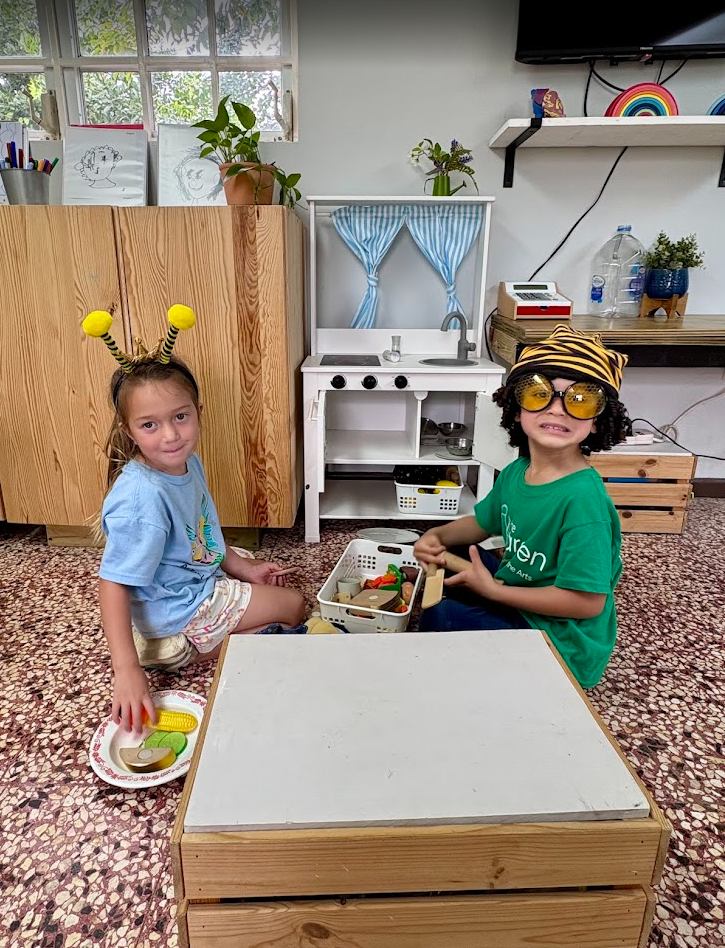
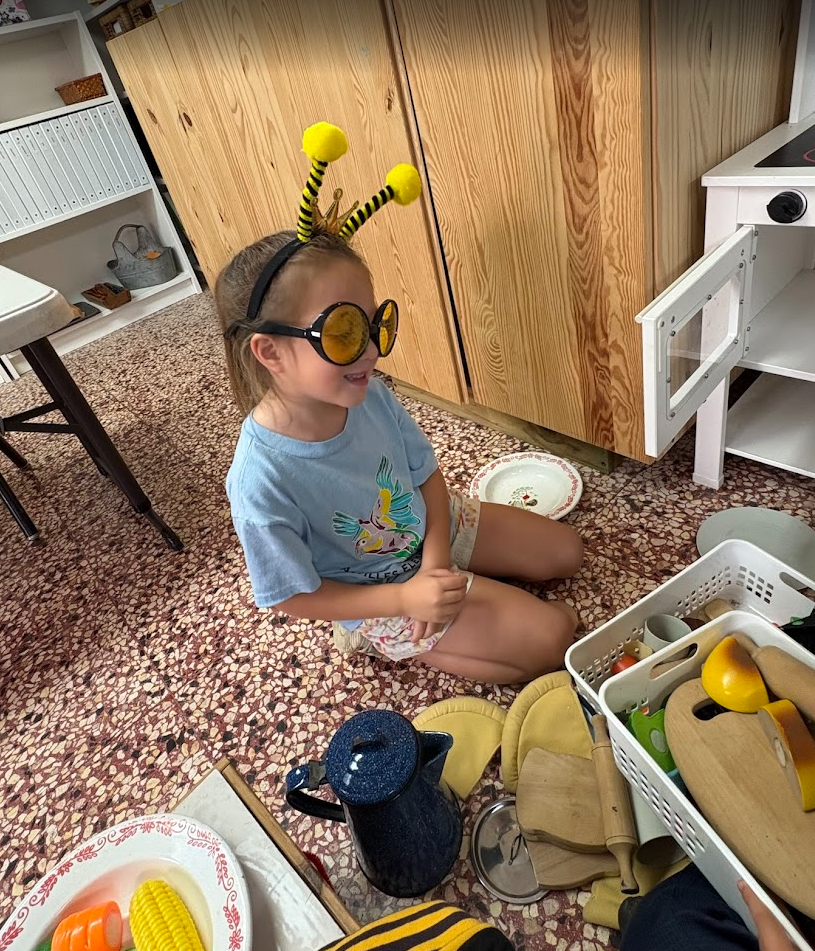
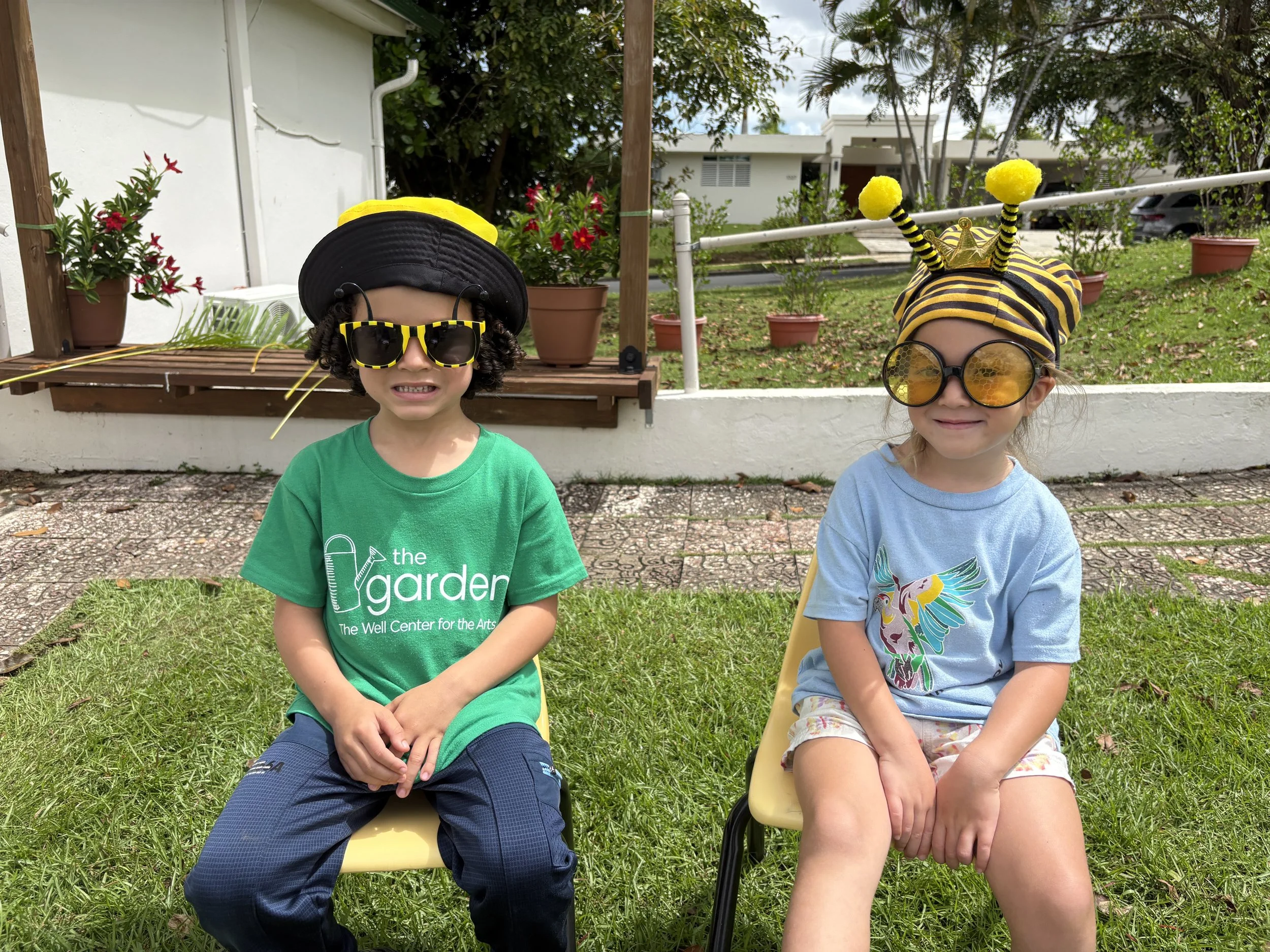
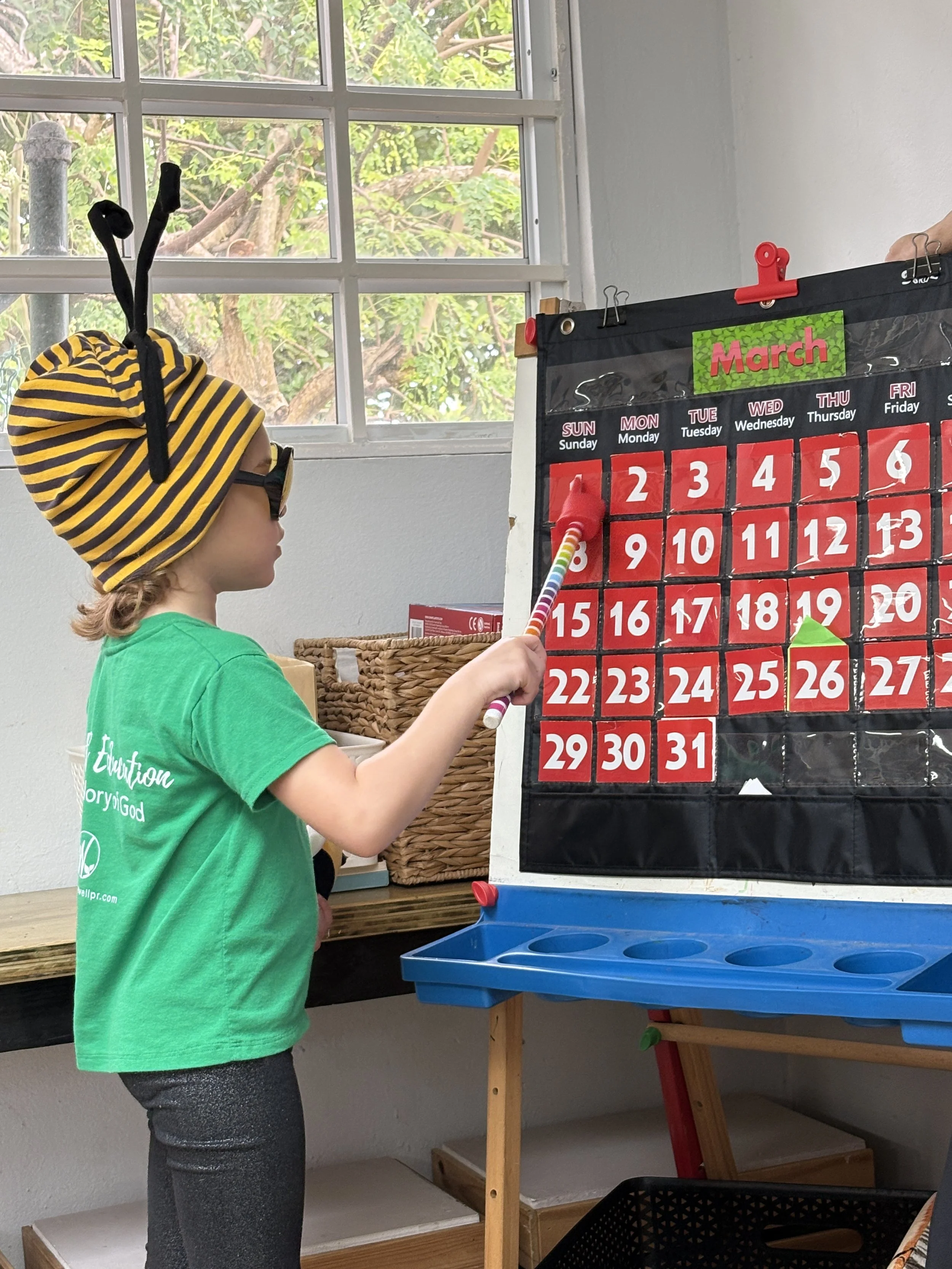
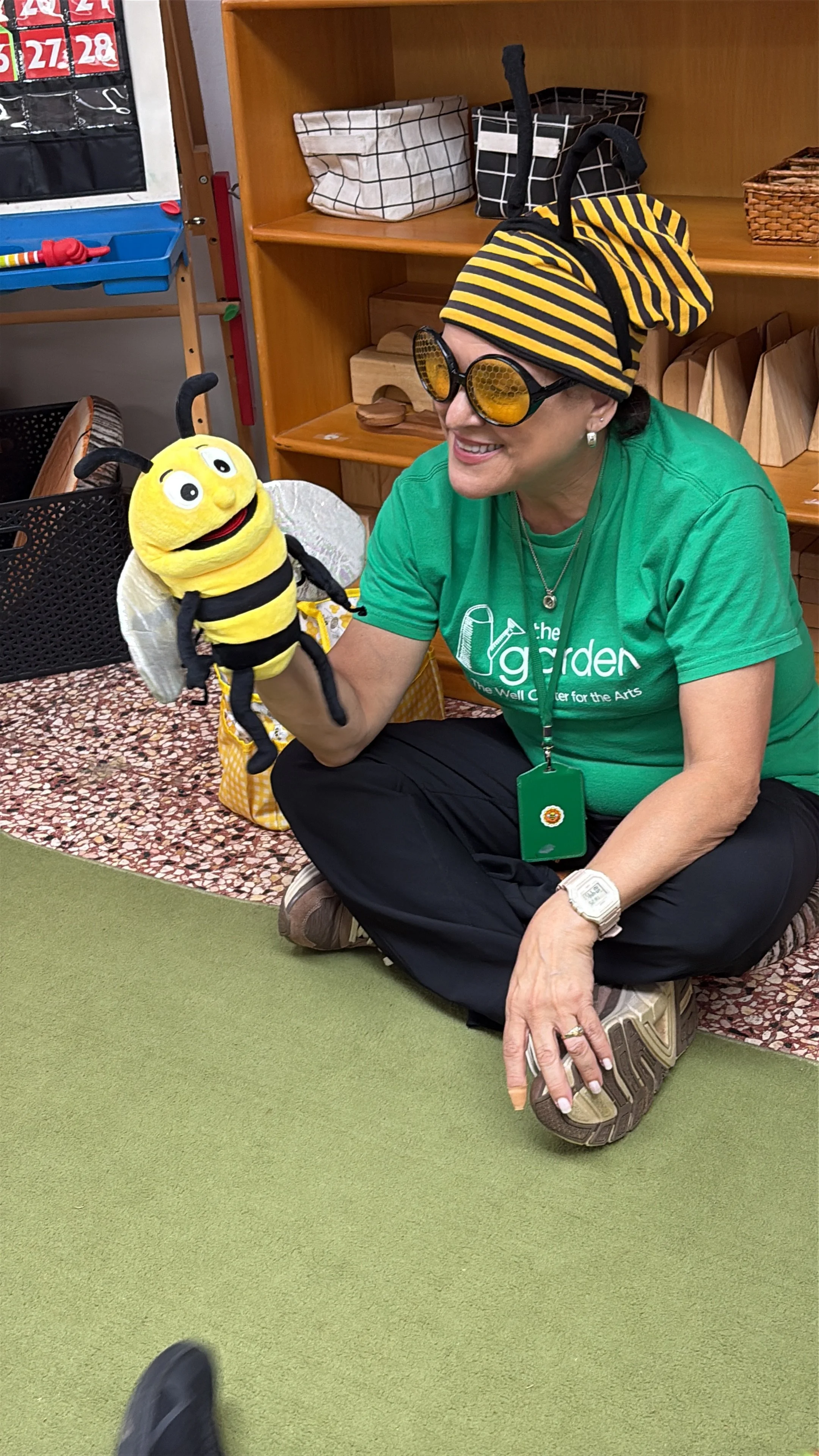
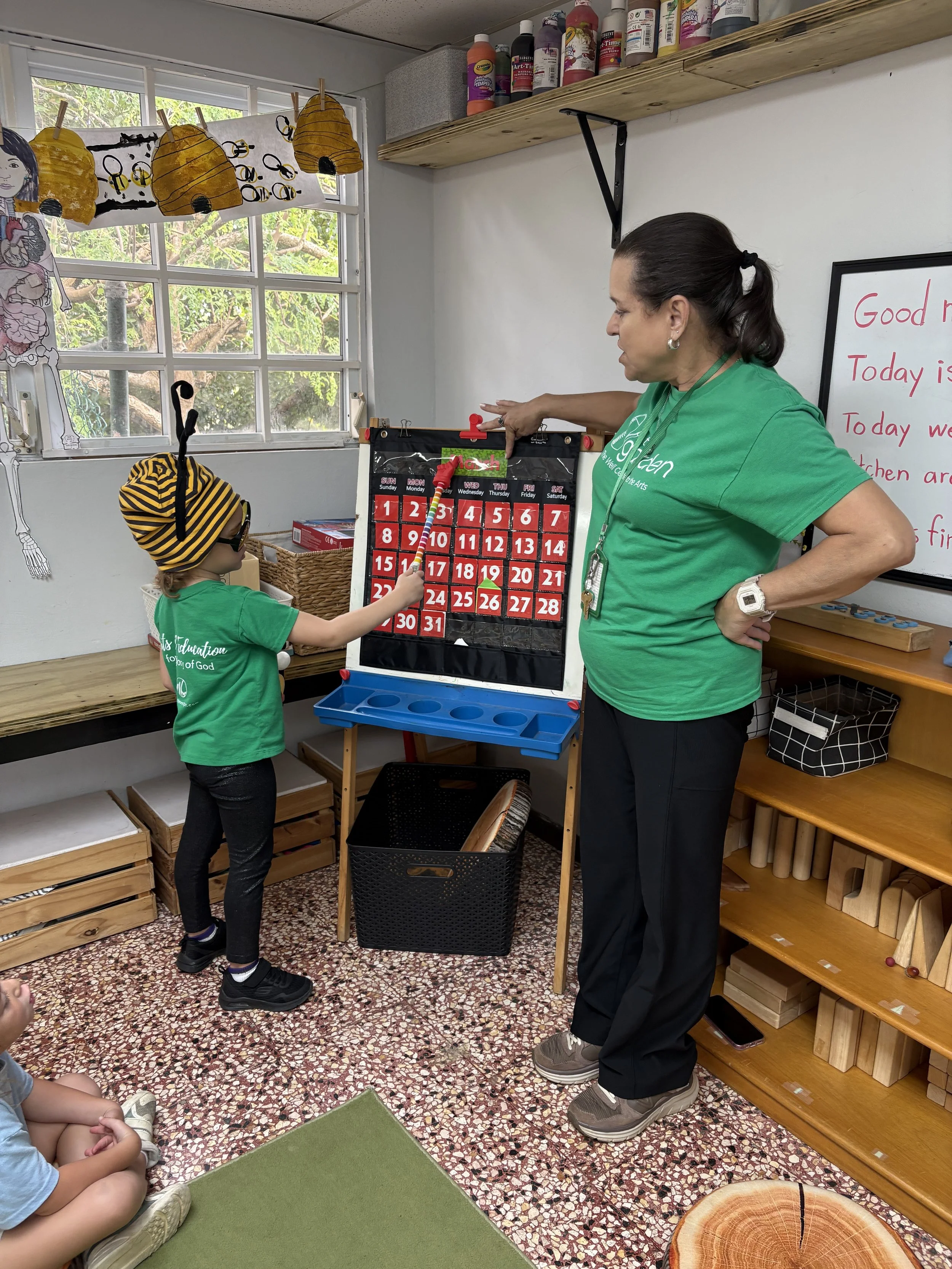
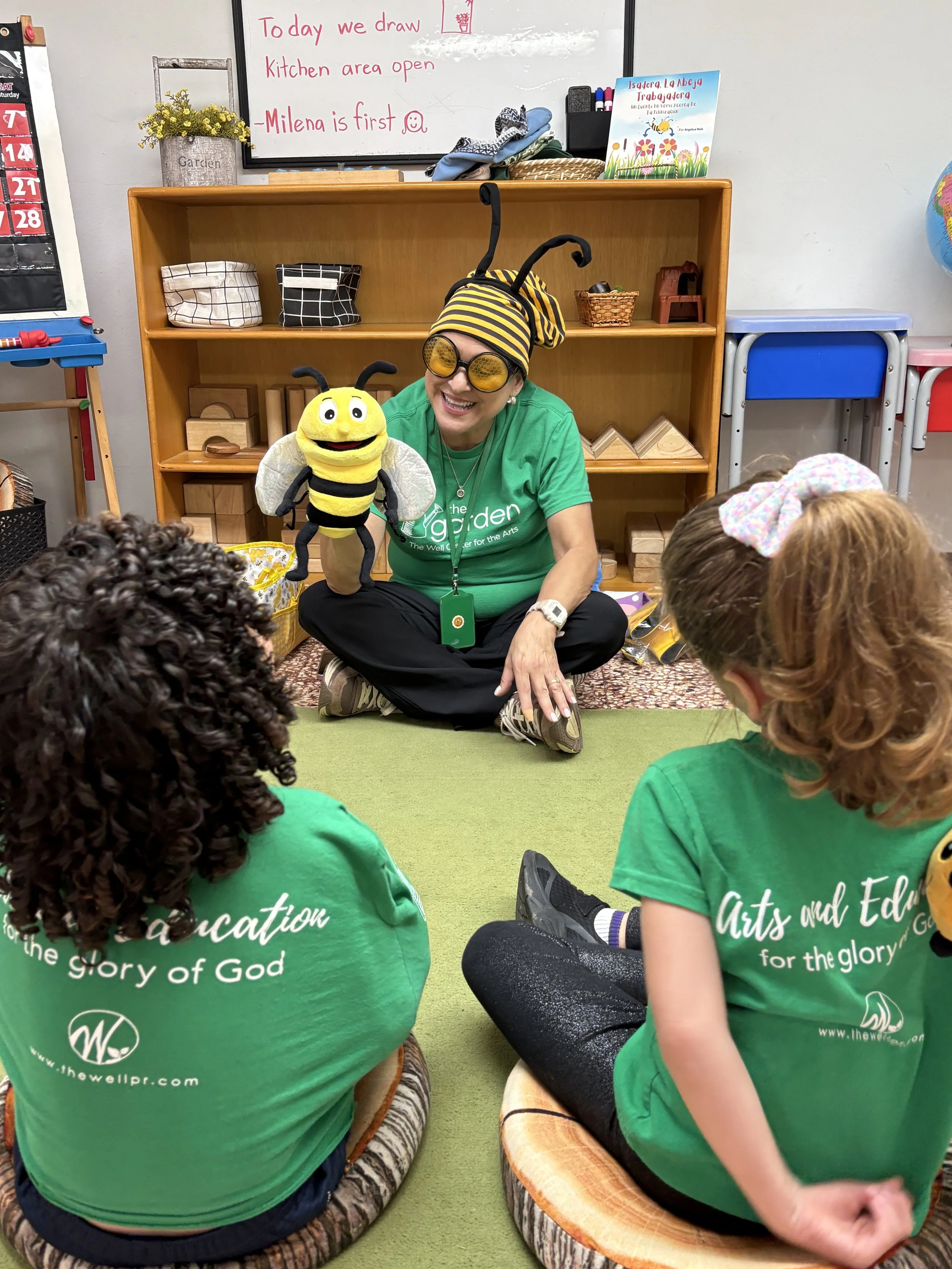
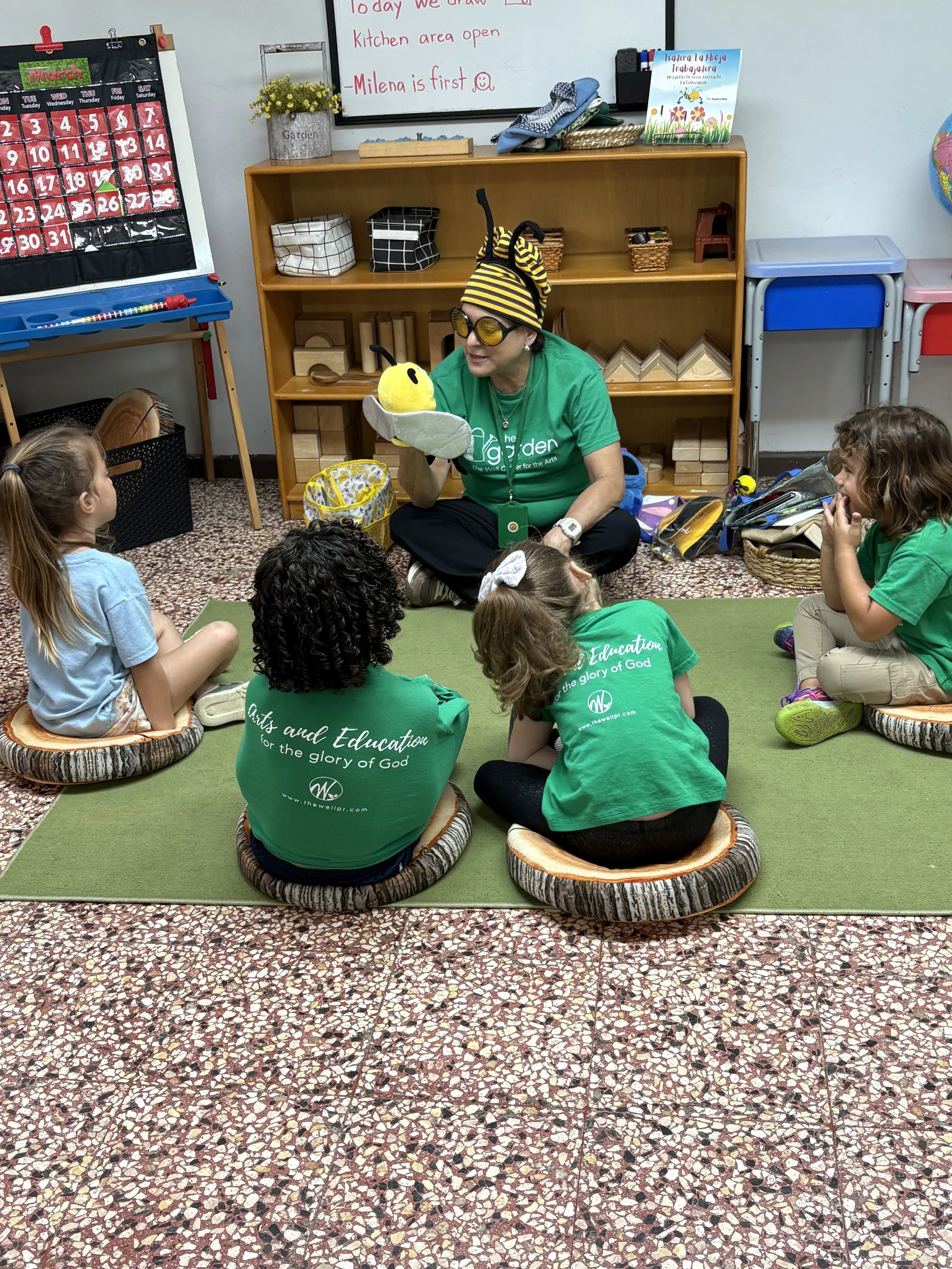
At circle time, we continue to learn about bees with our puppet friend Bobby Bee and his little brother Billy, who brought his friend Daisy Flower. Did you know that a bee’s buzzing sound does not come from its mouth? They make it by flapping their little wings. They also taste and smell through their antennae and how sometimes bees cover their entire bodies with pollen. We can see how God made these insects so special just like us.
Songs: “I’m Bringing Home a Baby Bumblebee” and “One Little, Two Little, Three Little Bees” / “Pollito Chicken”
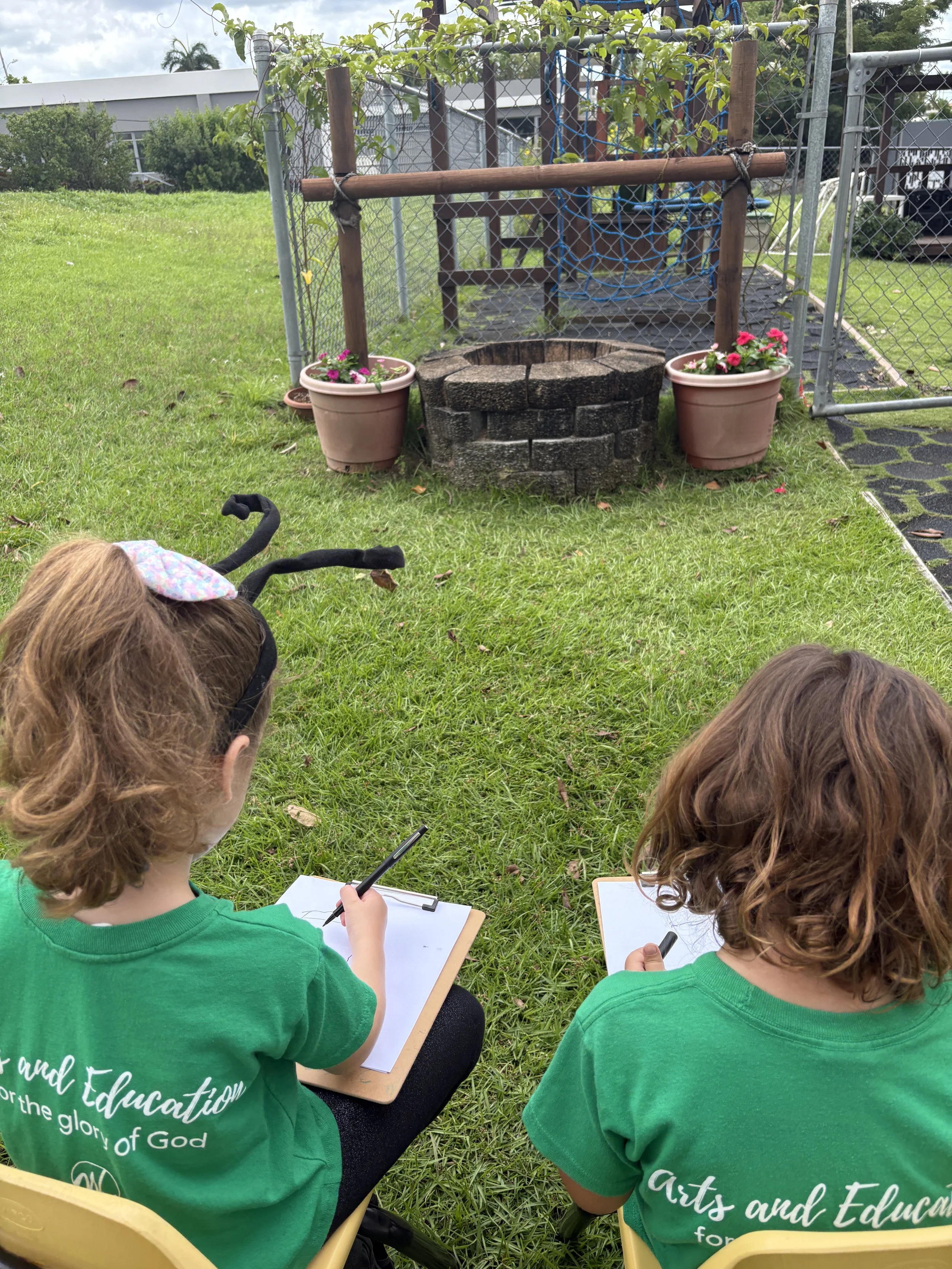
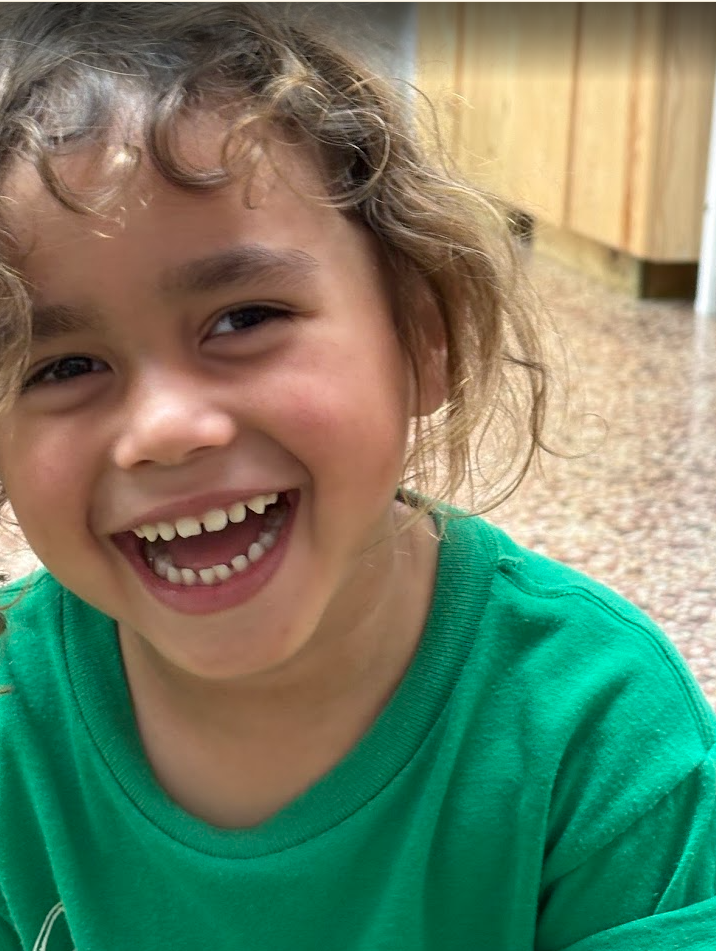
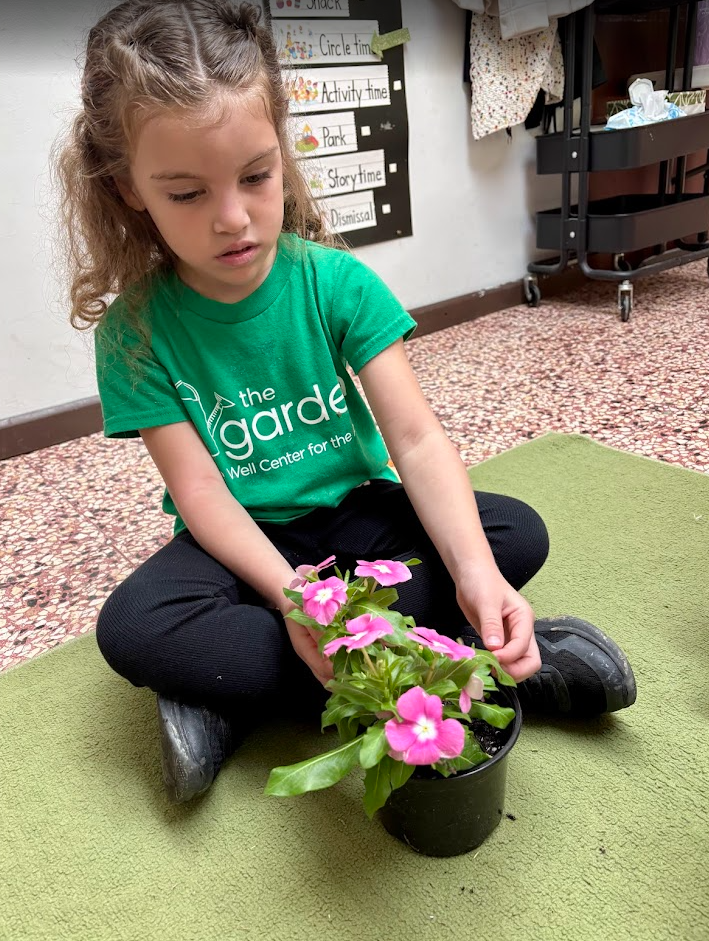
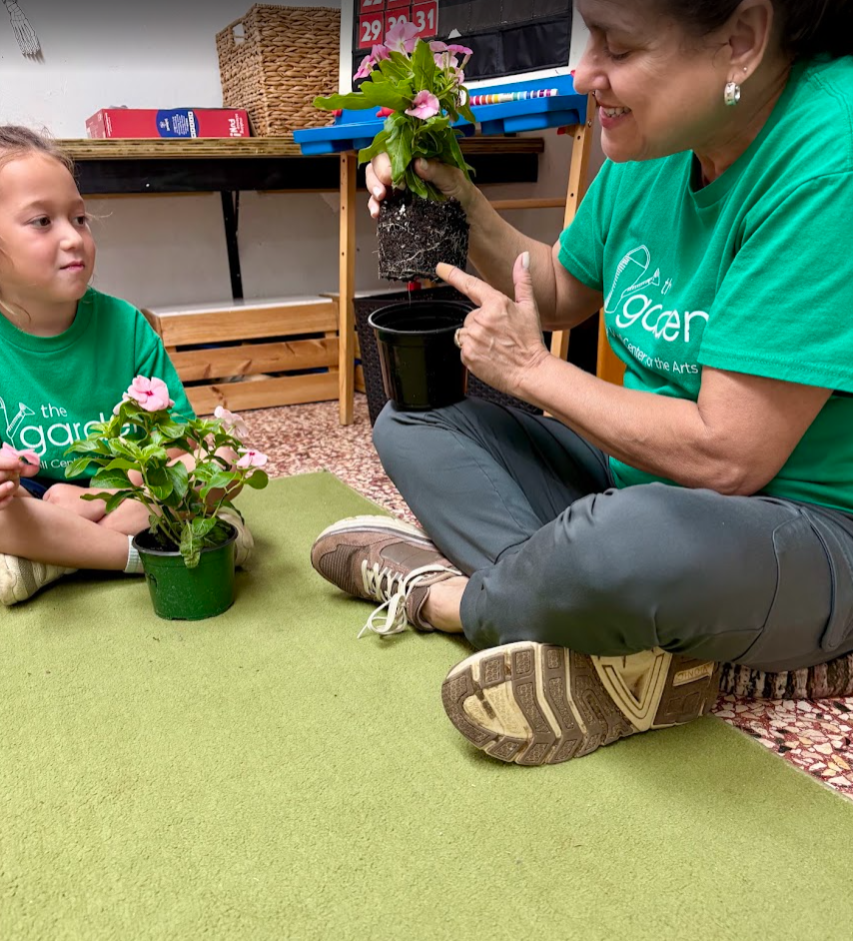
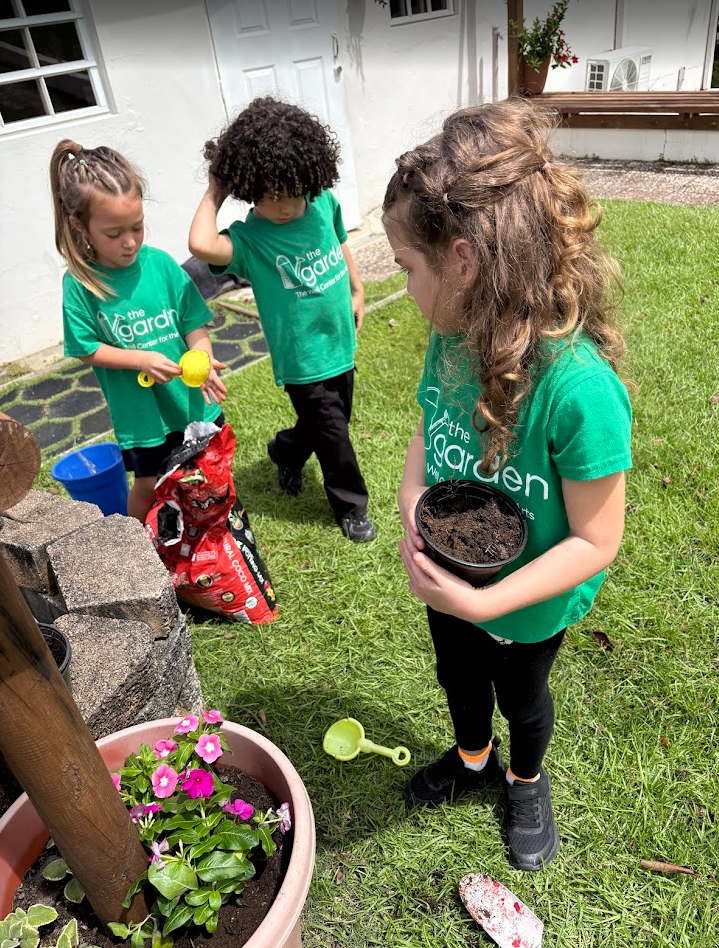
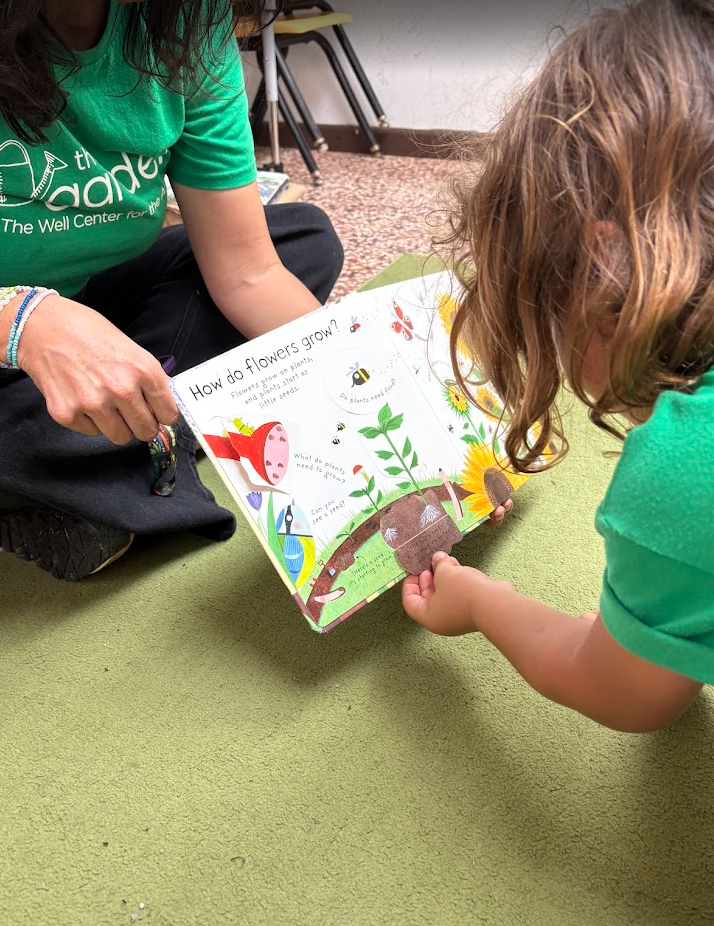
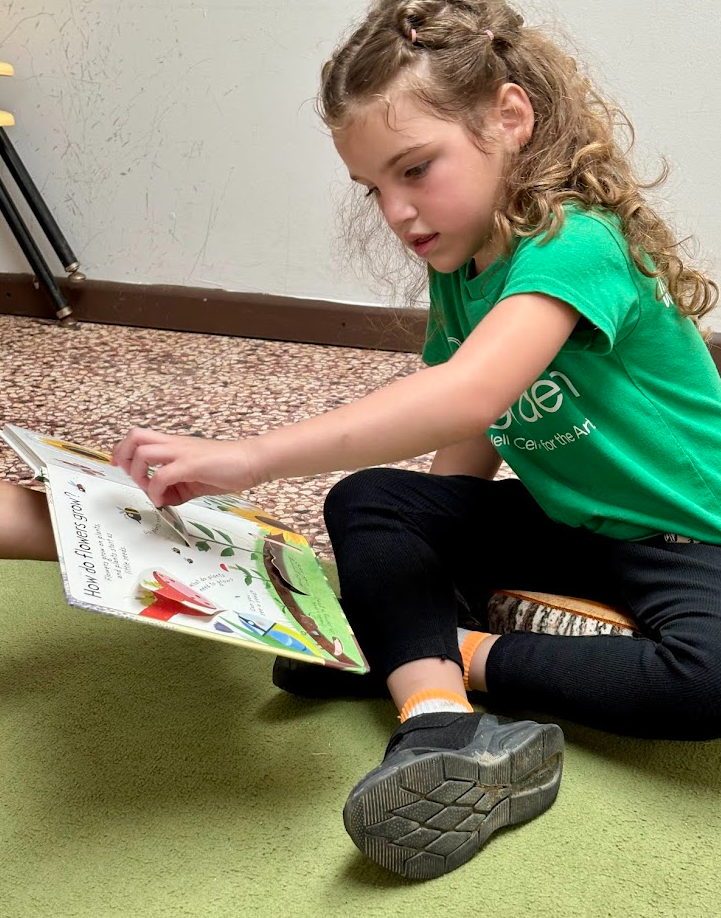
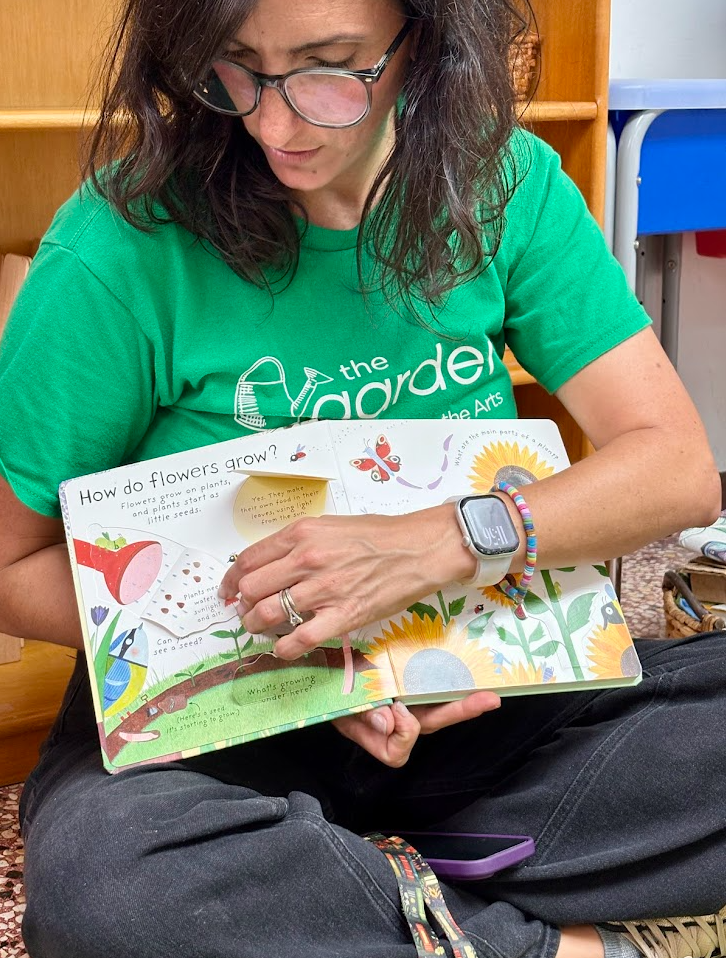
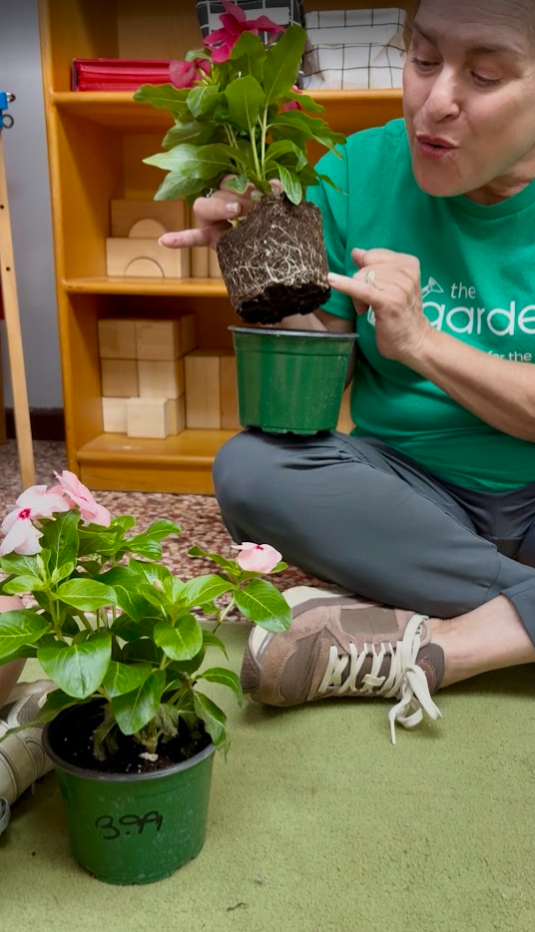
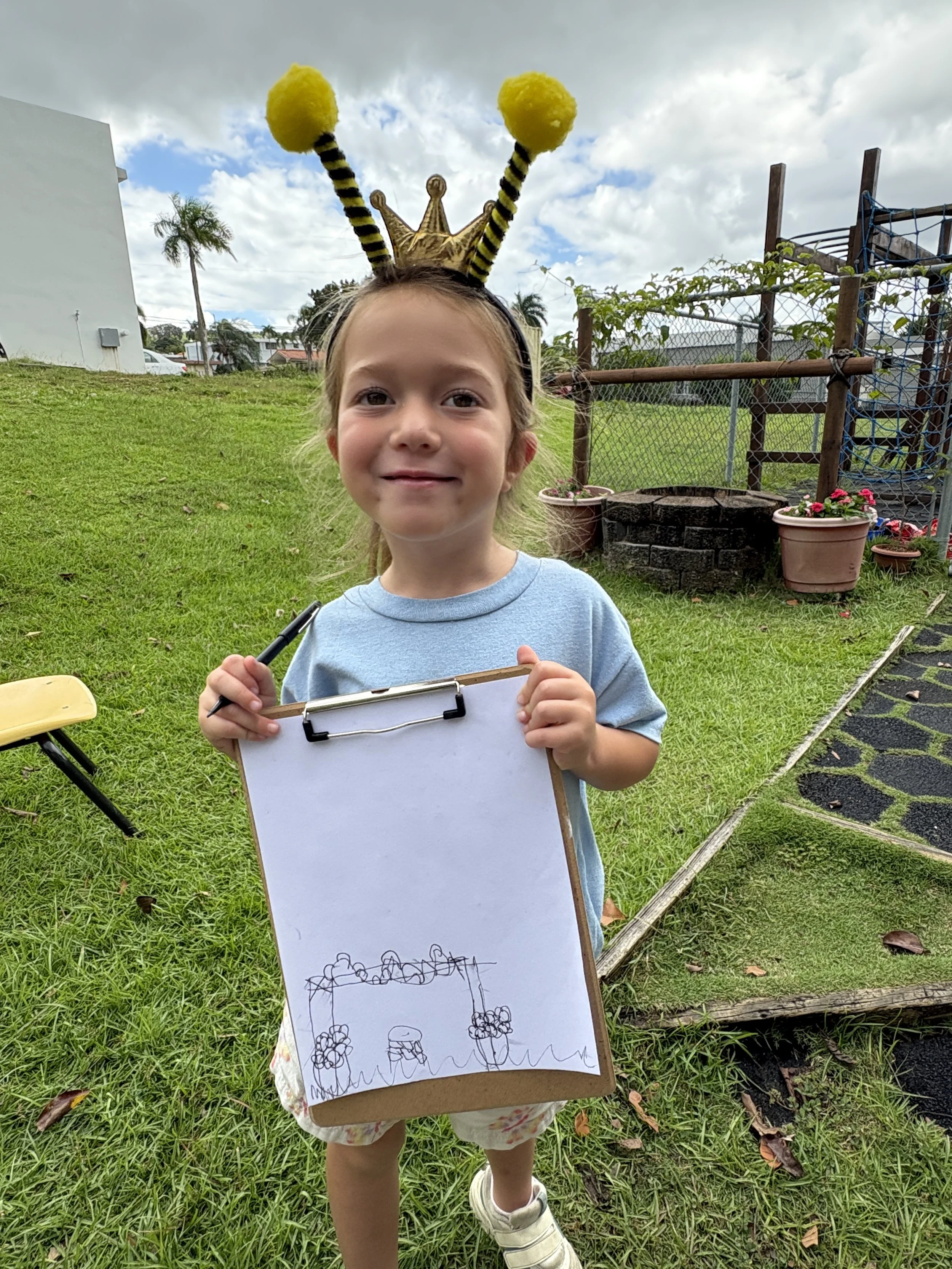
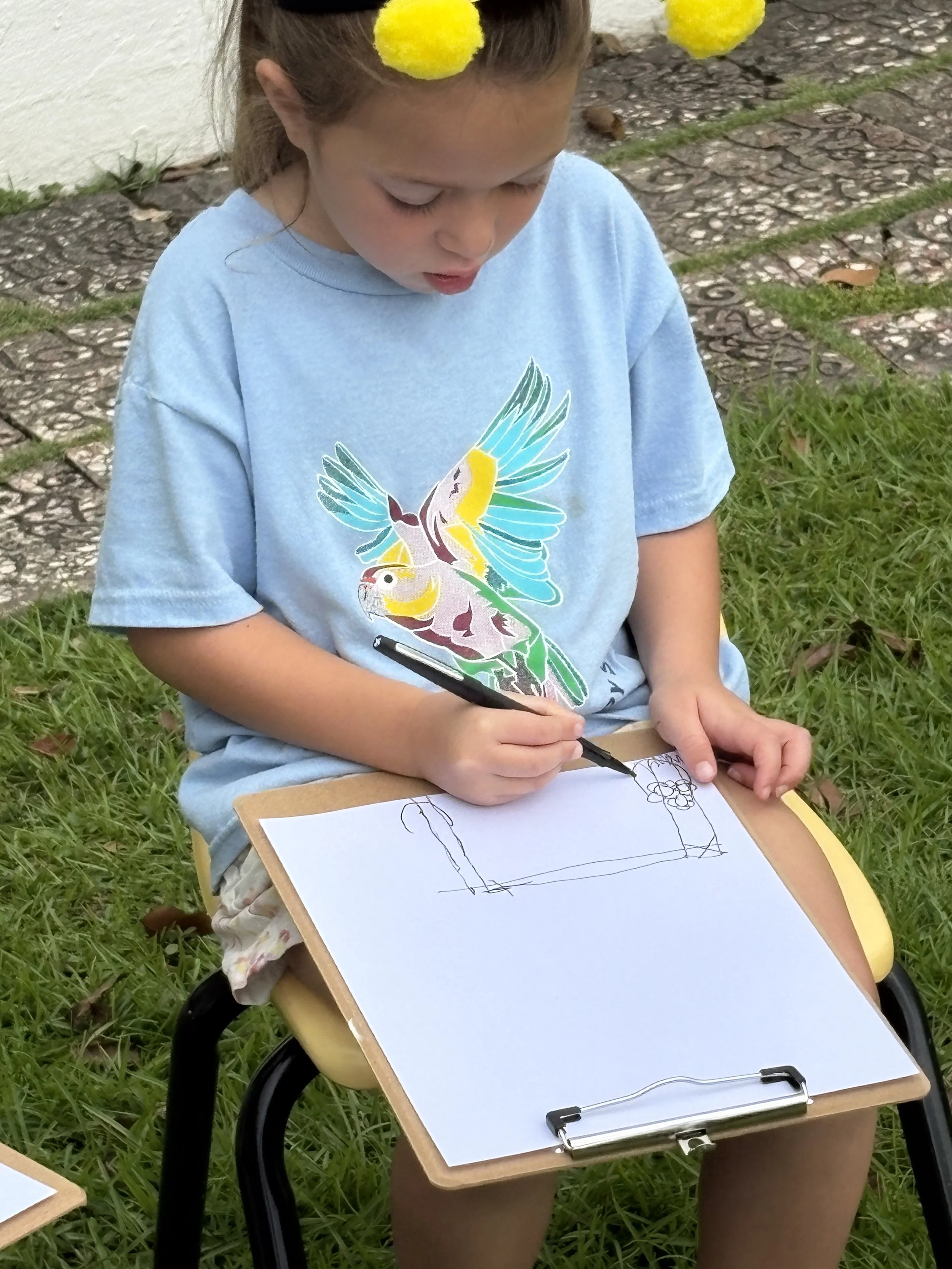
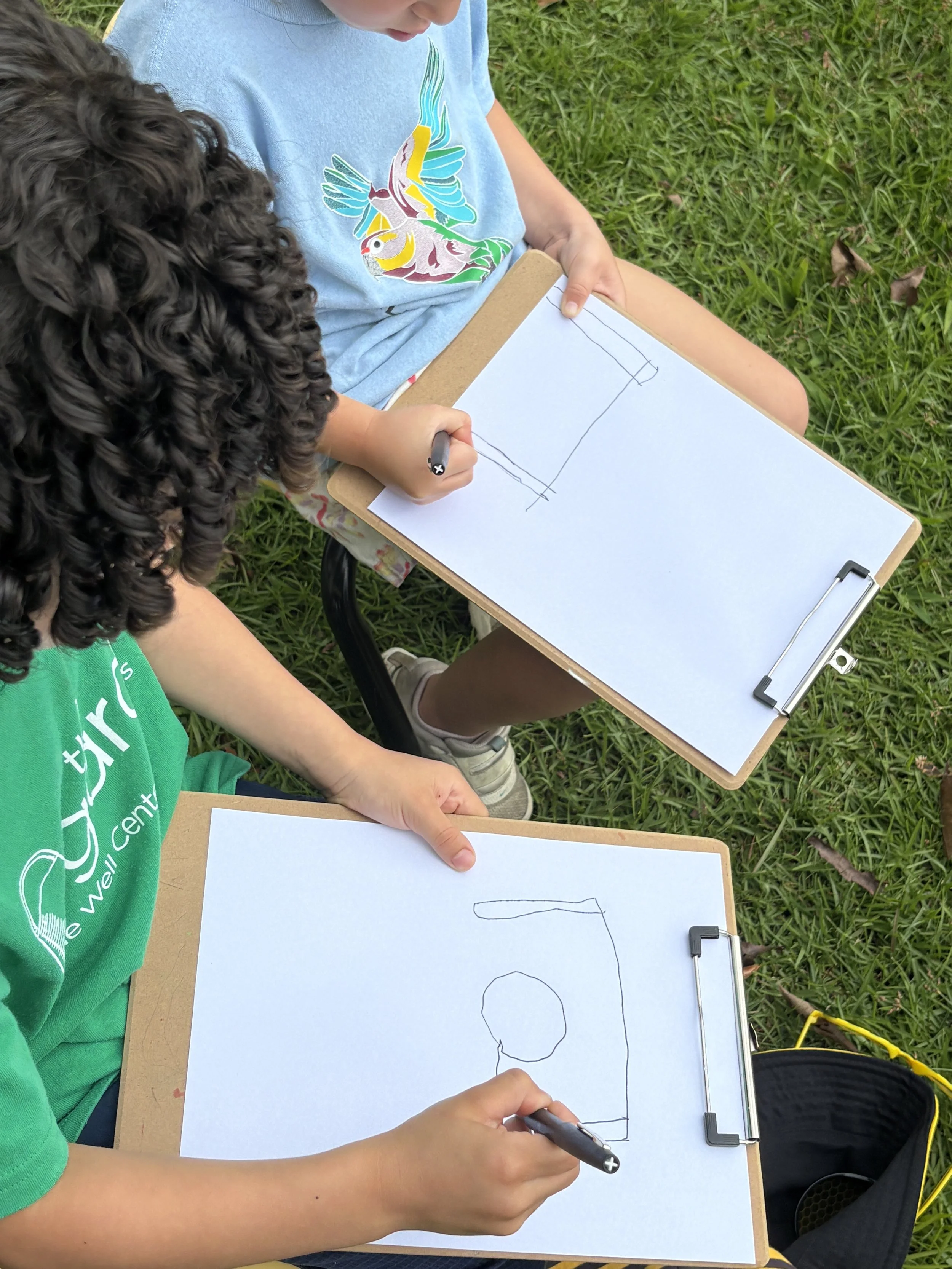
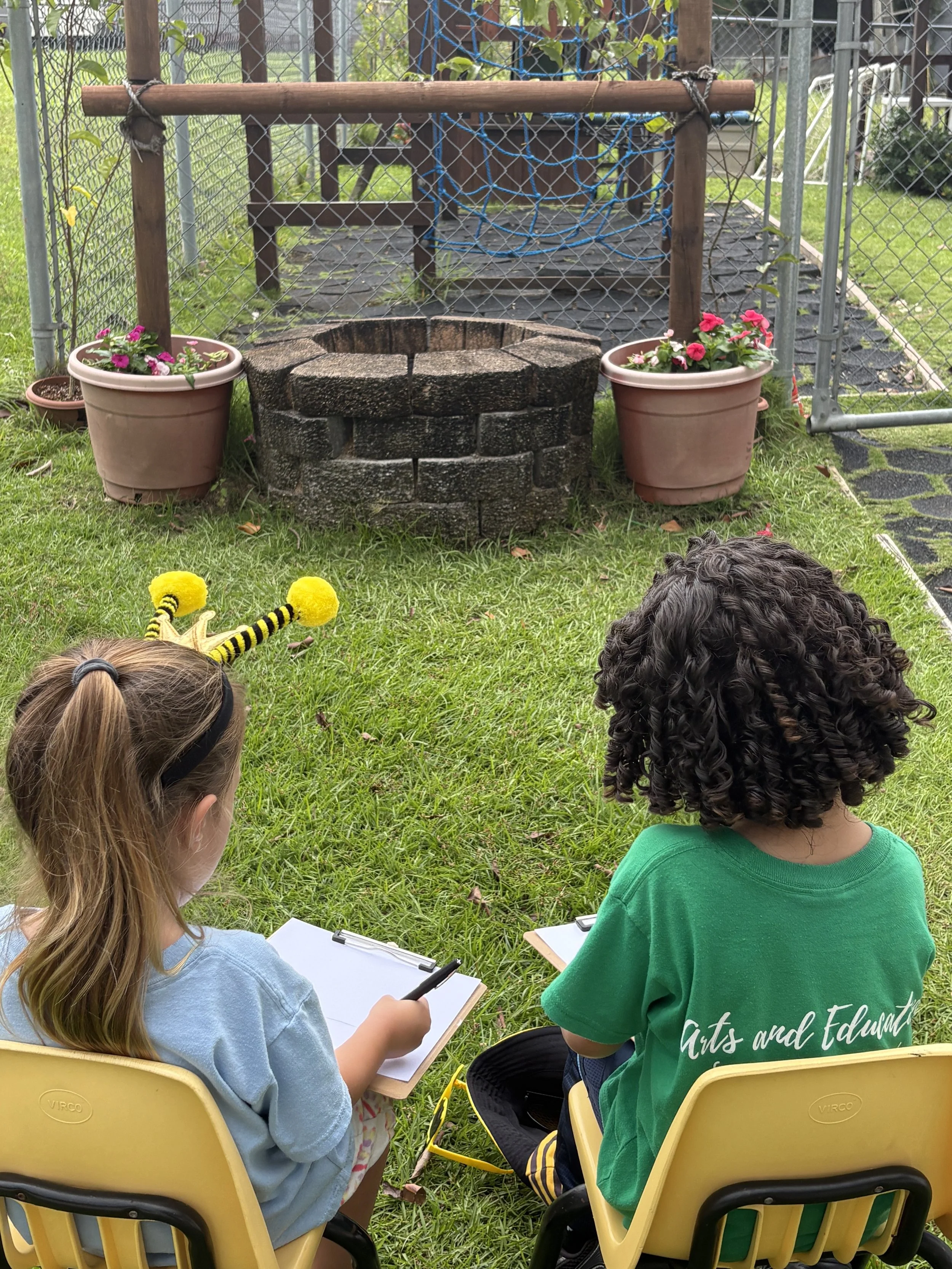
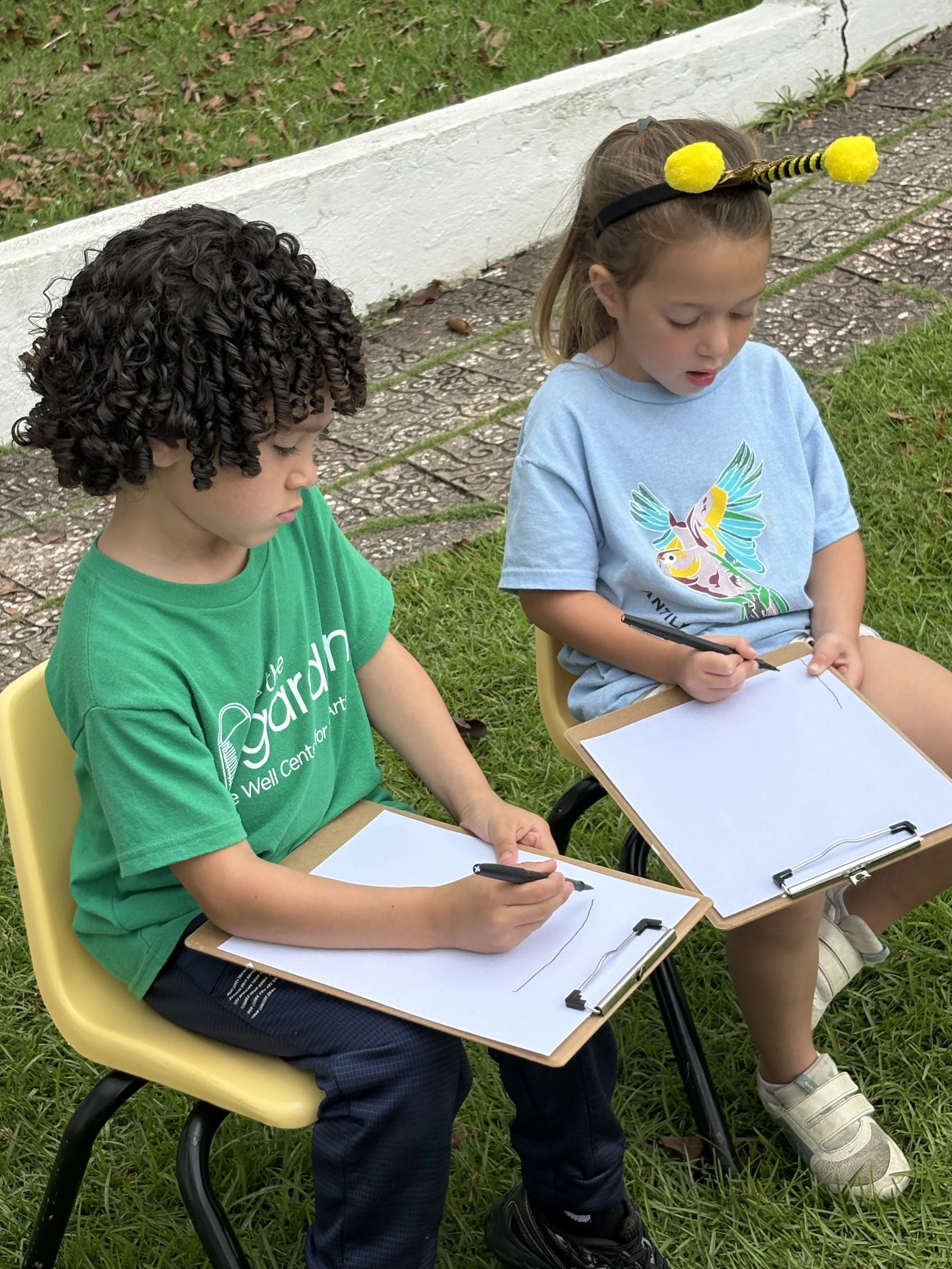
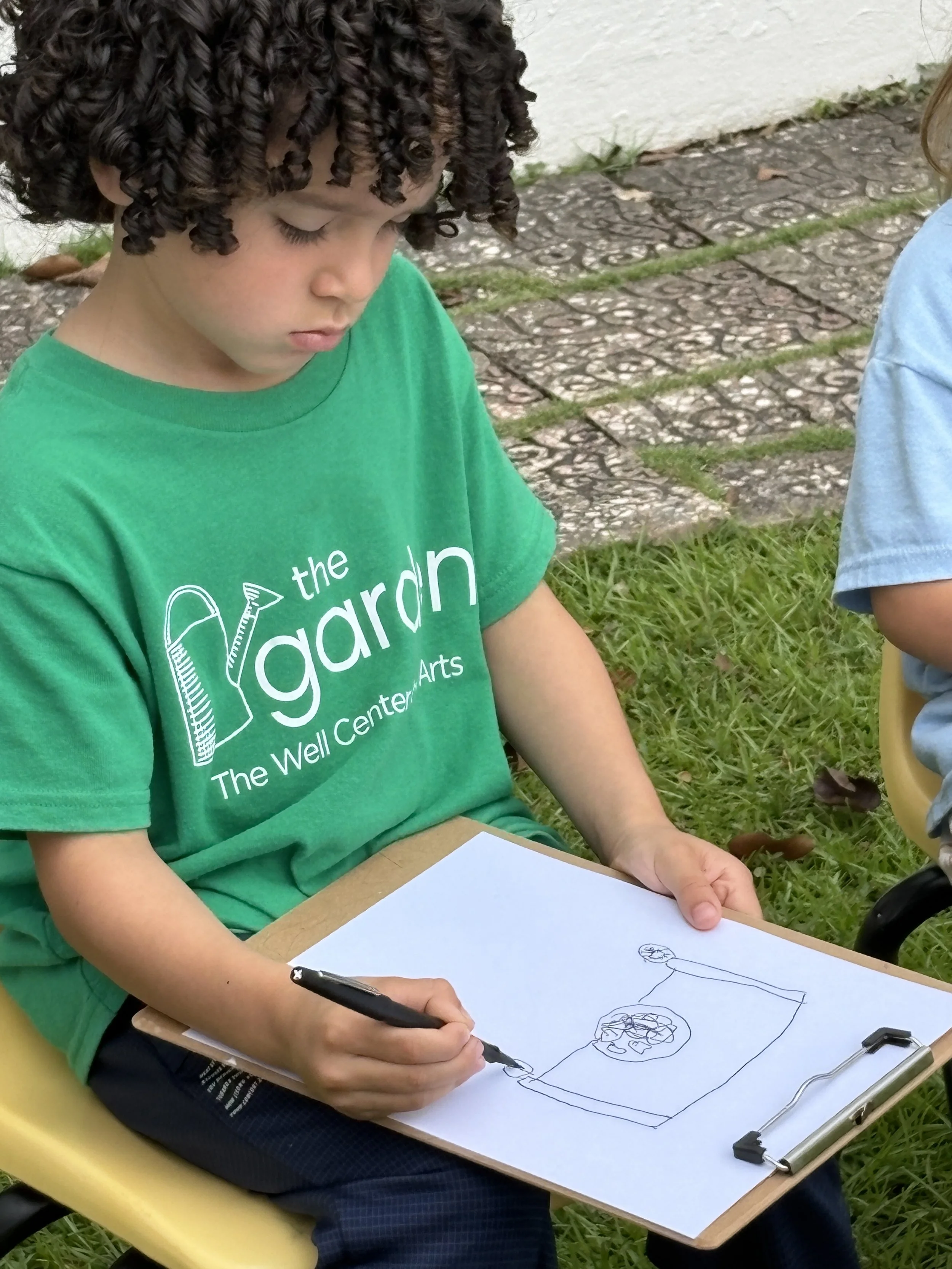
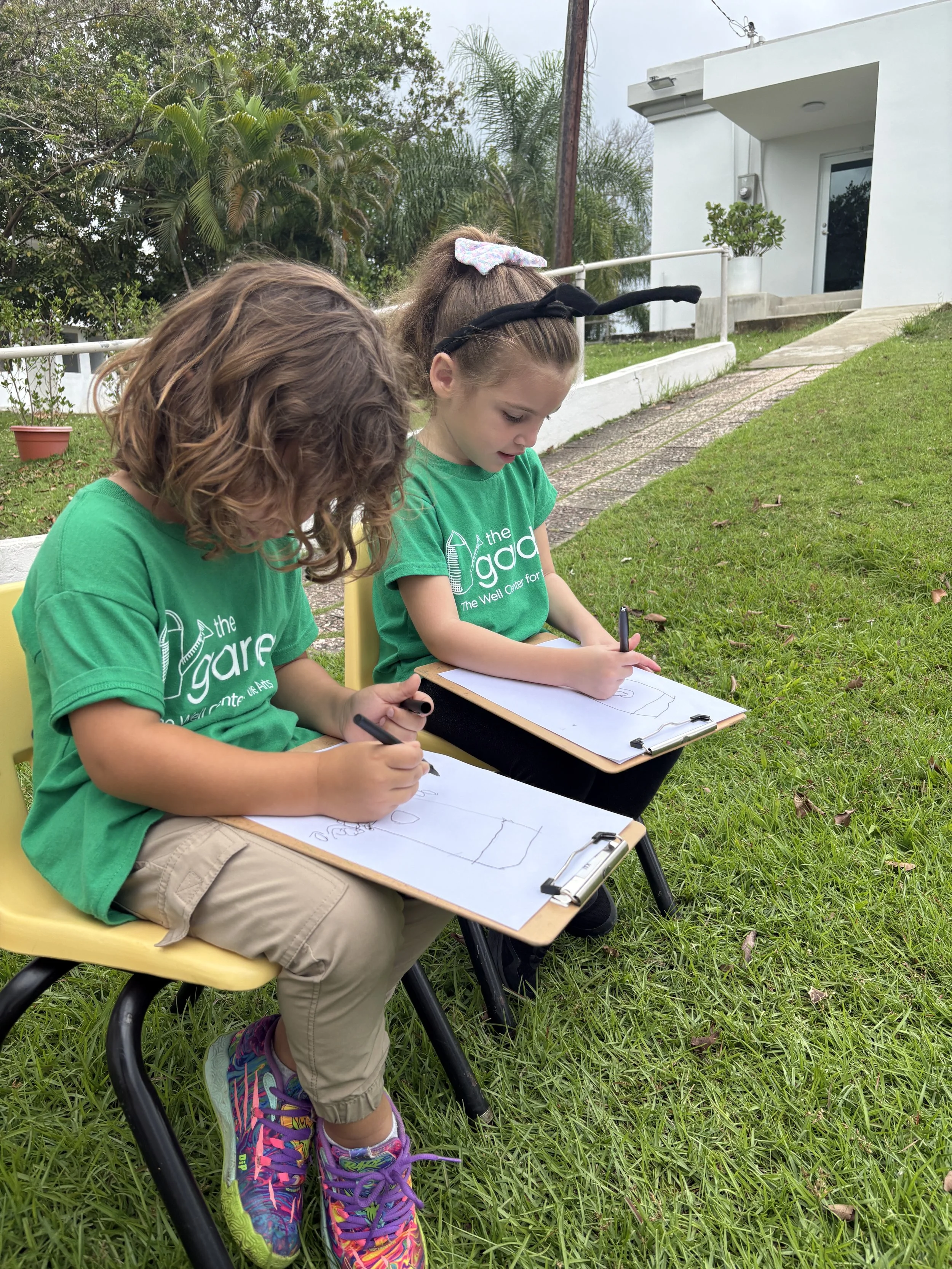
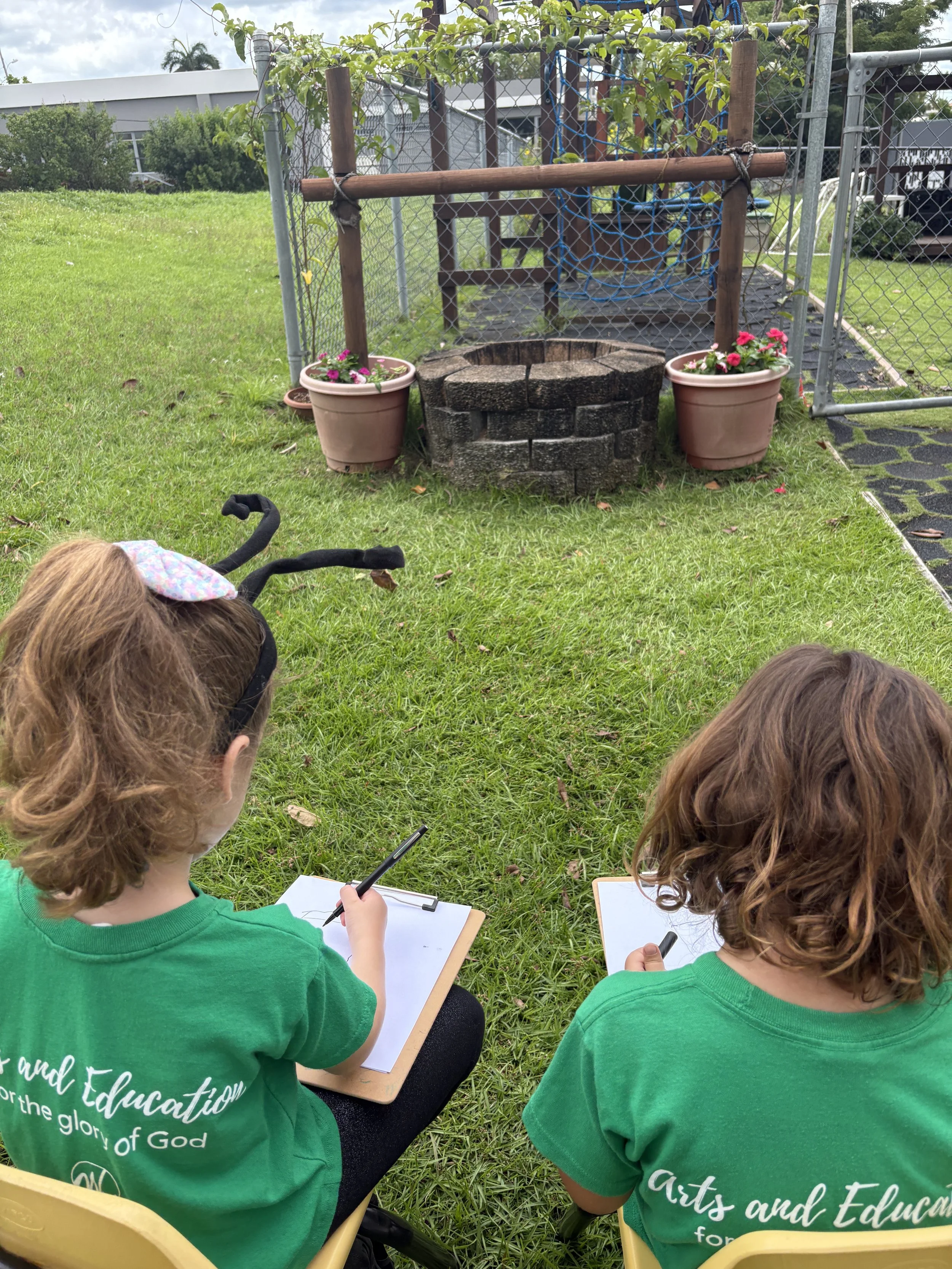
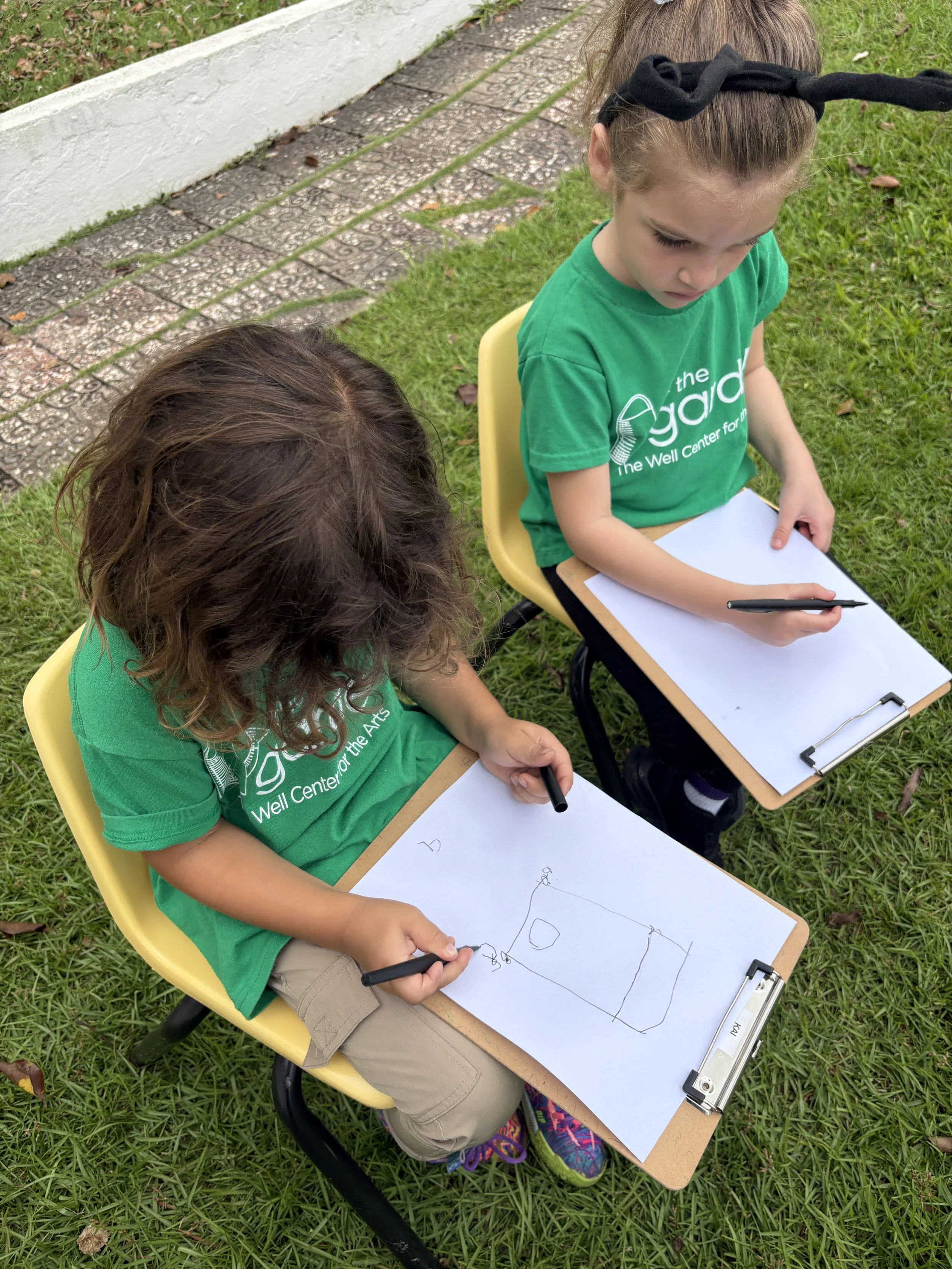
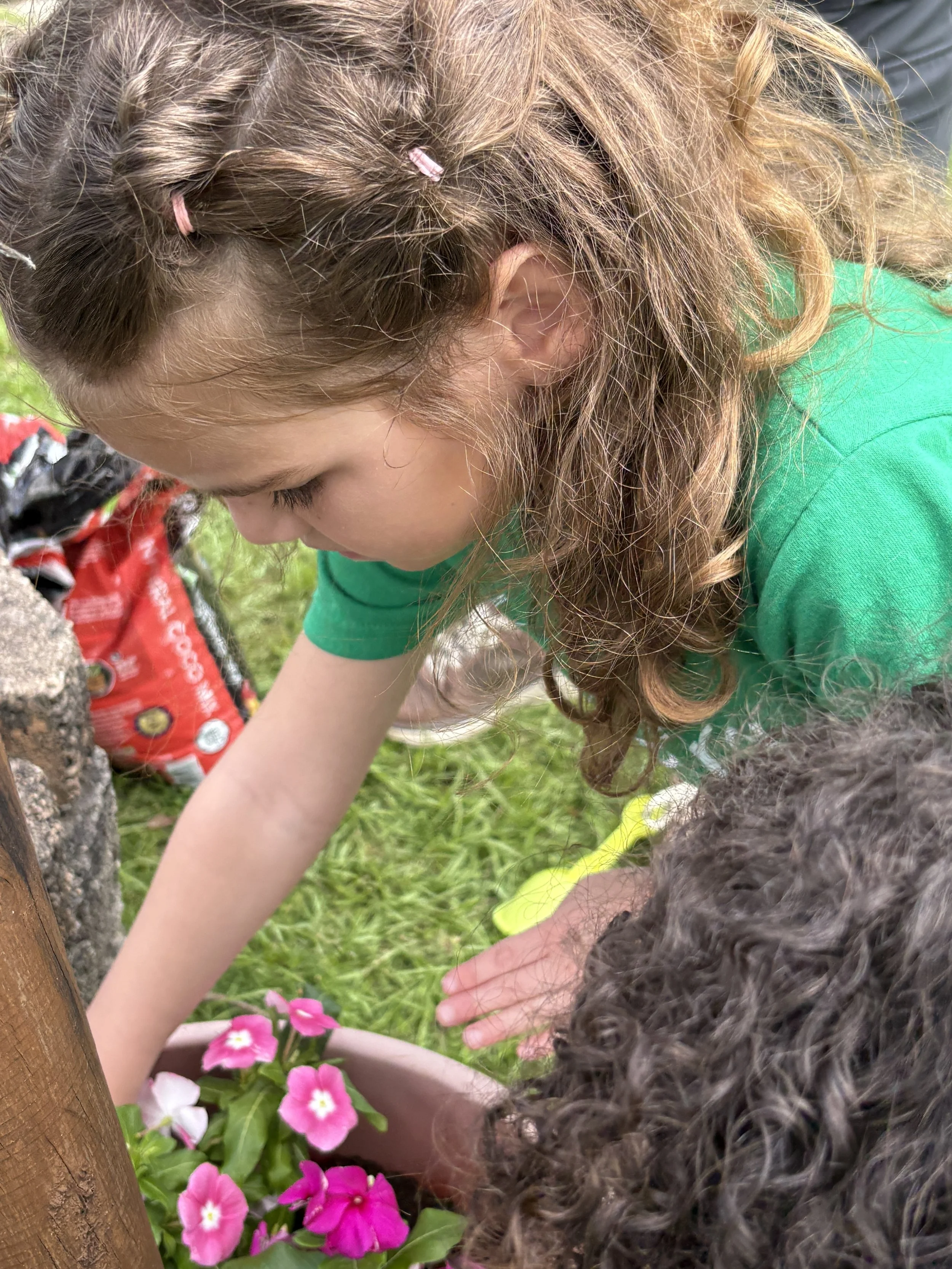
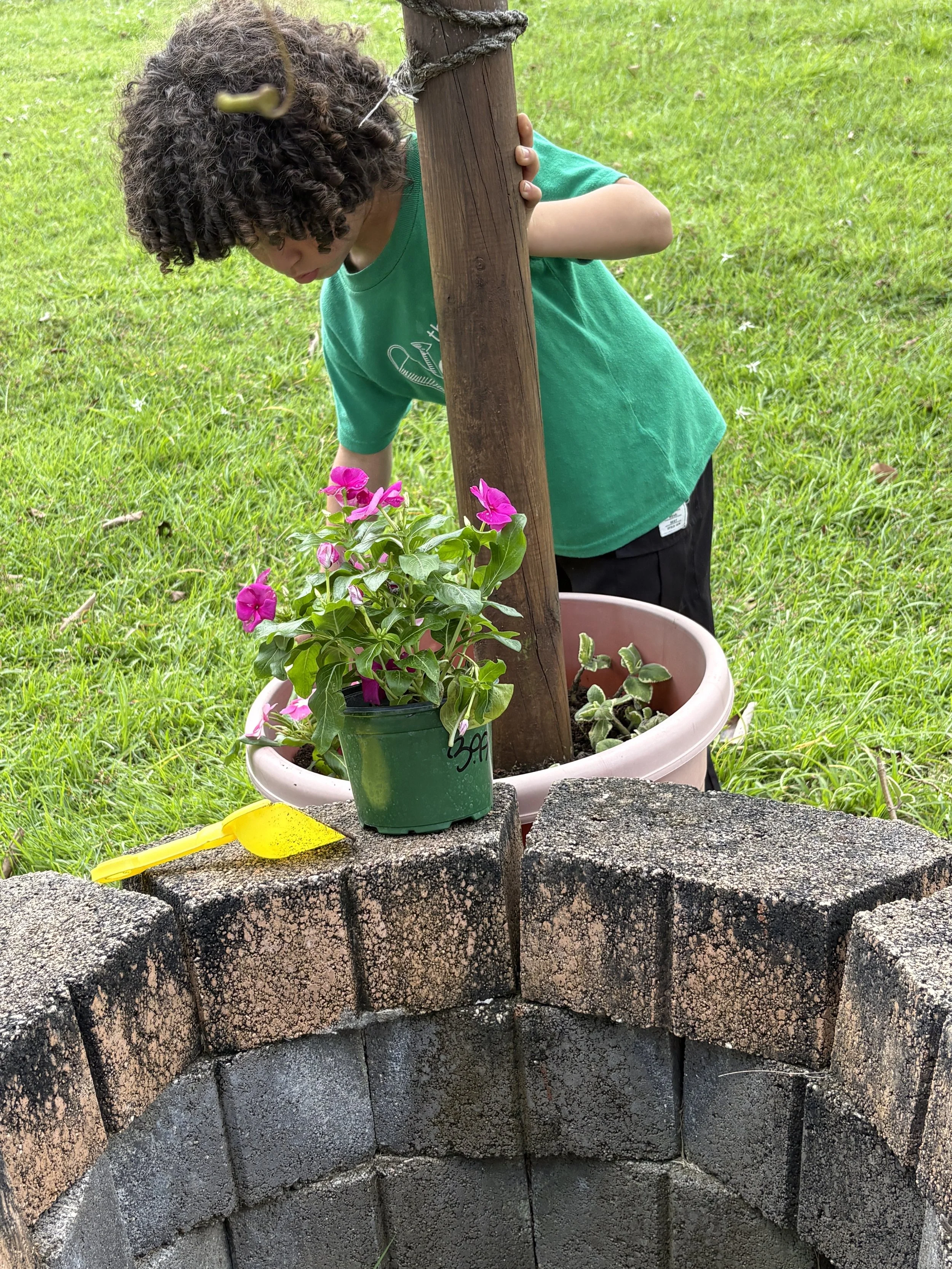
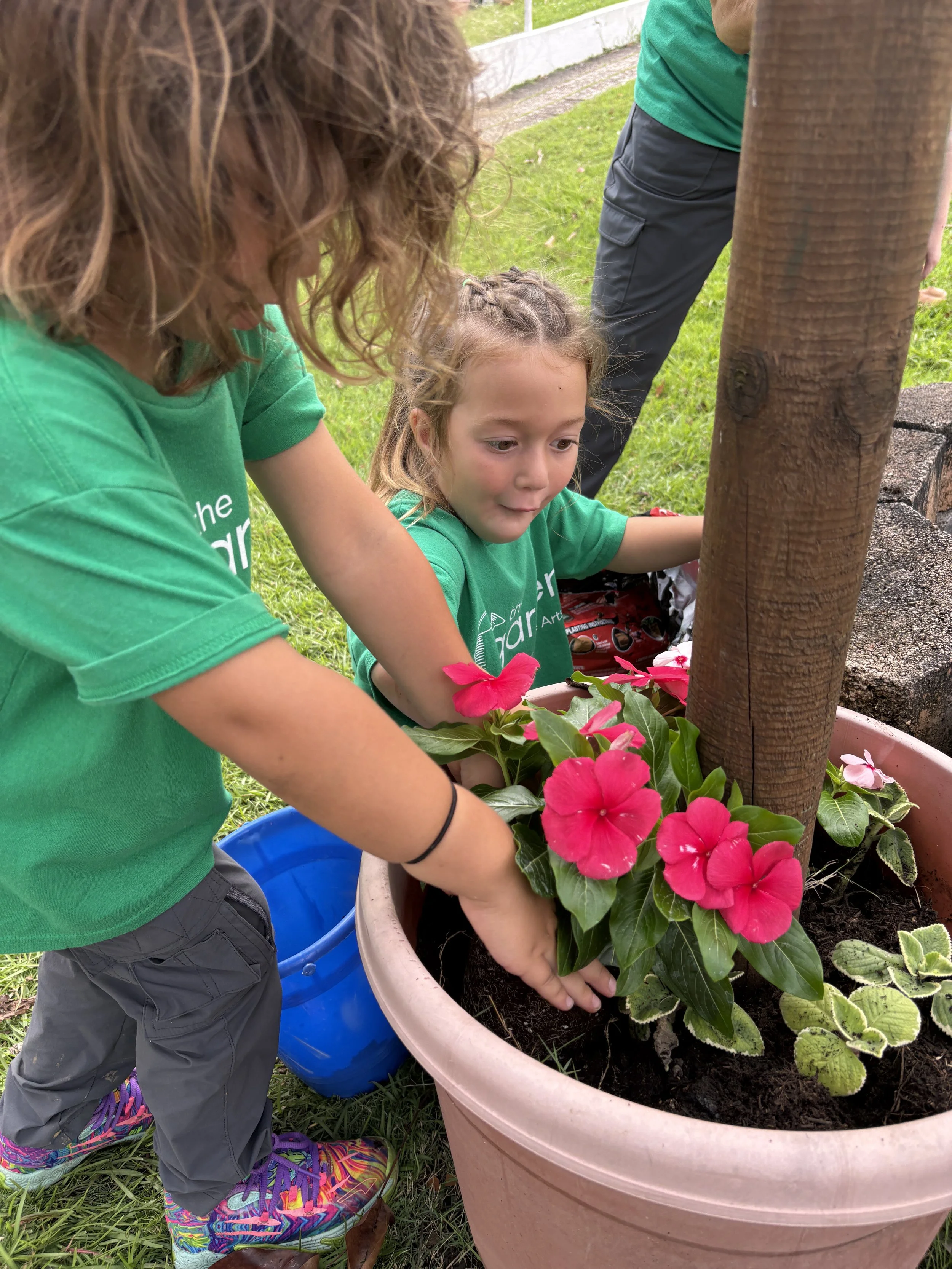
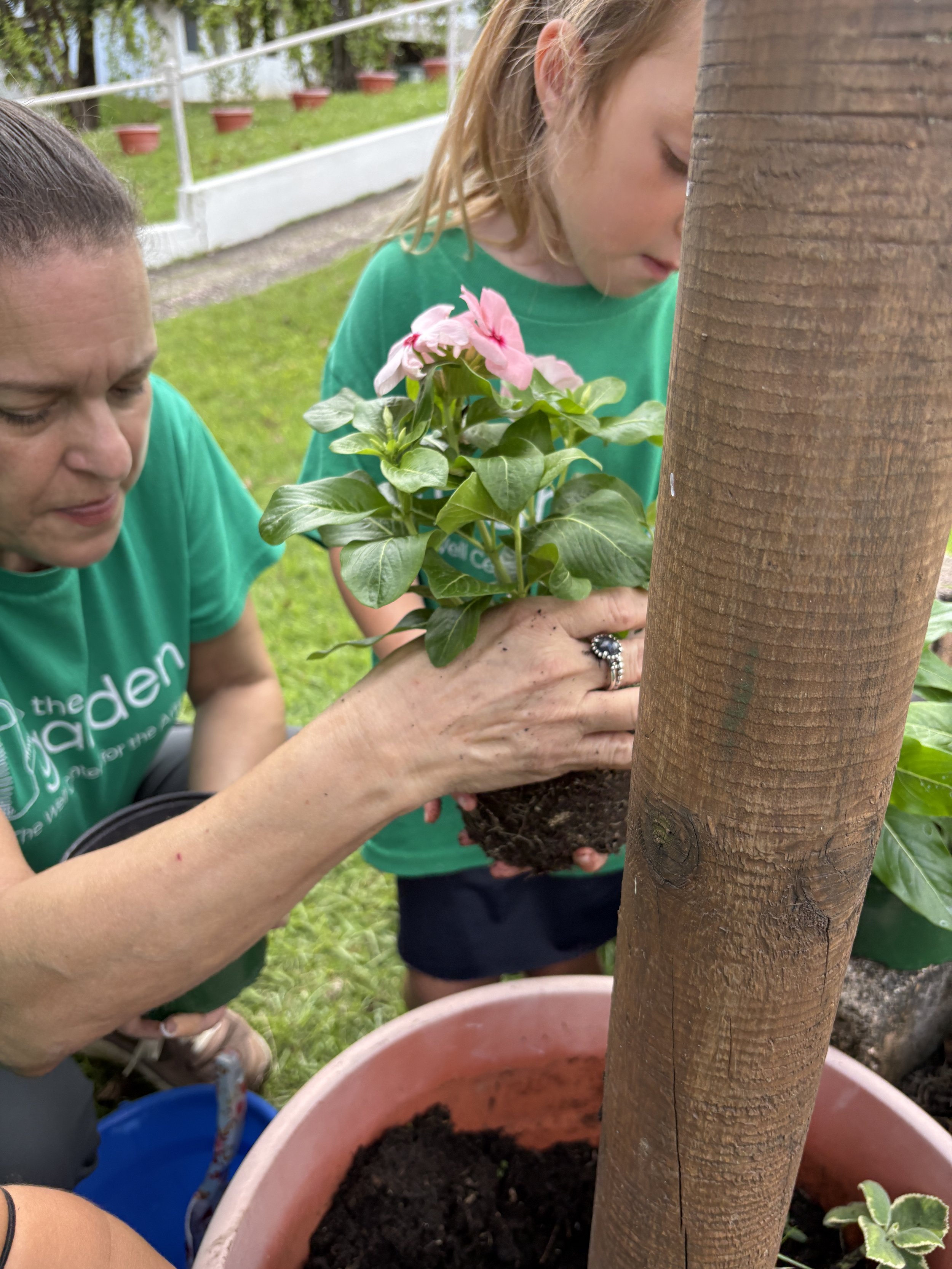
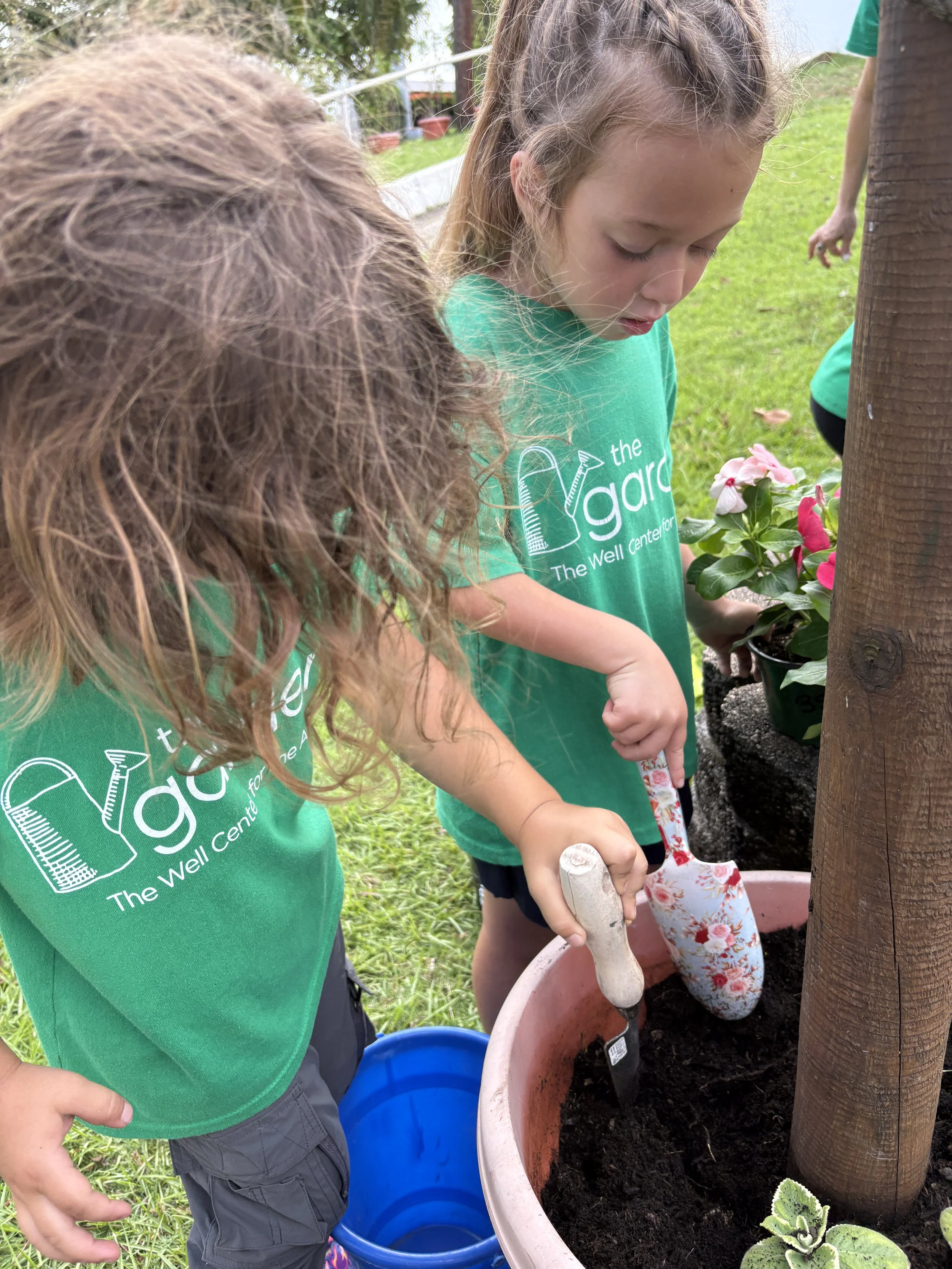
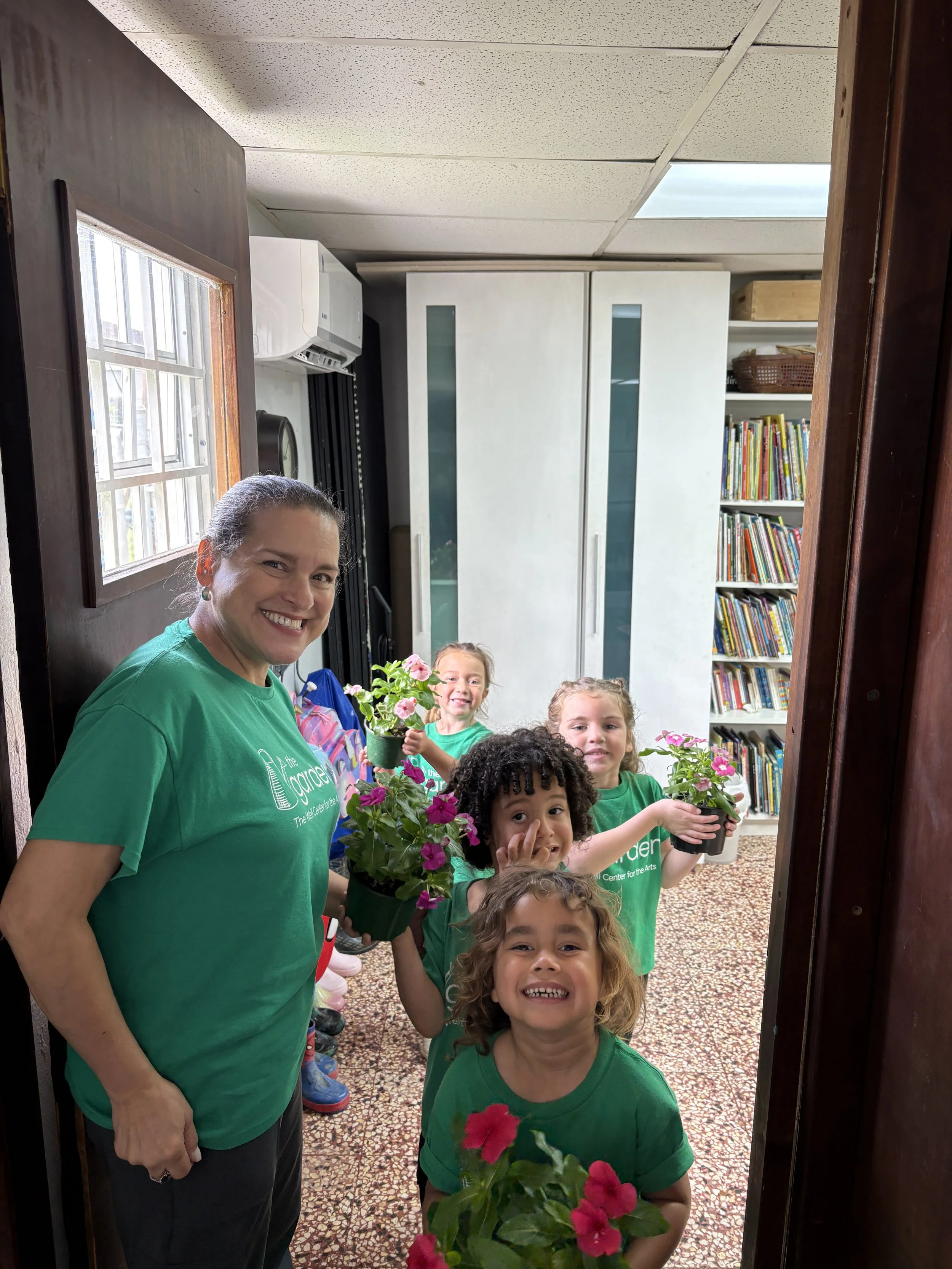
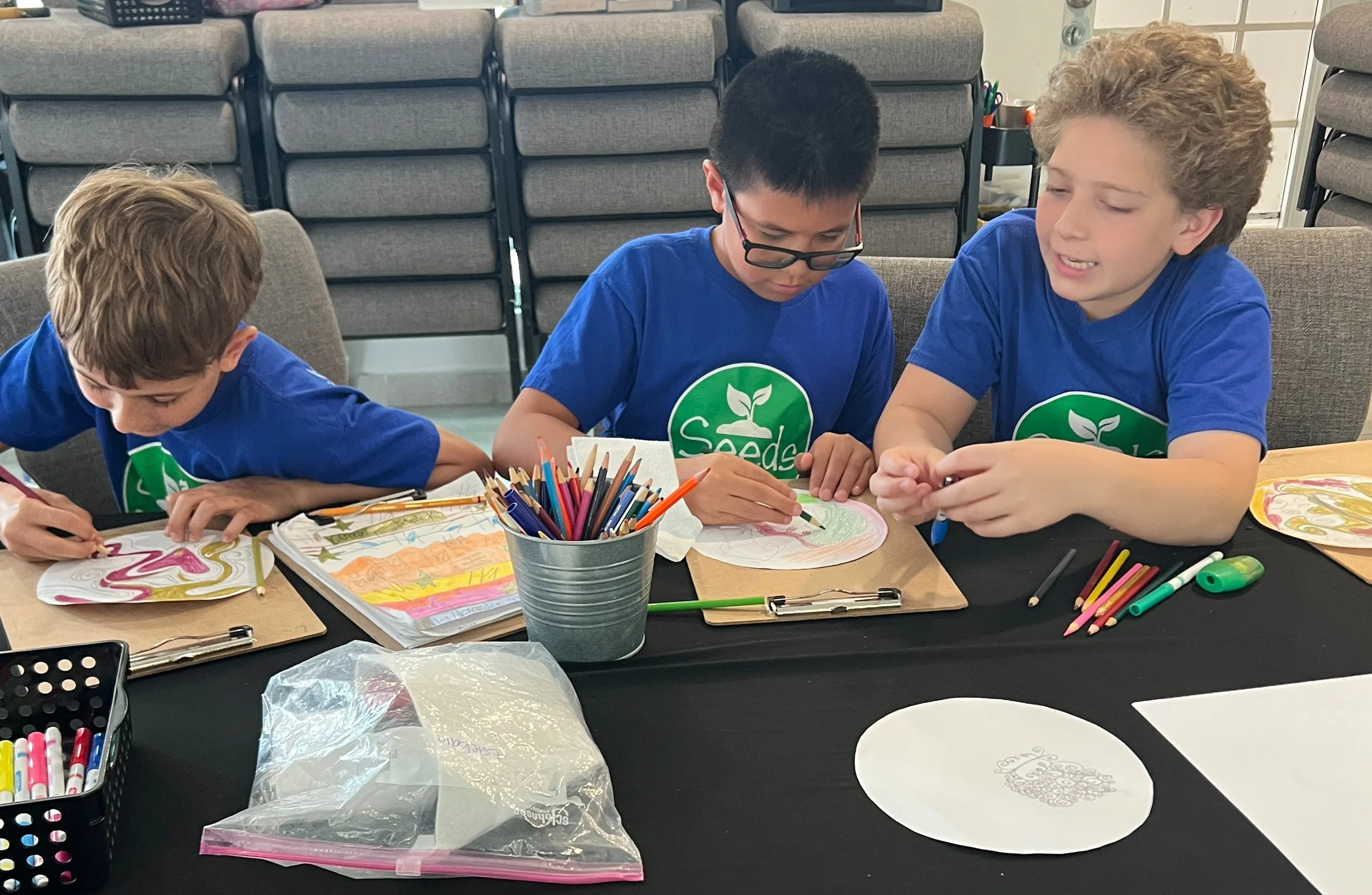
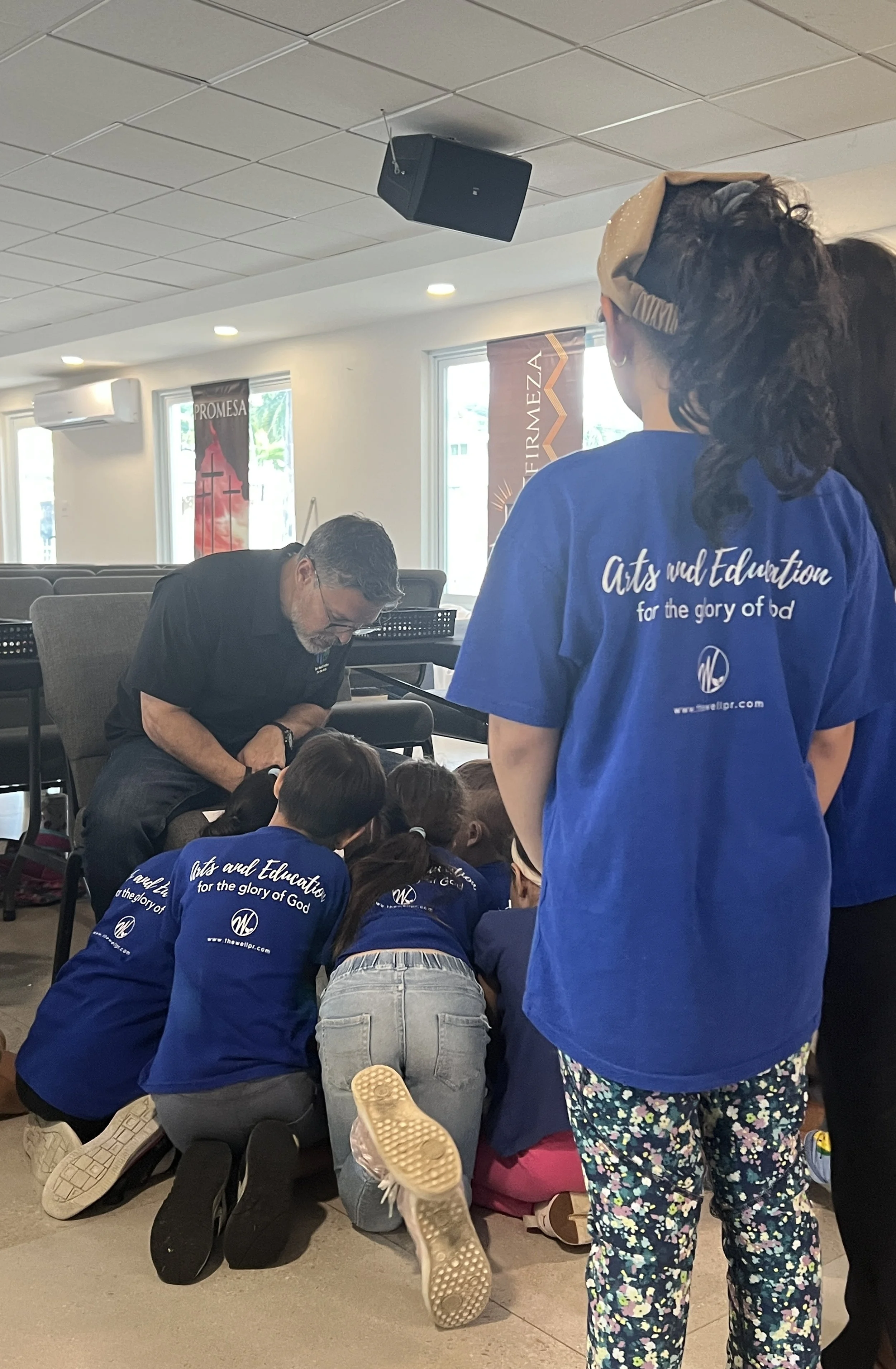
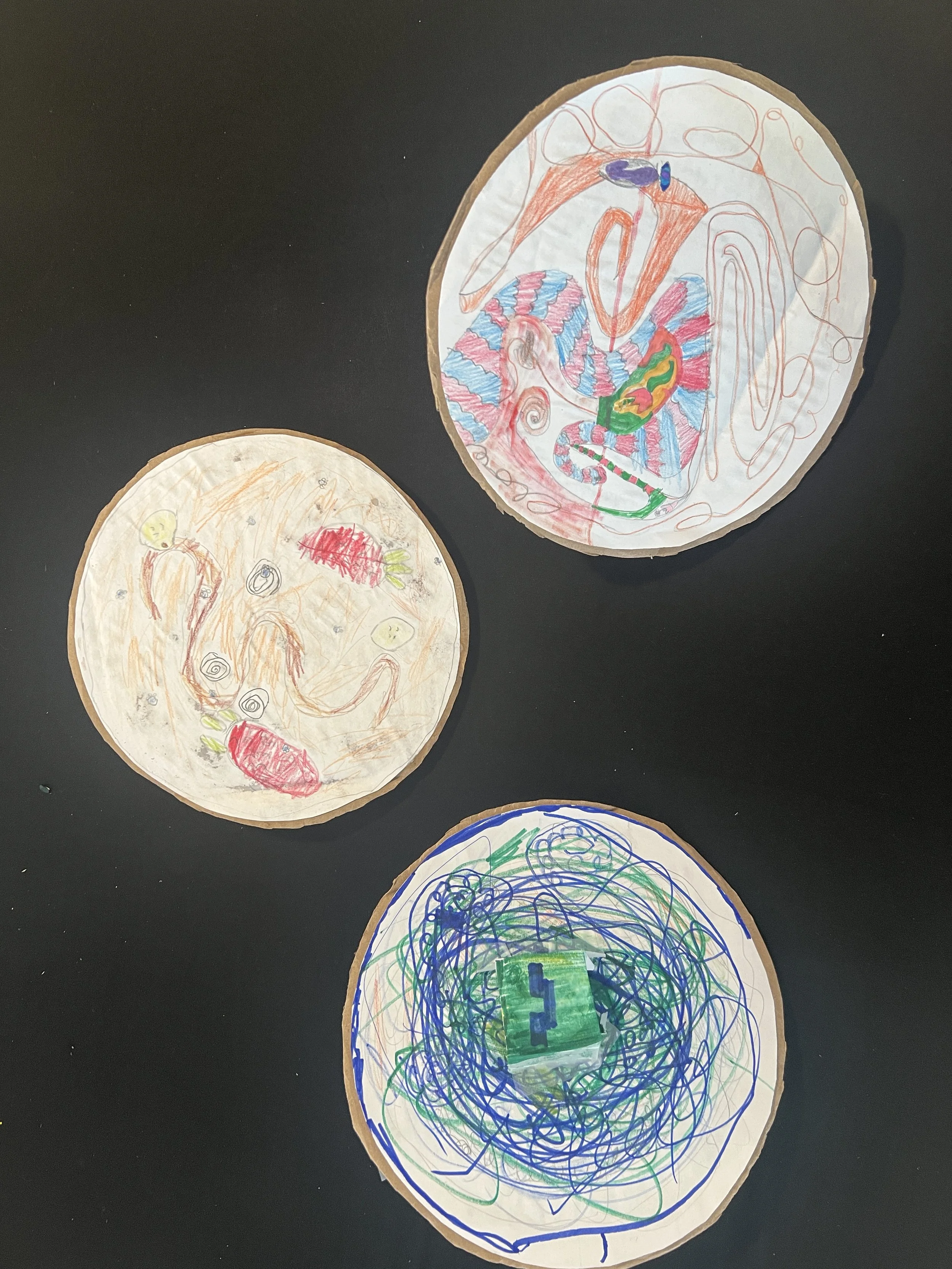
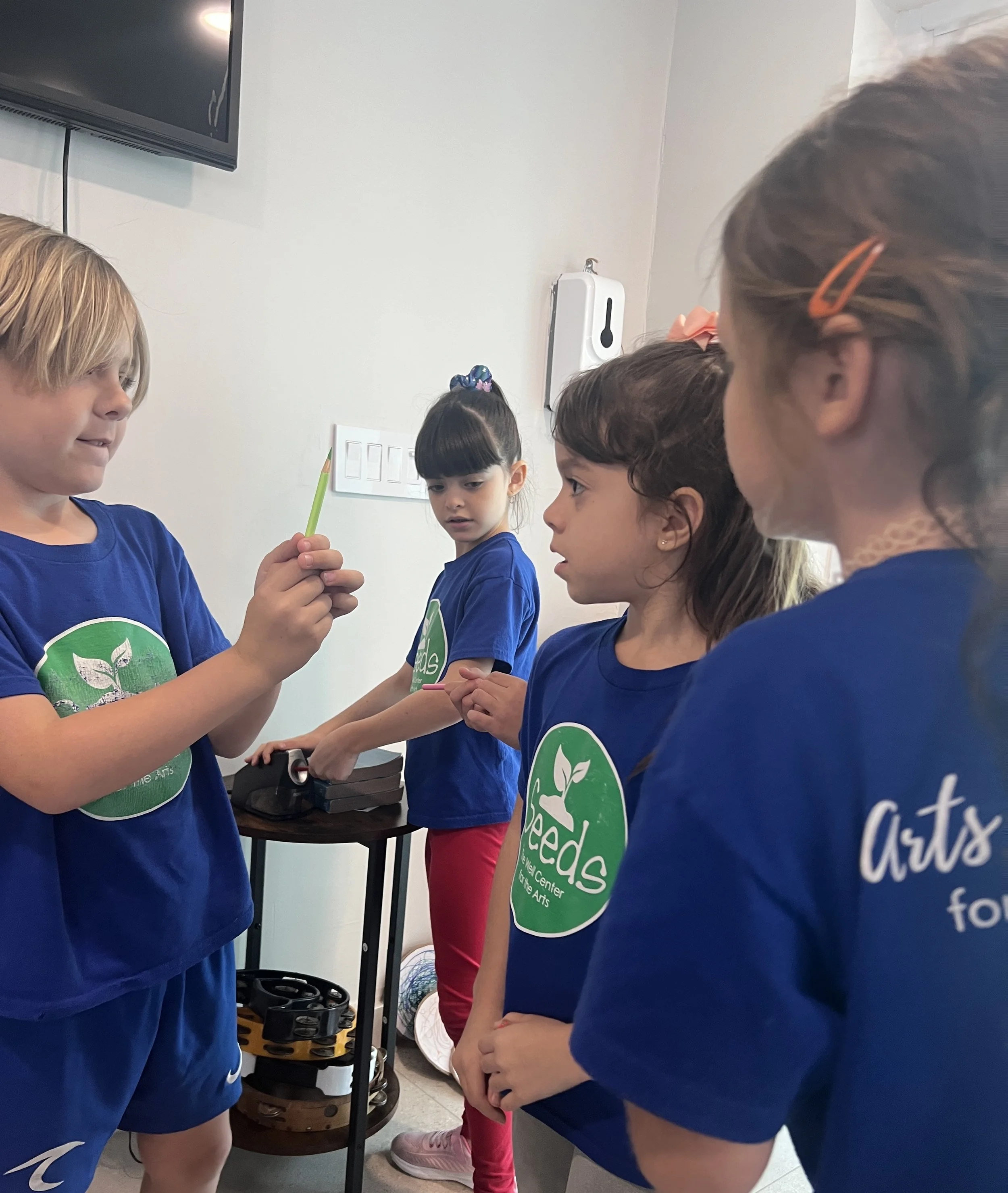
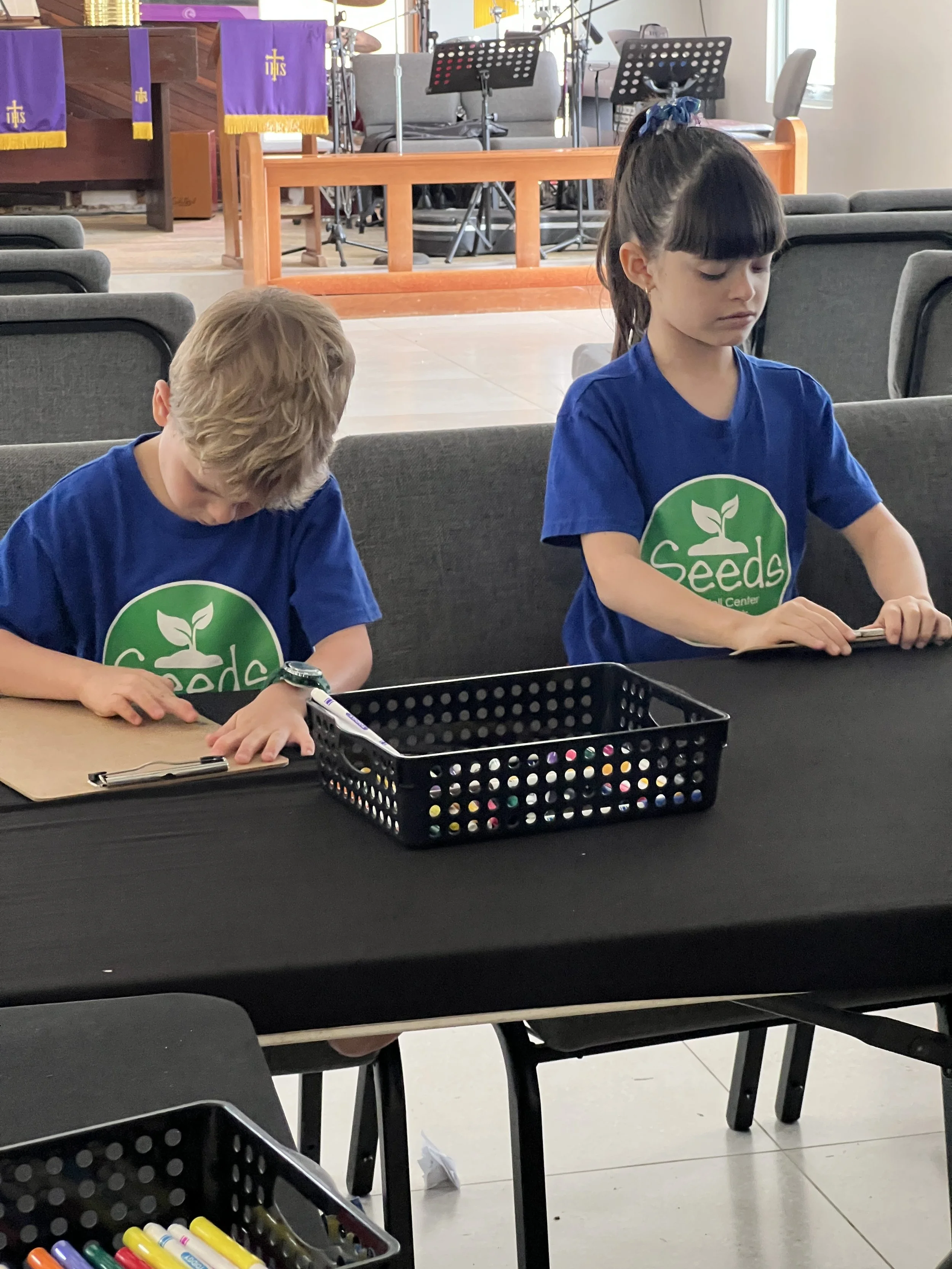
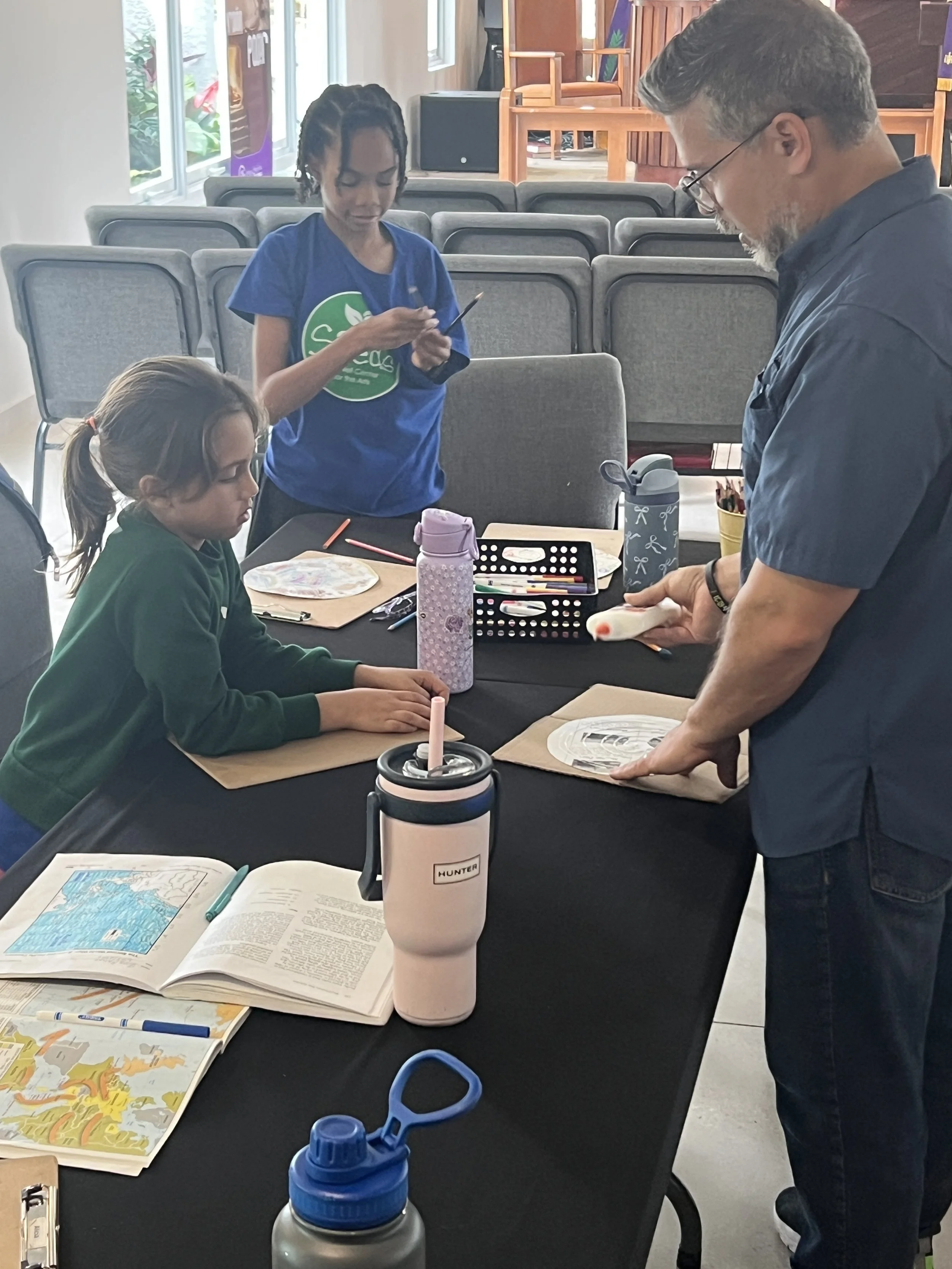
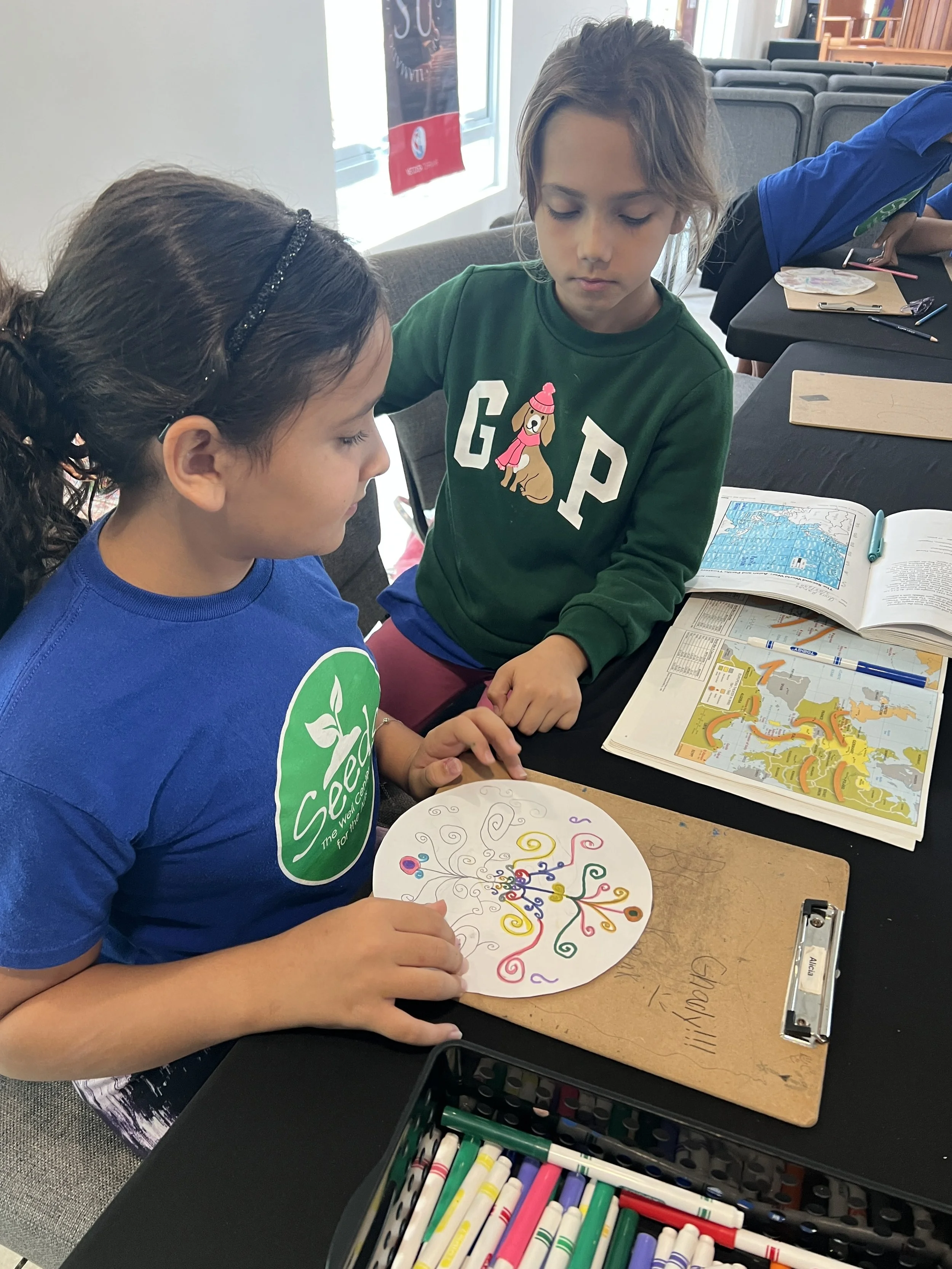
For activity time, we got to plant flowers by the well for the bees to enjoy. It was so much fun working with the soil and seeing the flower roots as we carefully pulled them out of their small pots to transfer them to a larger pot outside. We also went outside to look at and draw a picture of the flowers we planted by the well. It’s called observational drawing, where you look at something in real life (still life) and transfer it to paper. It’s great for improving hand-eye coordination. The kids really enjoyed doing this and took it very seriously.
Story: How do Flowers Grow ?
The Seeds Program
BIBLE
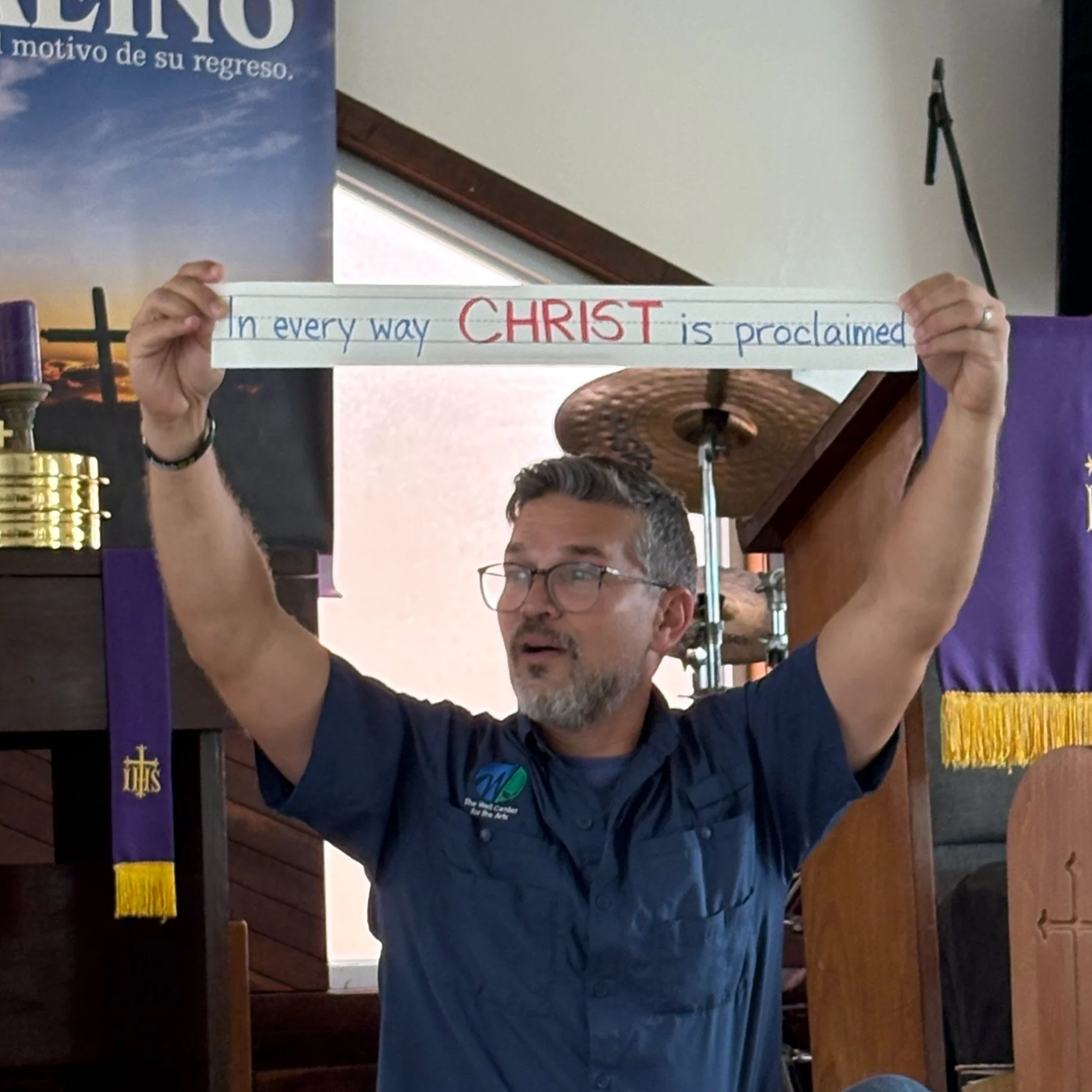
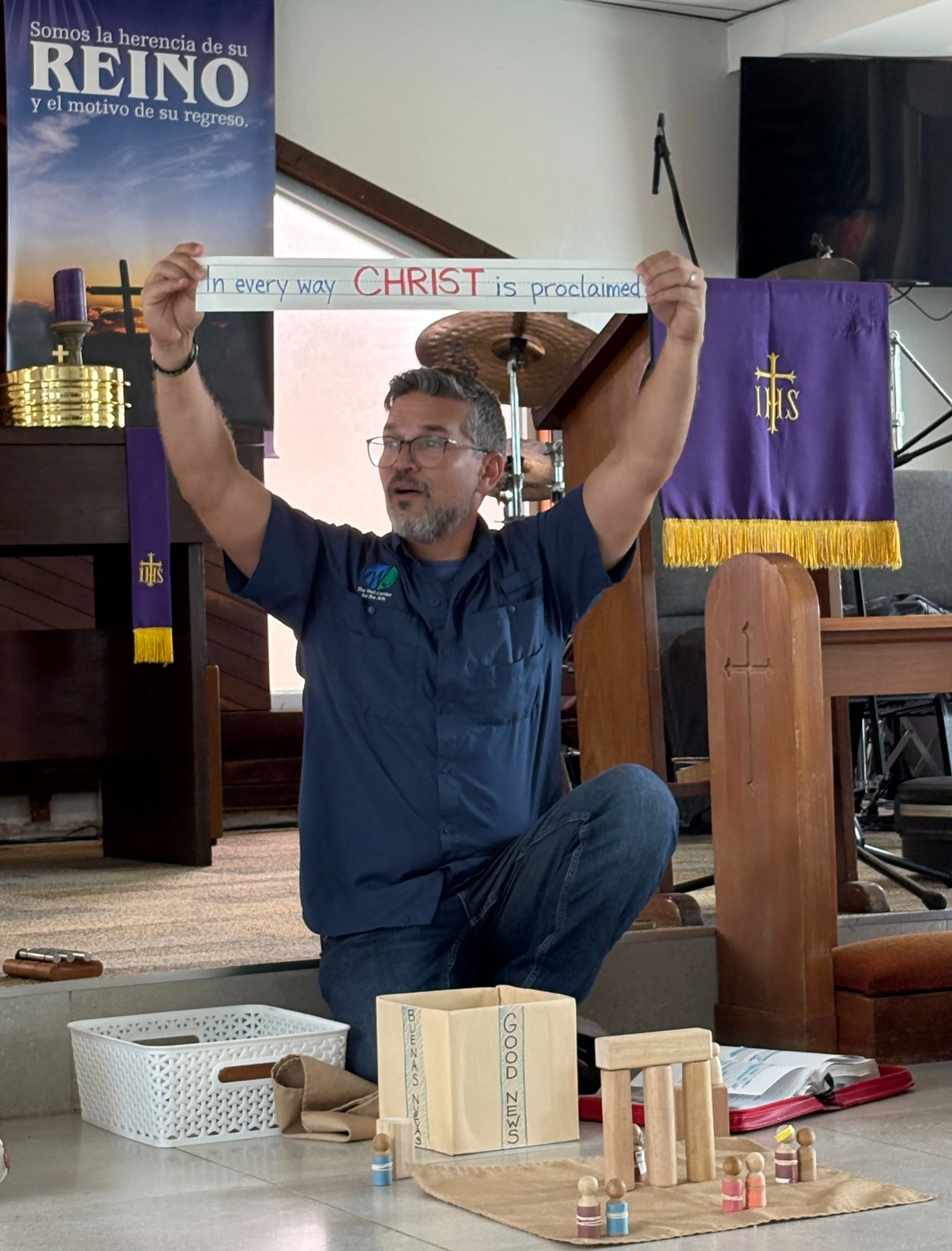
In the letter to the Philippians, Paul continued to encourage the church to live with JOY no matter what they experienced. The big lesson for us was to take every opportunity to PROCLAIM CHRIST! Especially in this time where many people remember Christ’s death and resurrection, what an amazing moment to do just that!
SUGGESTED READINGS
Bible
Philippians 1
STUDIO TIME
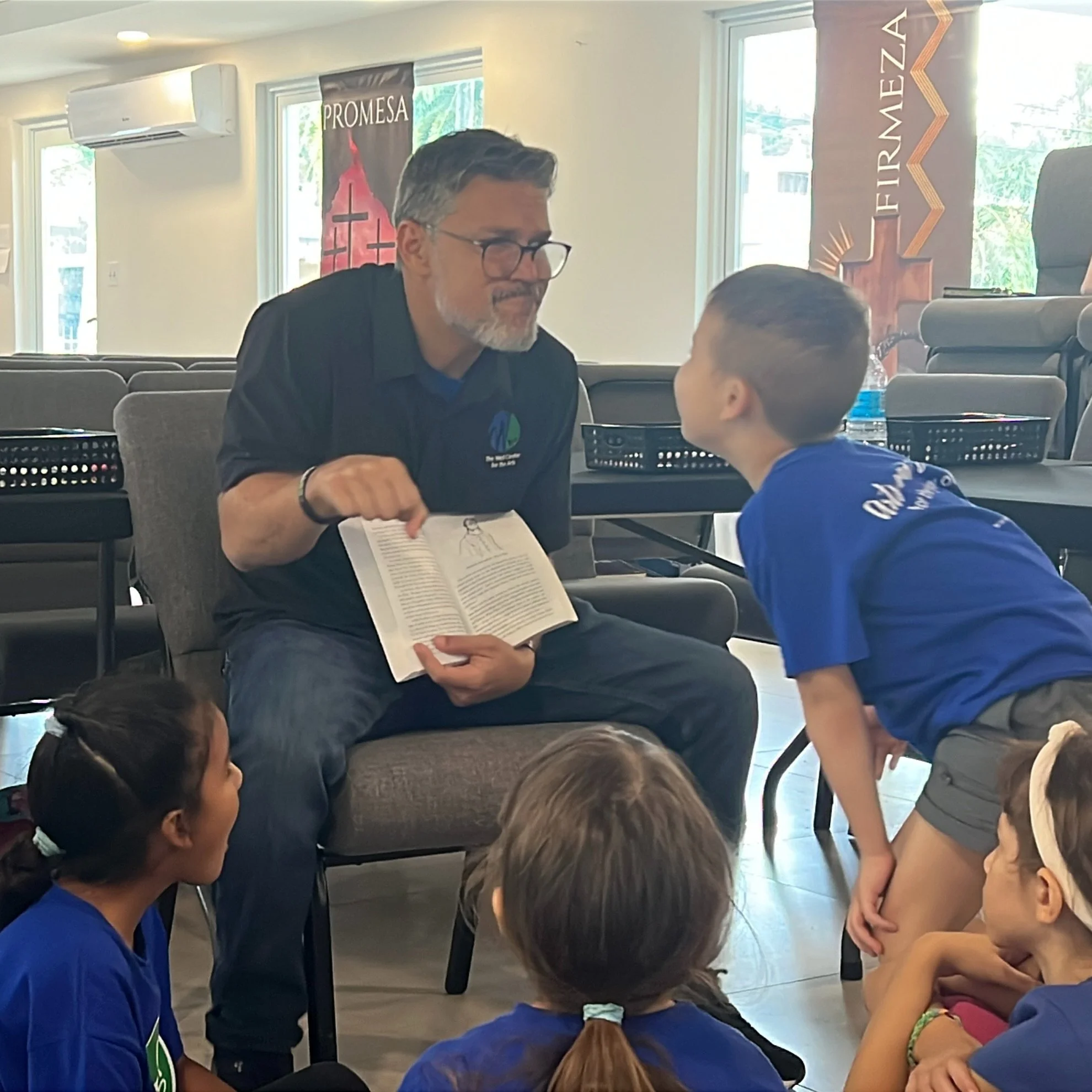
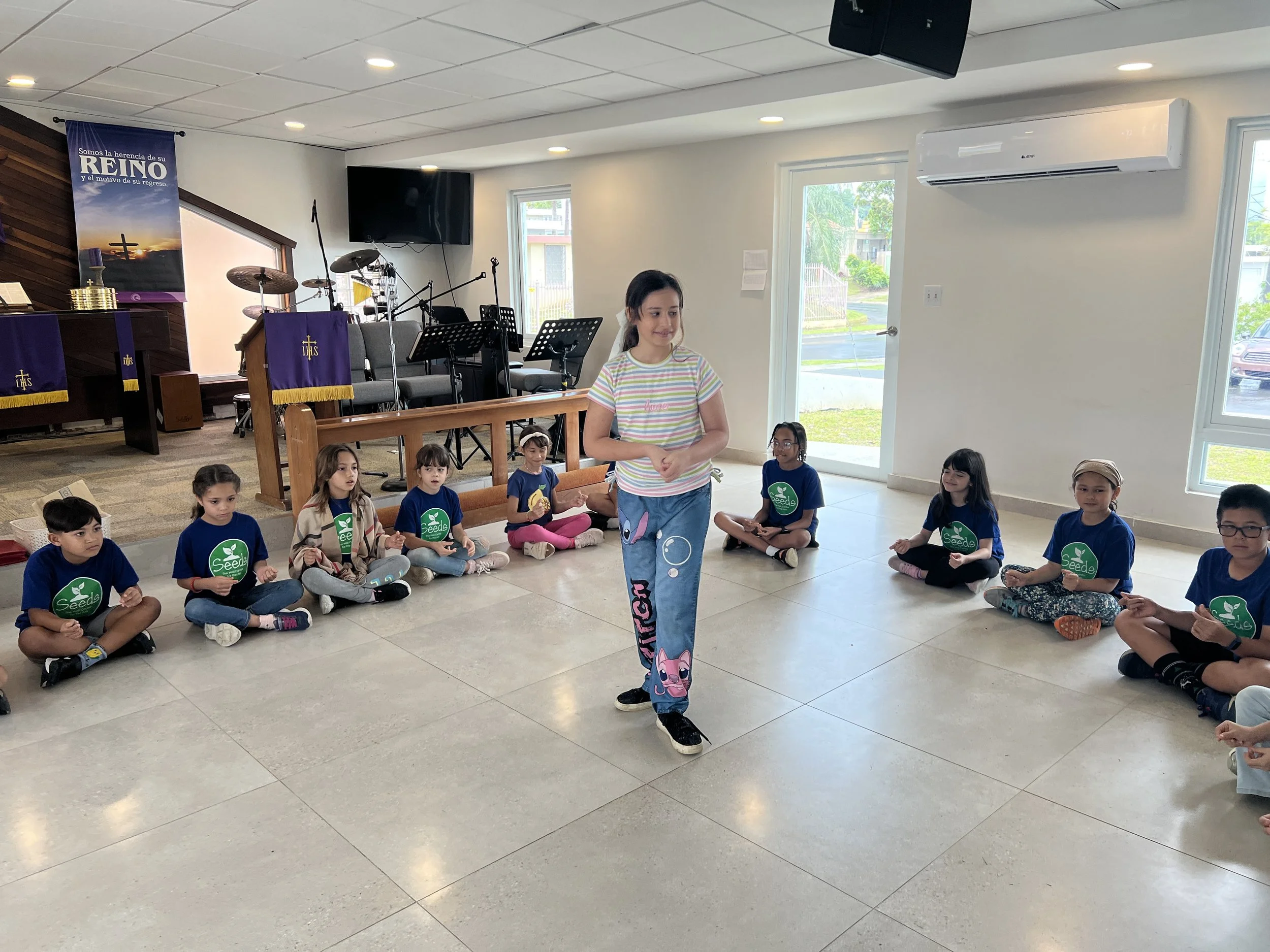
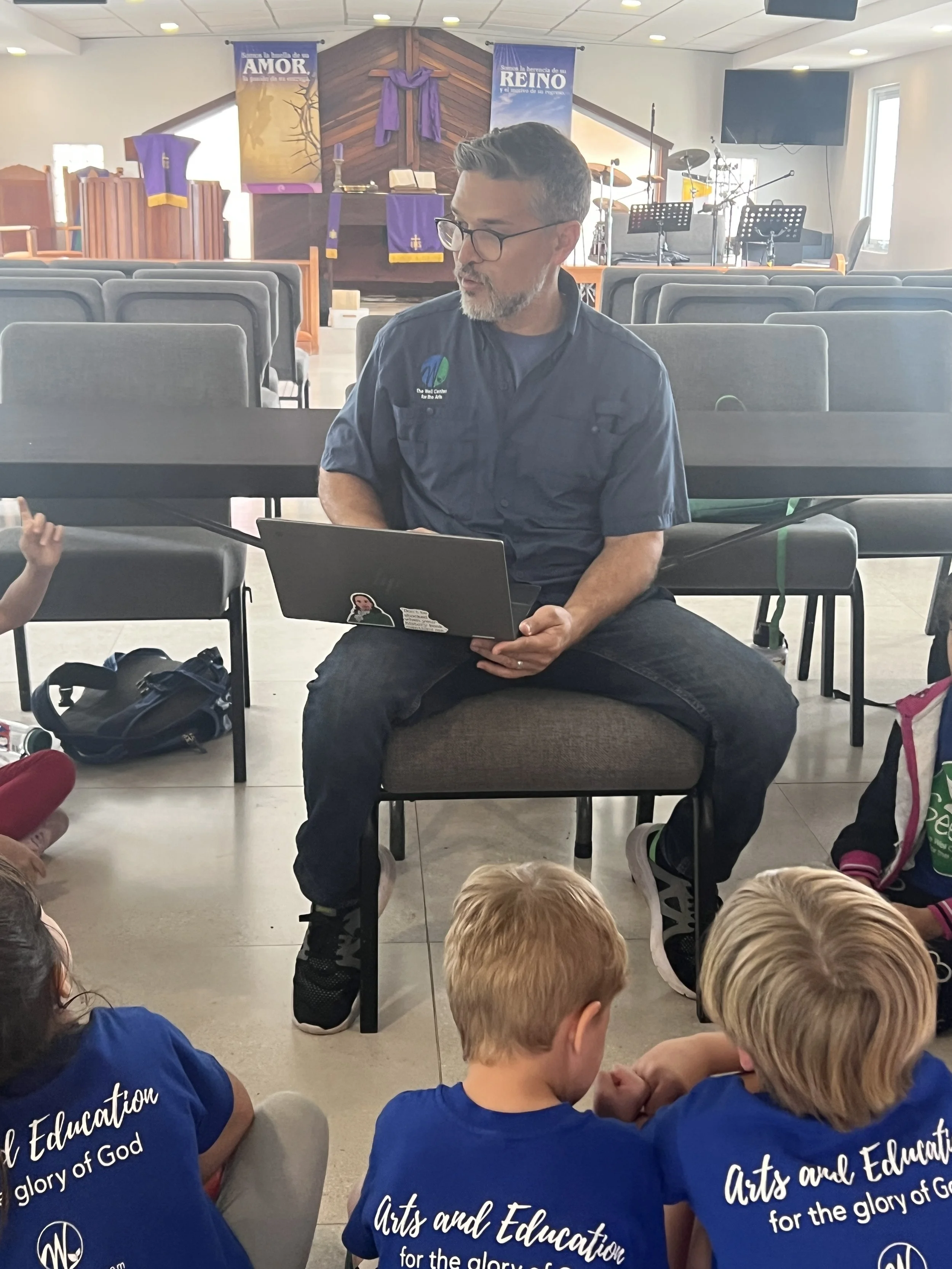
In Studio Time, we began to learn about the life of Beethoven. We learned that unlike Mozart, he was not a child prodigy. The kids loved hearing the first “tun, tun, tun, TUN” of his famous 9th symphony. We discussed the facts they heard about his life and the younger group even had the opportunity to use the silk scarves to dance to the music. We will continue to explore some of his most well-known compositions when we return from break.
HISTORY
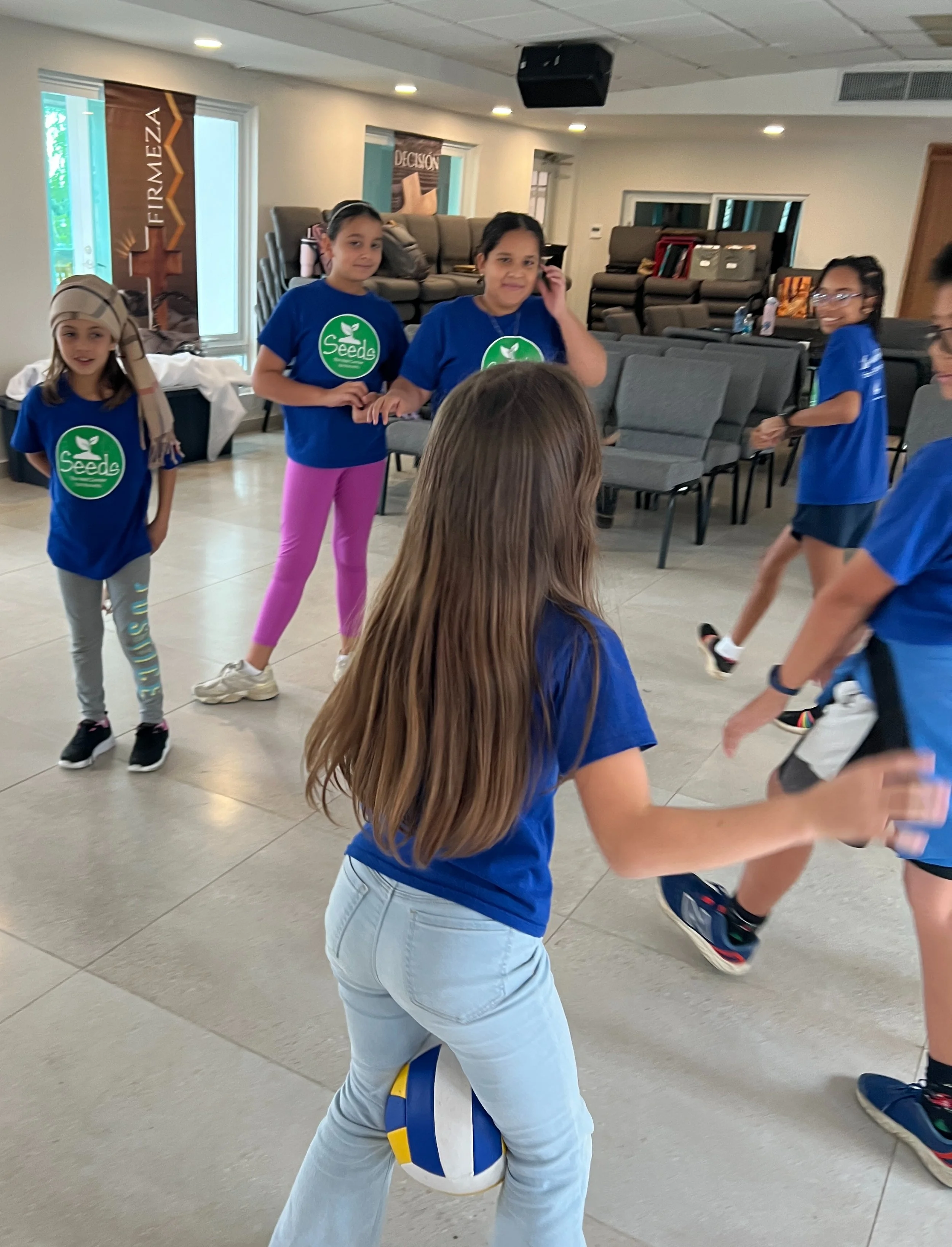
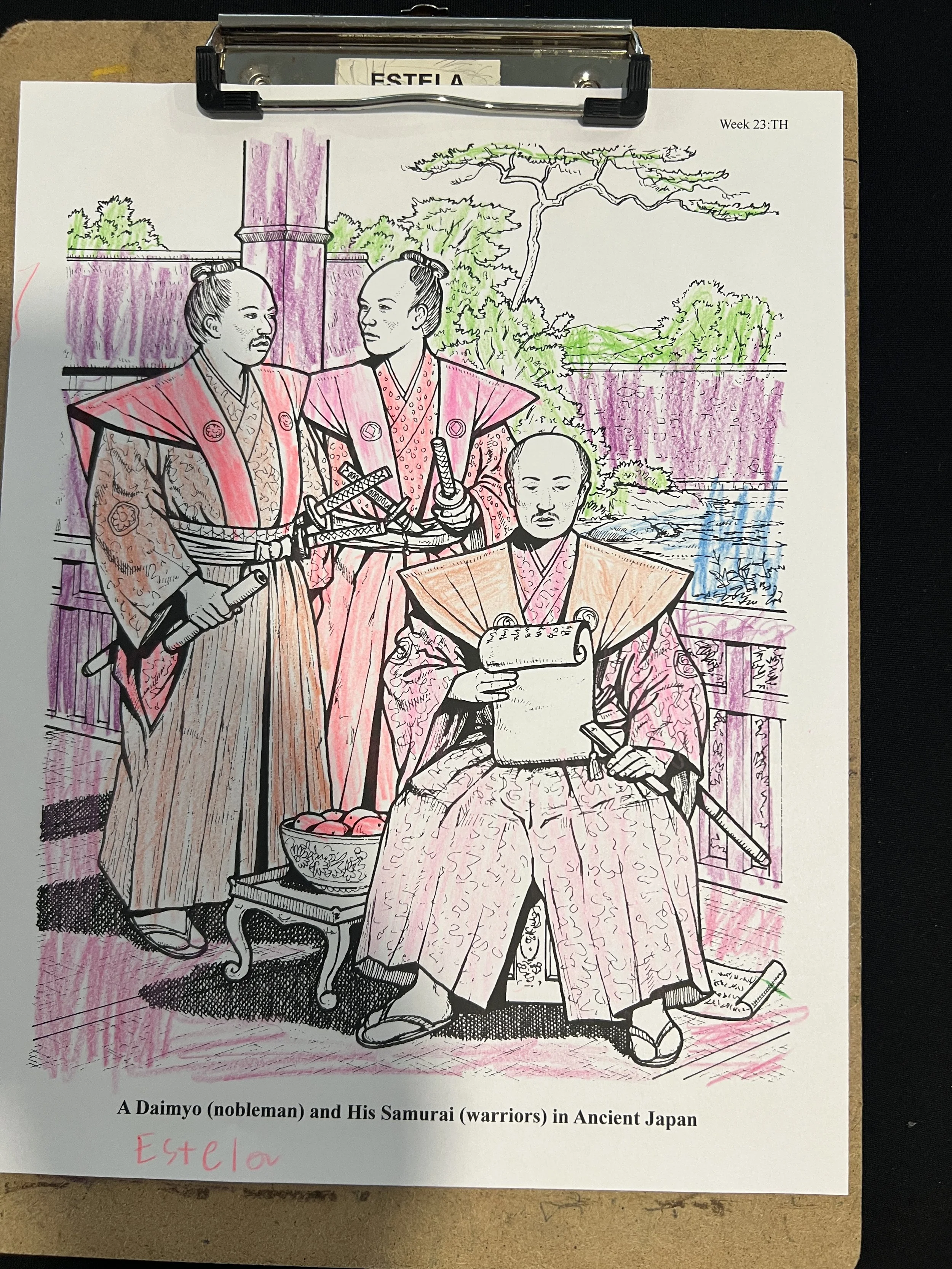
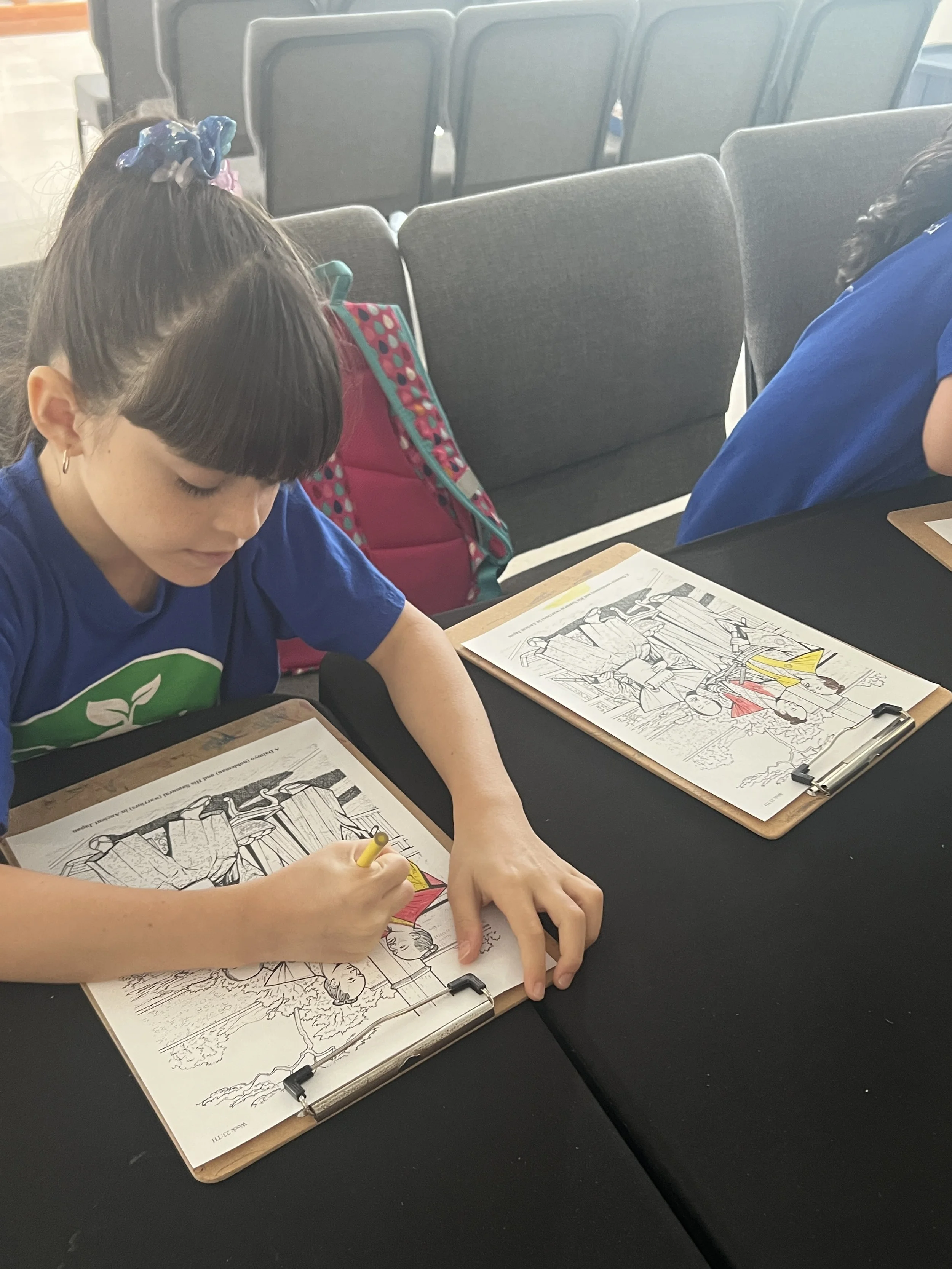
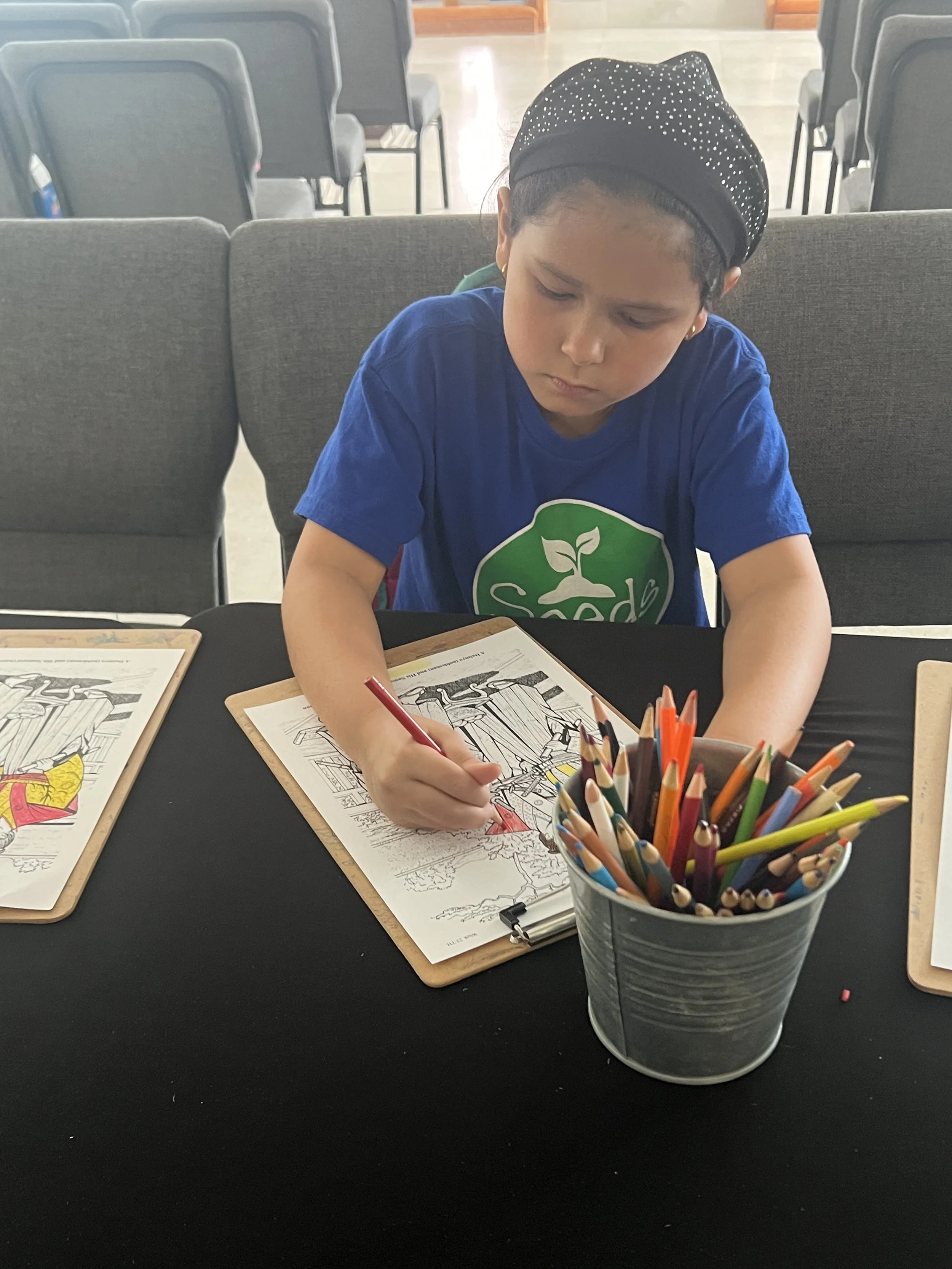
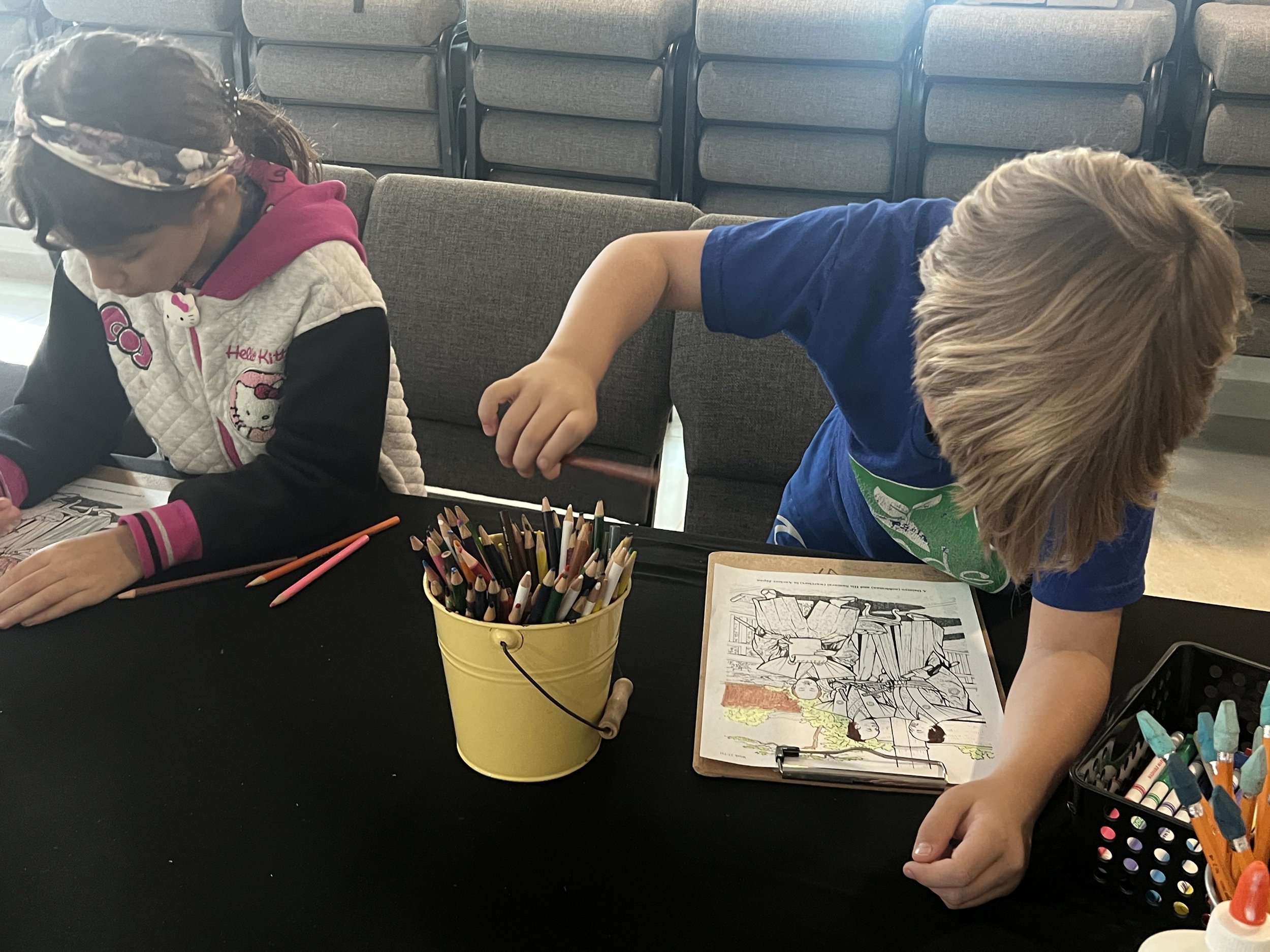
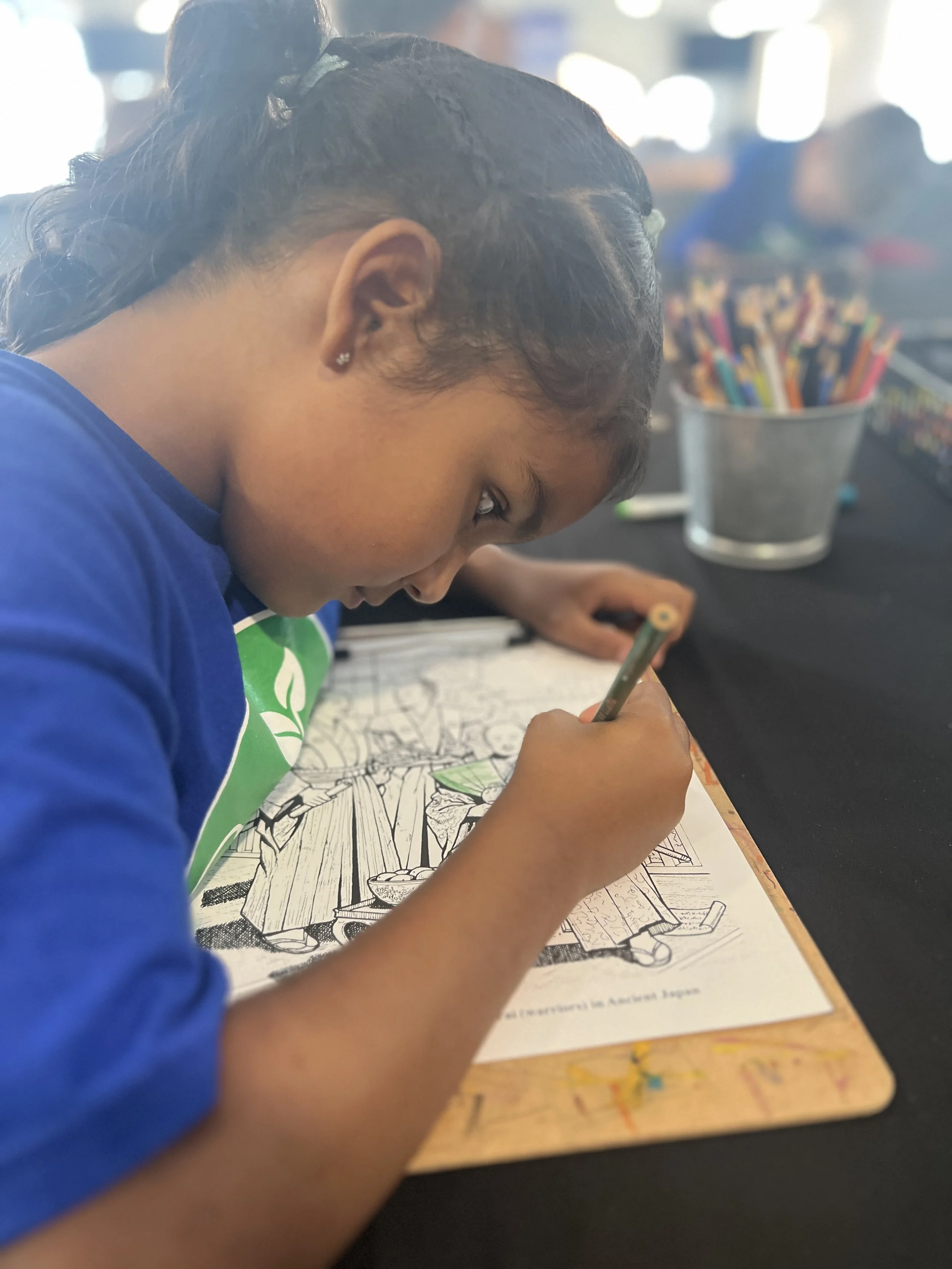
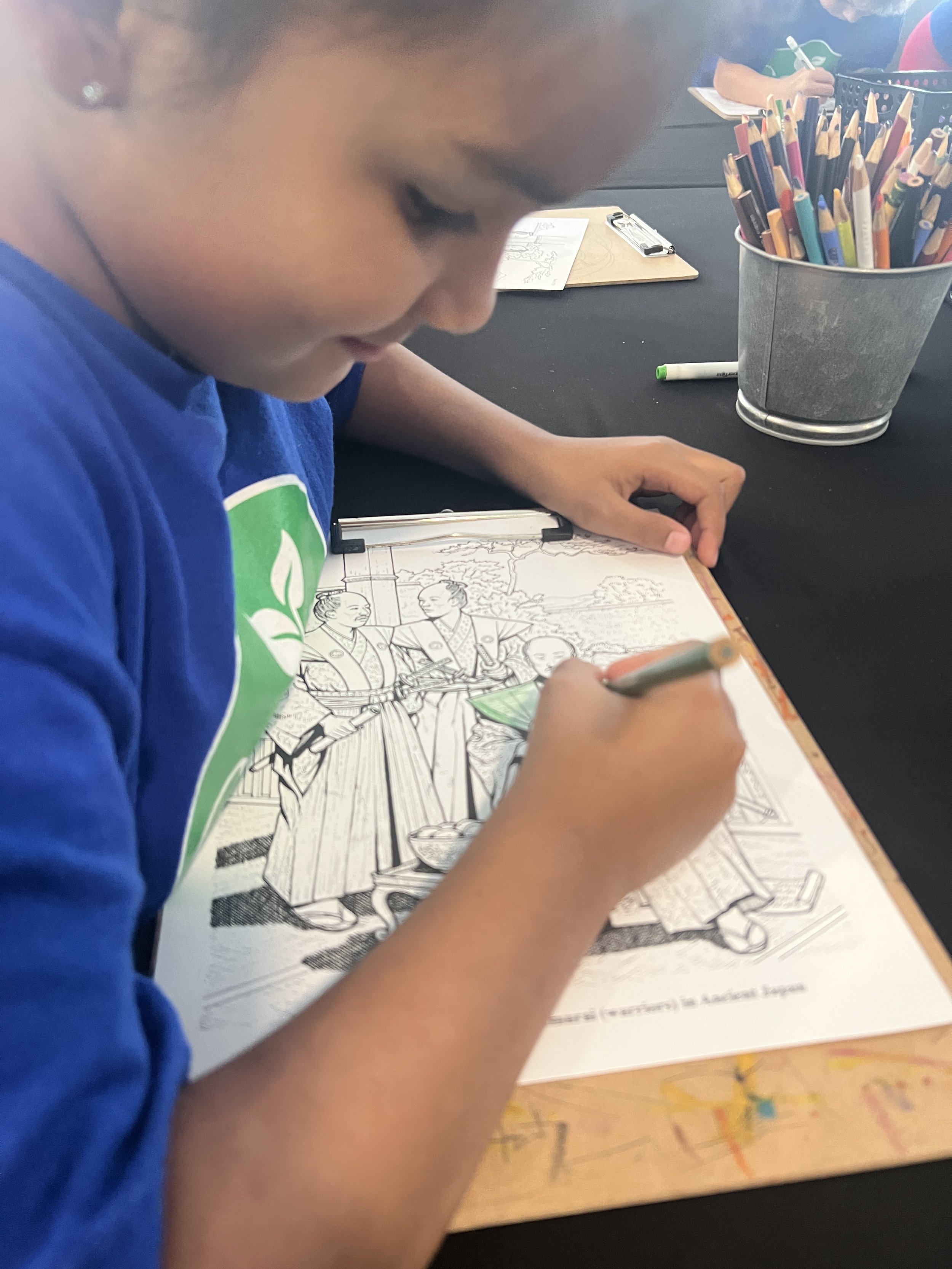
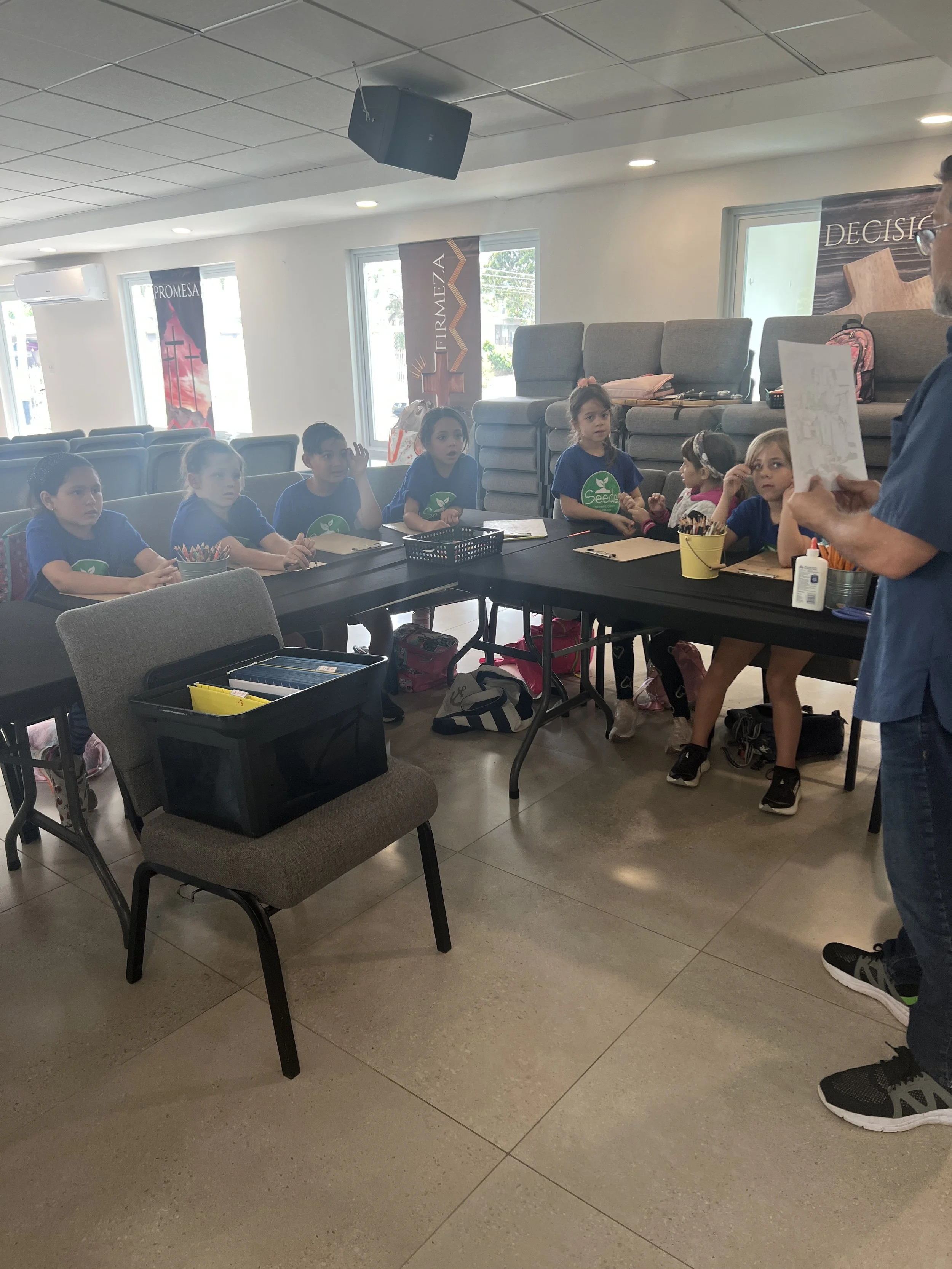
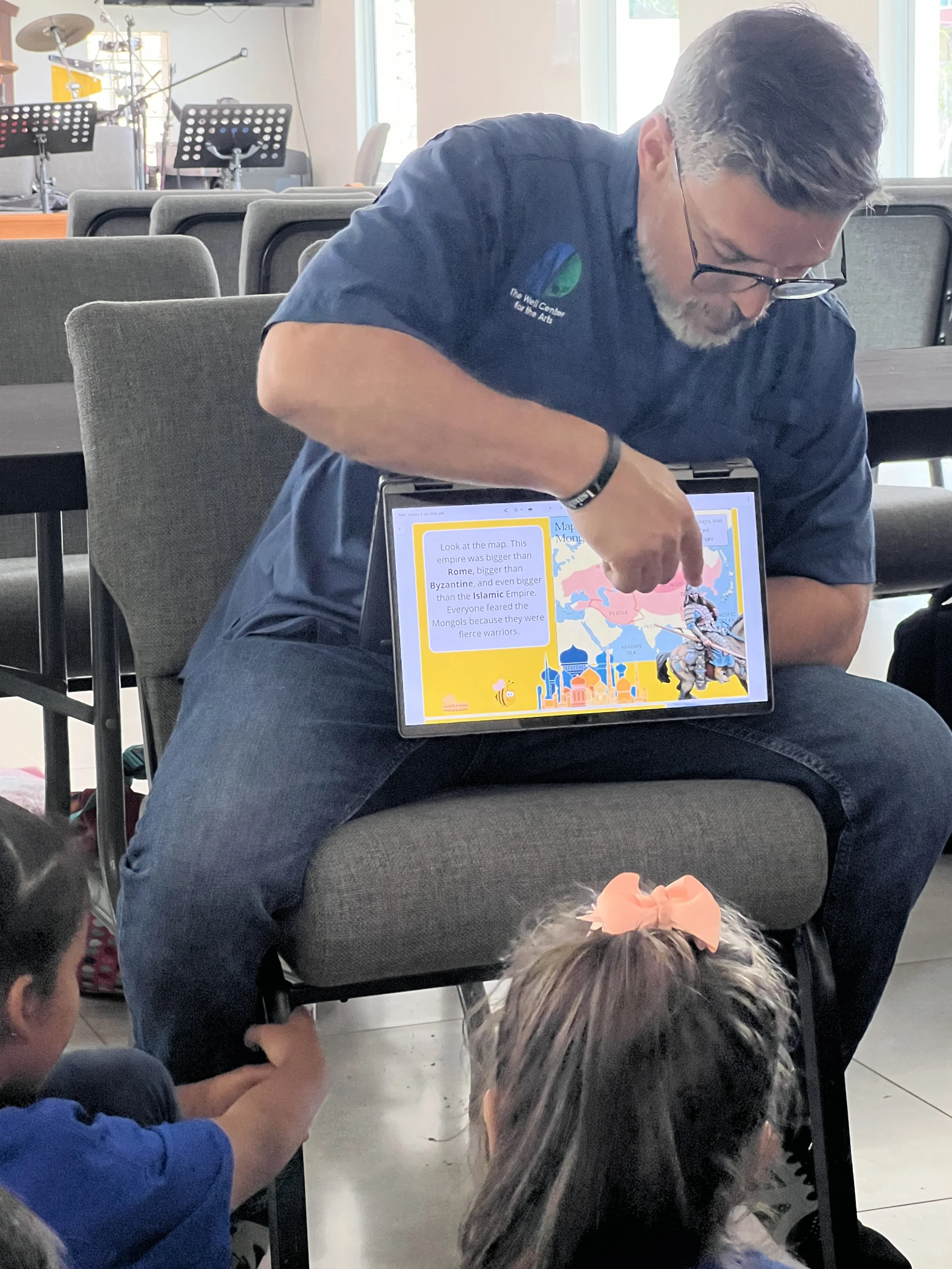
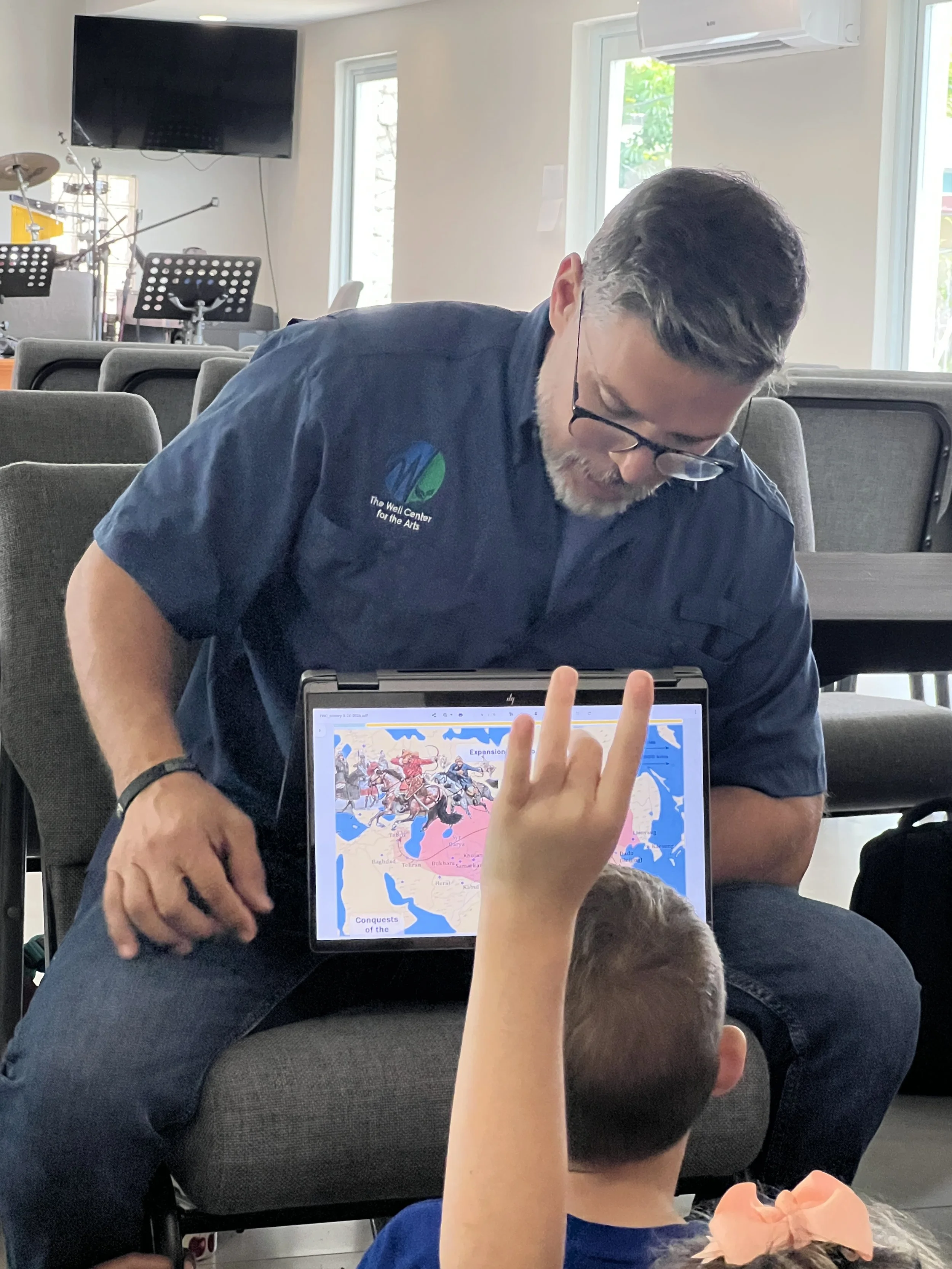
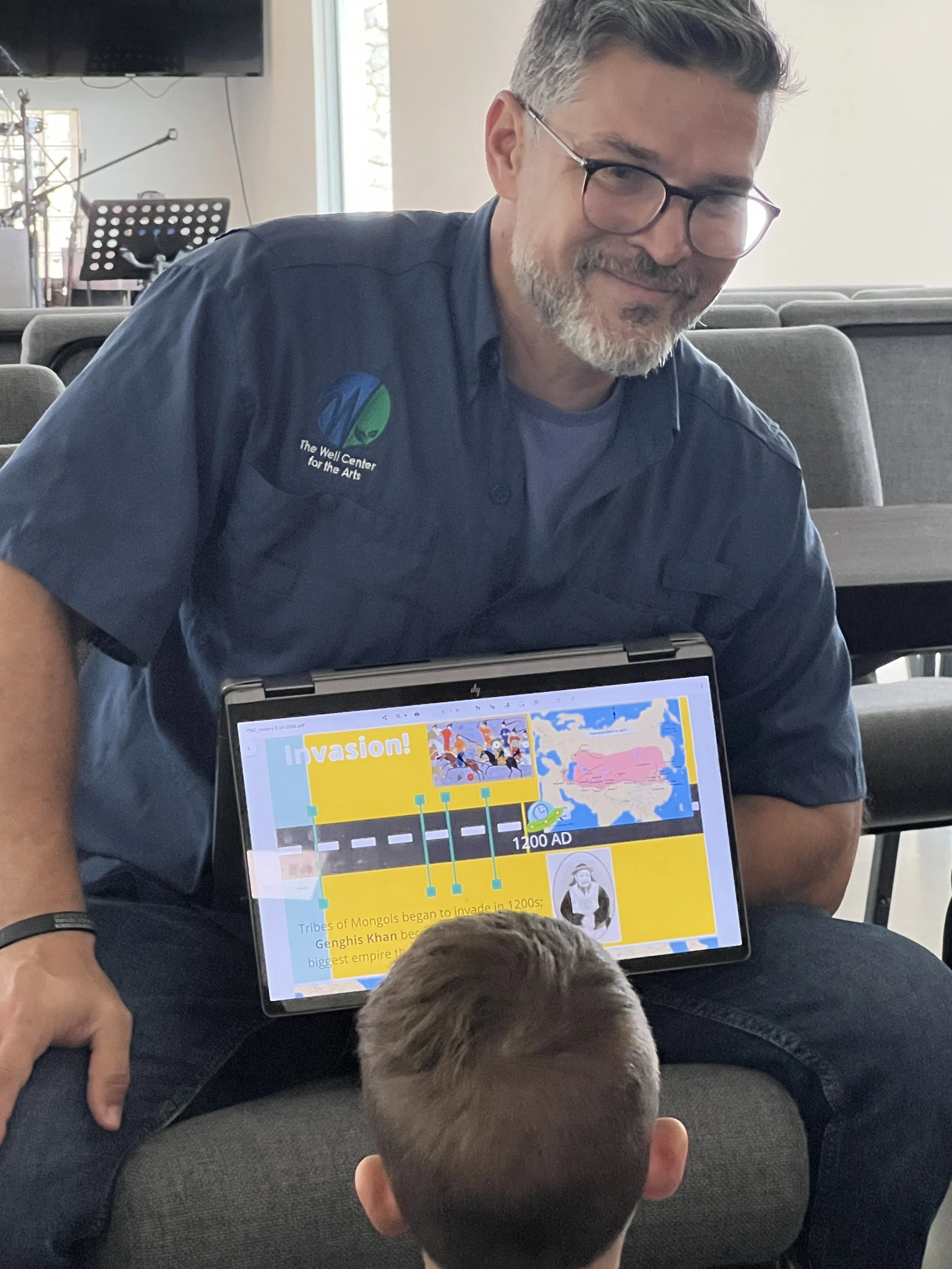
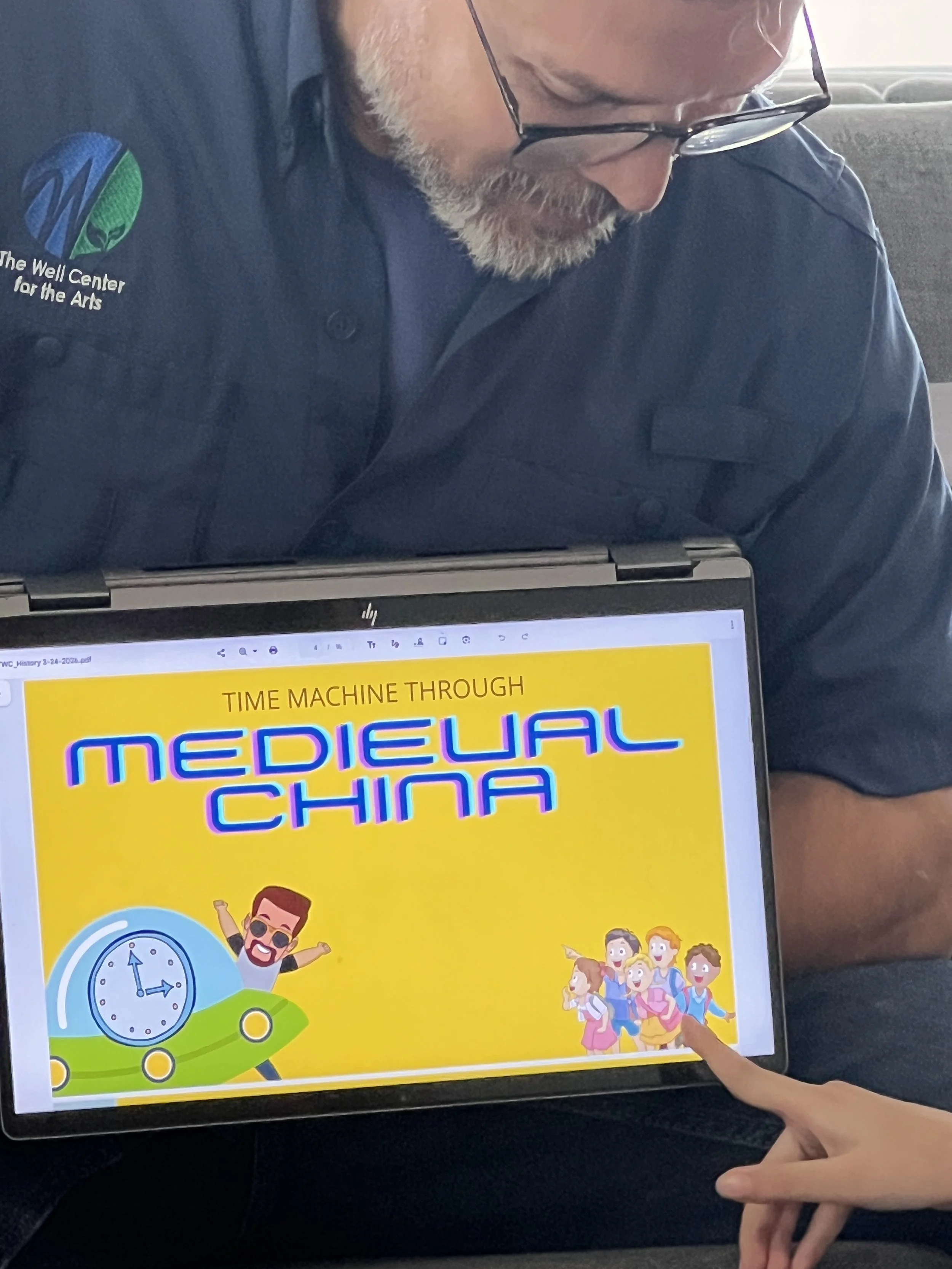
We continued our study into the Medieval period of Asia. Many of the students completed their shields as they listened to stories about Marco Polo’s expeditions to China and some of the social systems that existed in Japan during these times. We even got to play our version of Marco Polo inside (and without water!)
SUGGESTED READINGS
World History from Ancient to Modern Times
P. 156-157 - Mongol Invaders
P. 175 -Mongol Invaders, Ming Dynasty
P. 178-179 - Explorers and Sailors
PHYSICAL EDUCATION
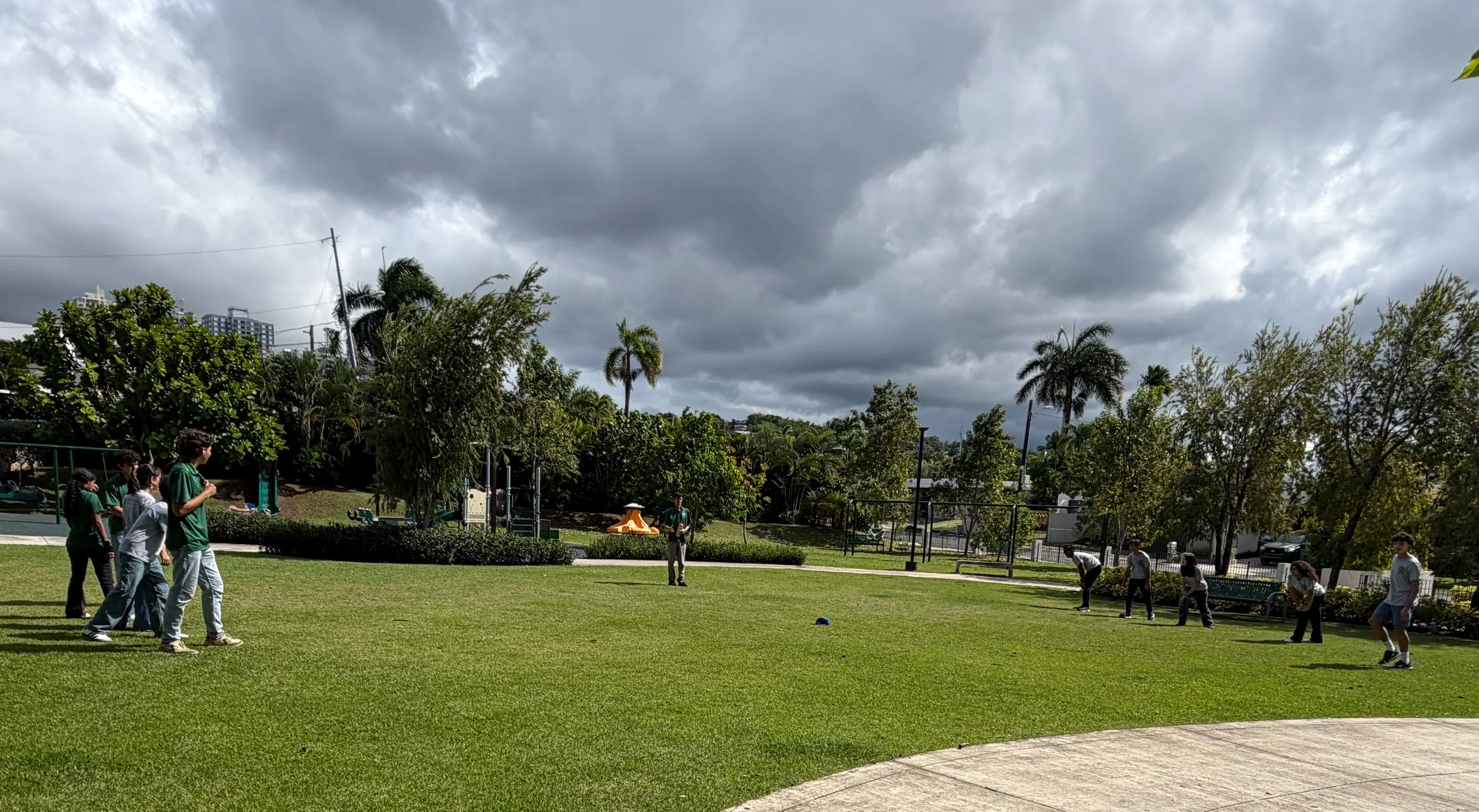
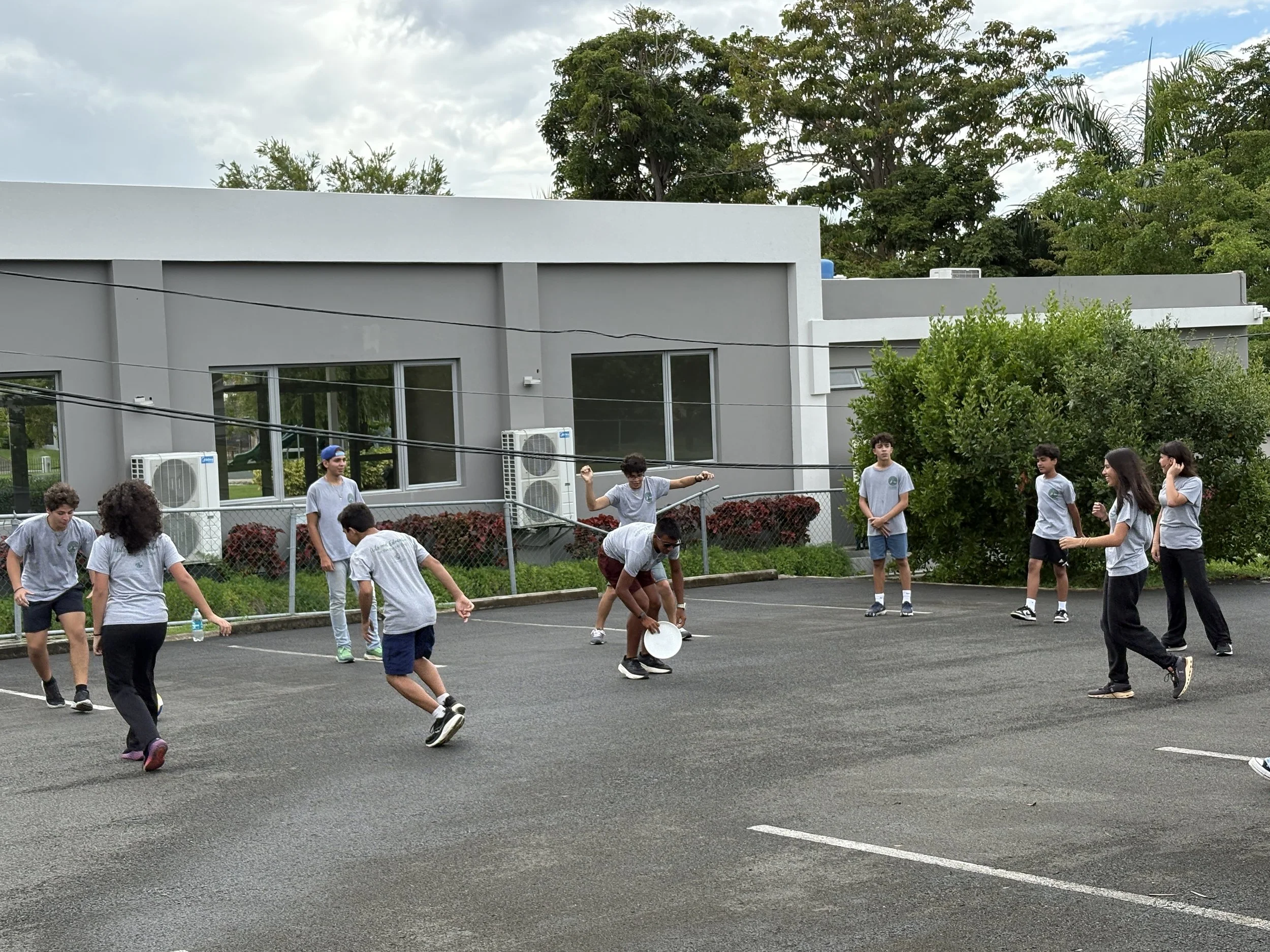
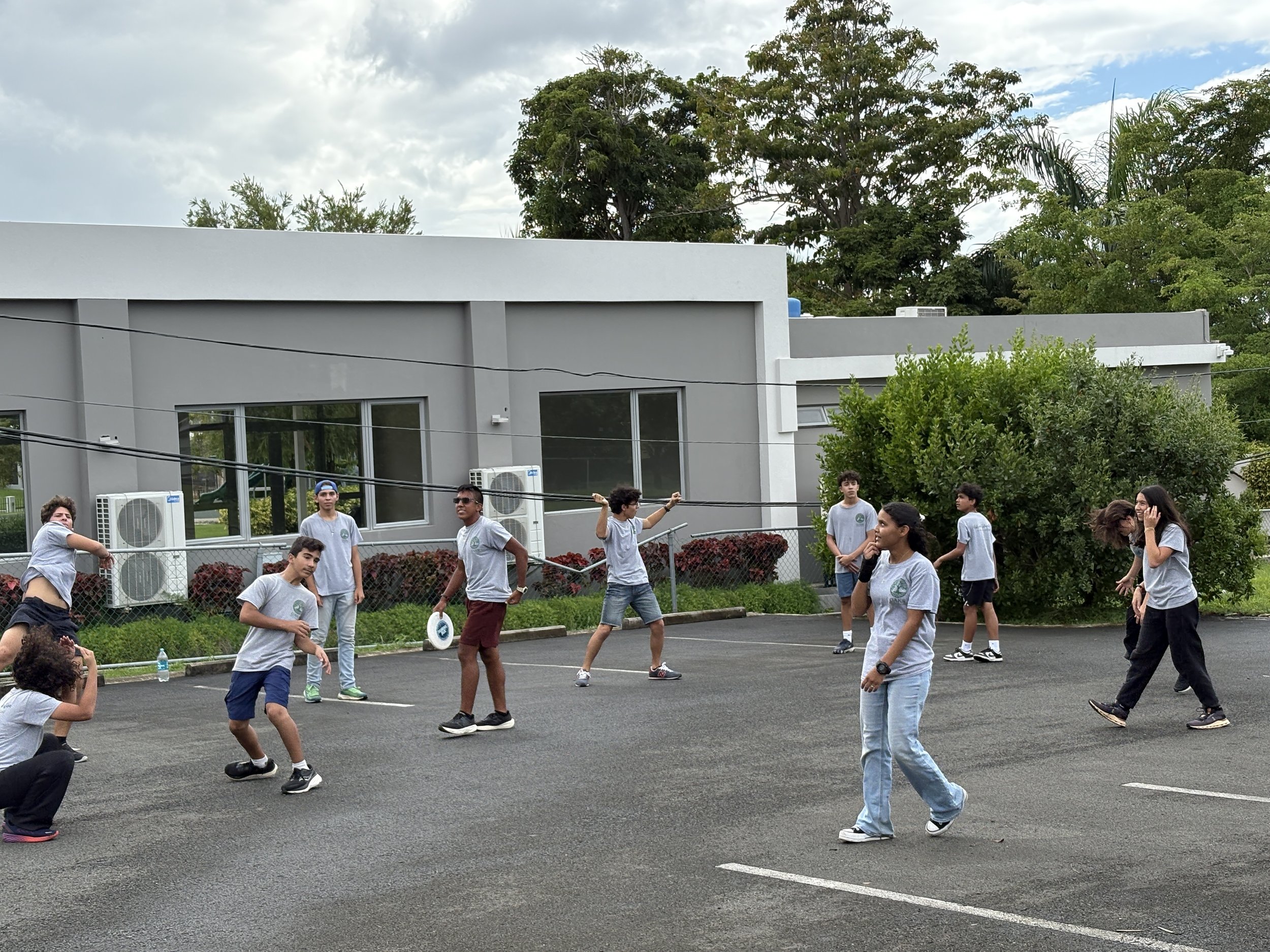
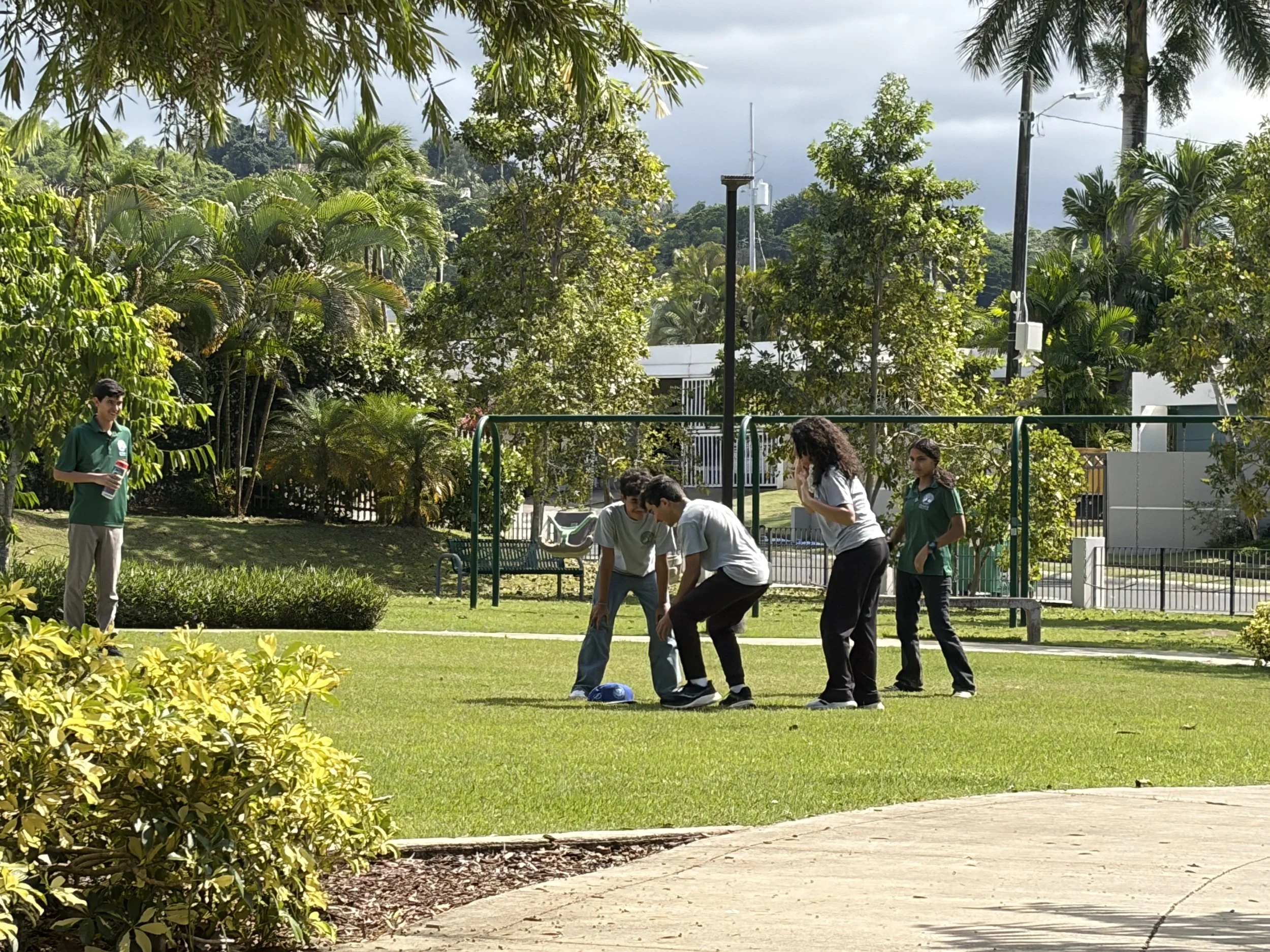
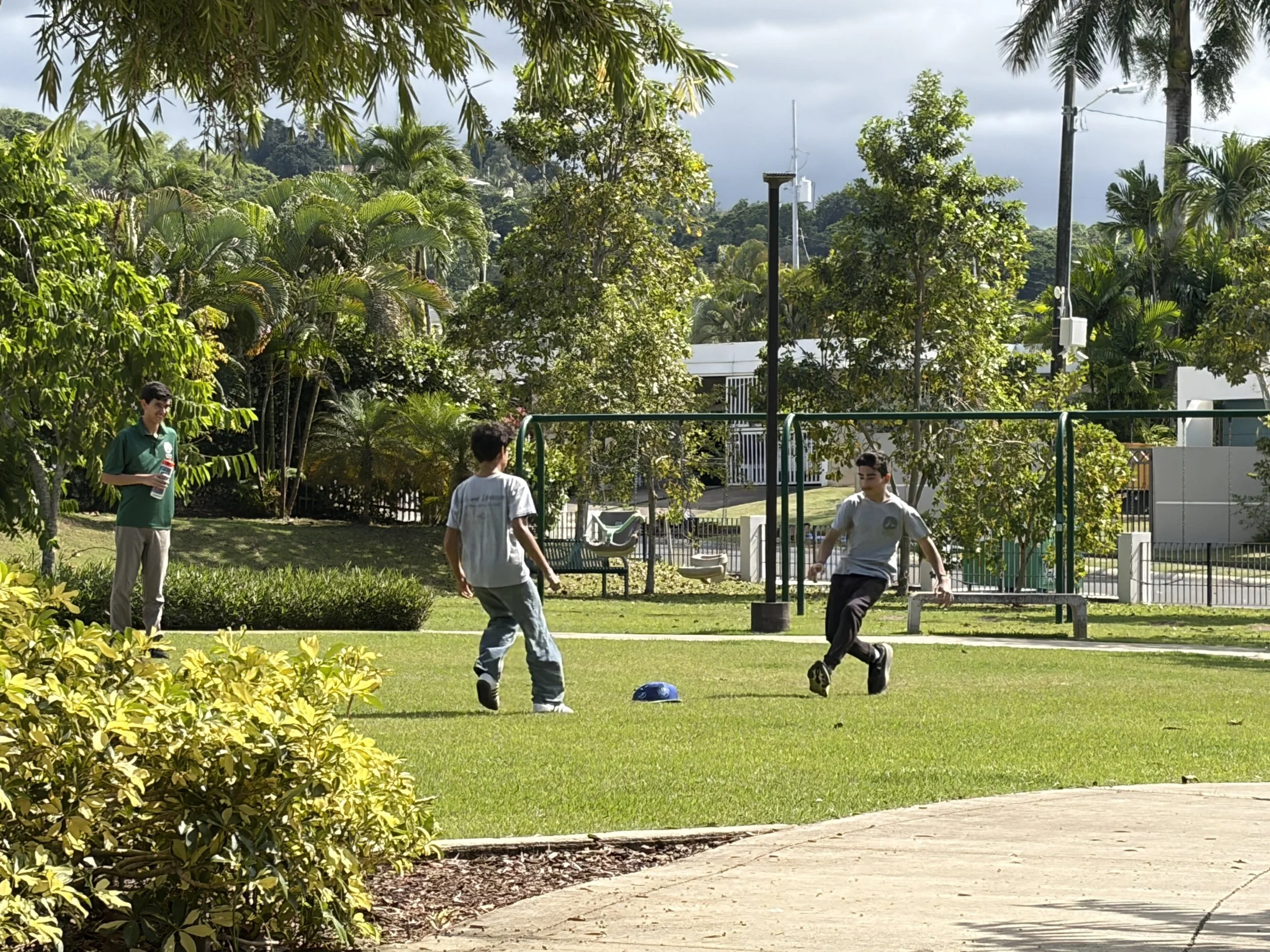
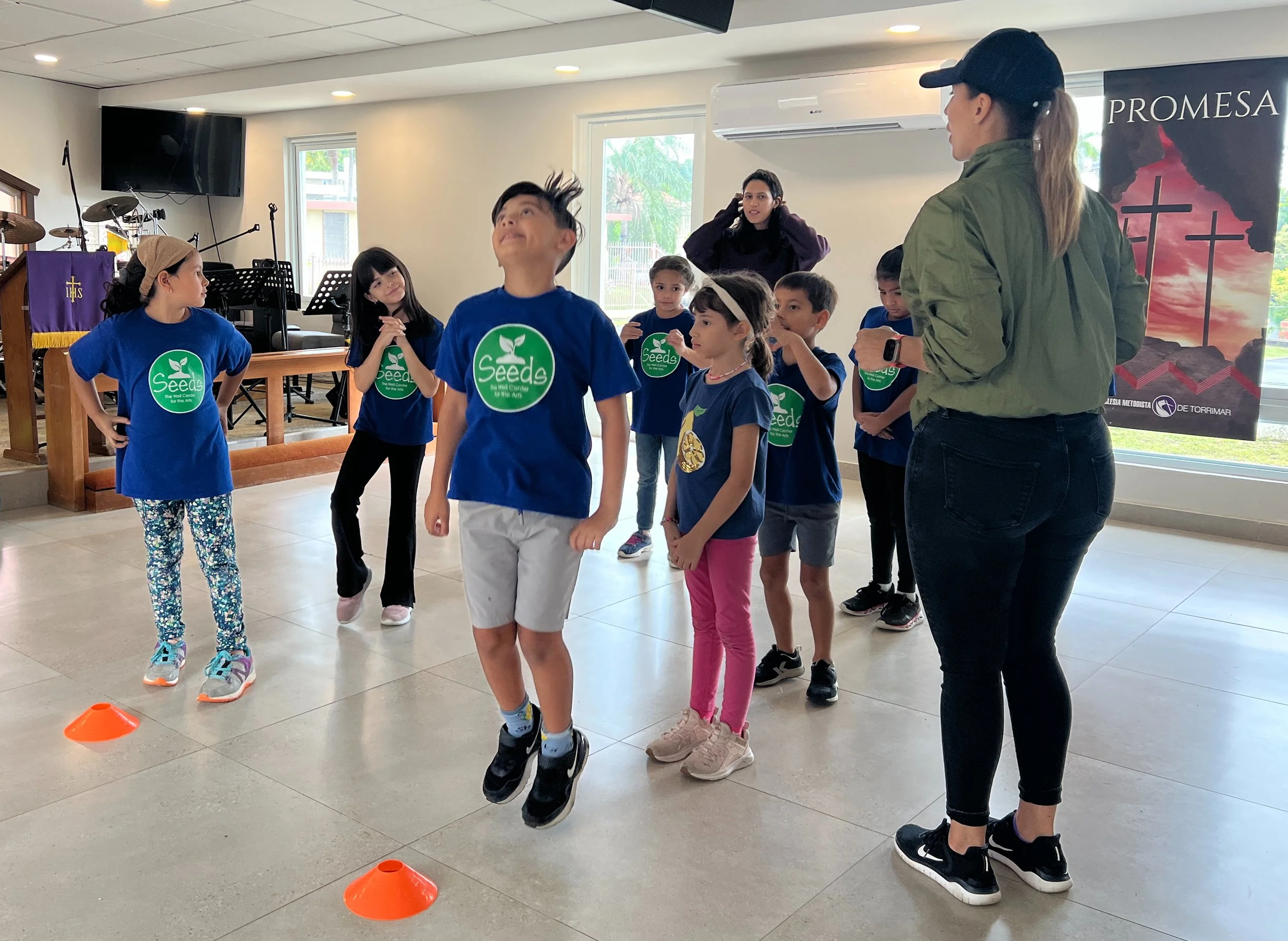
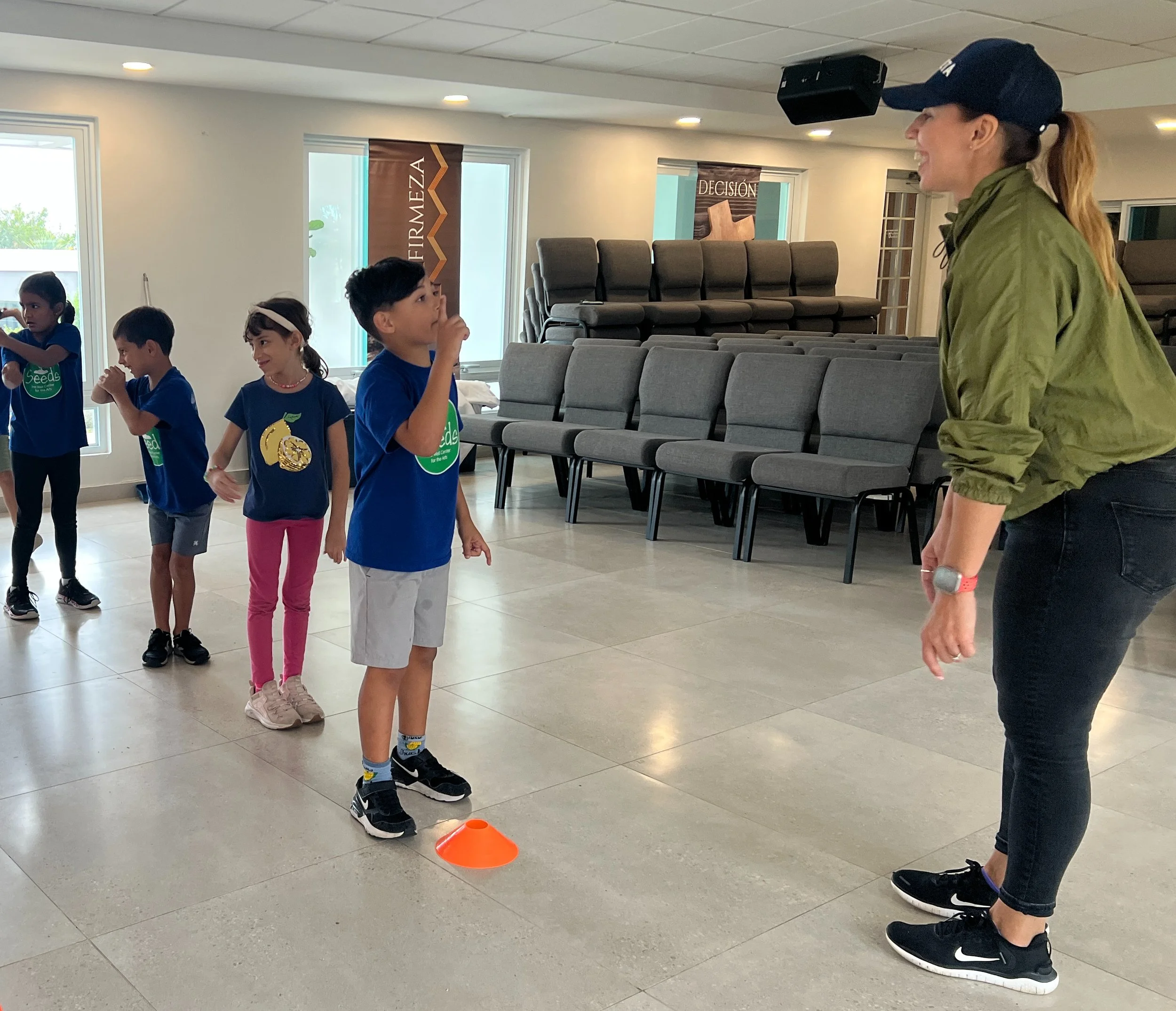
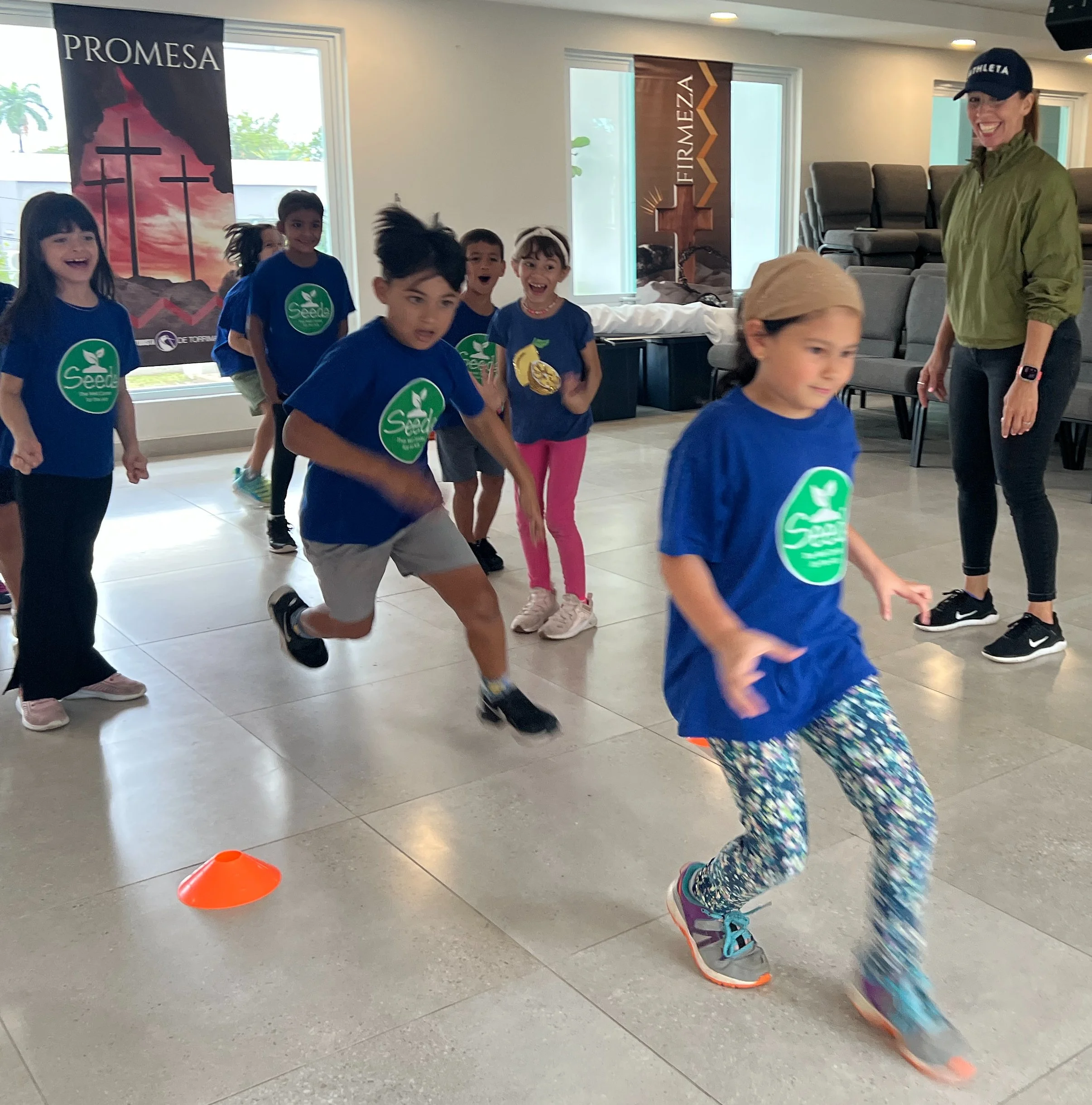
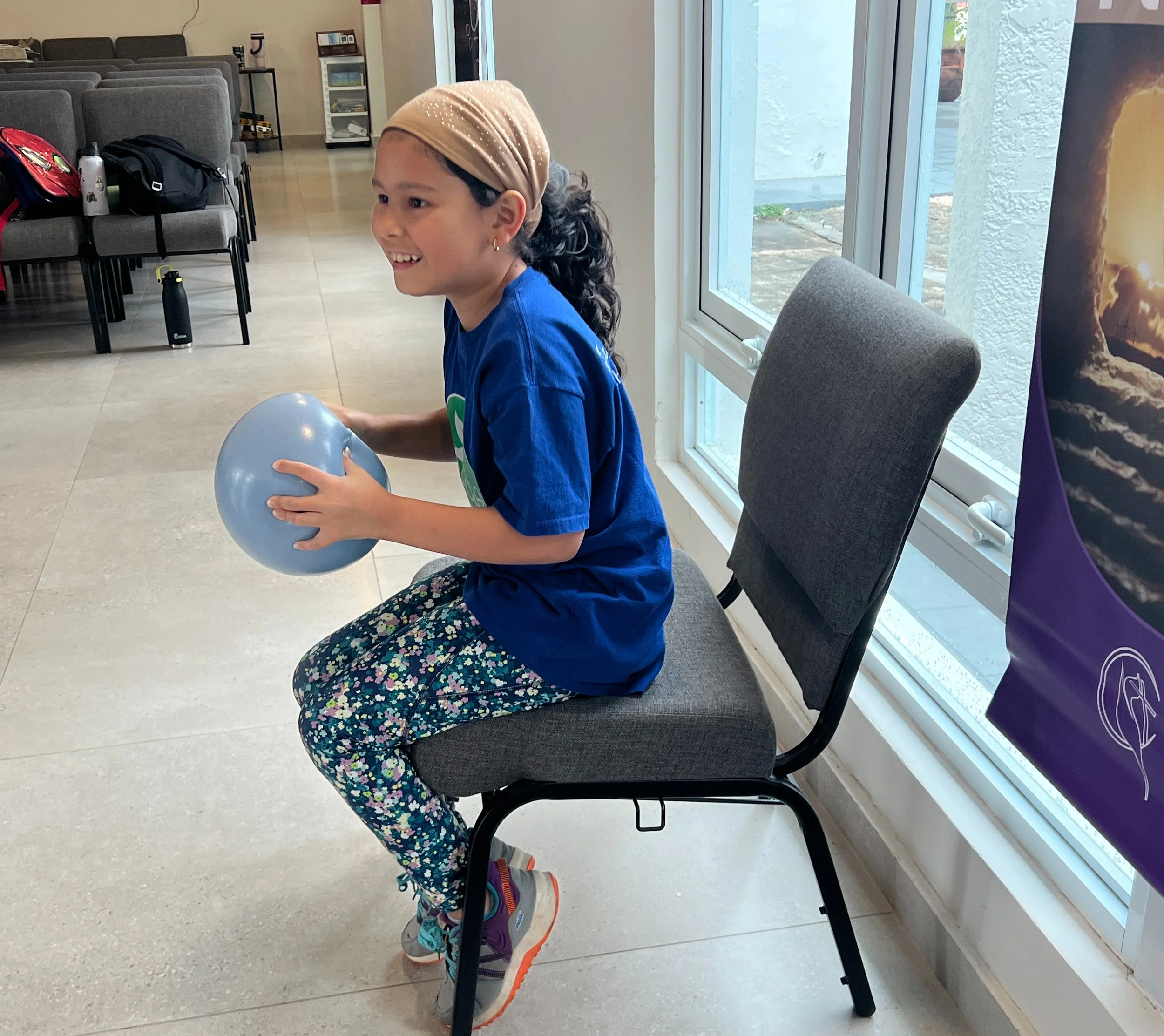
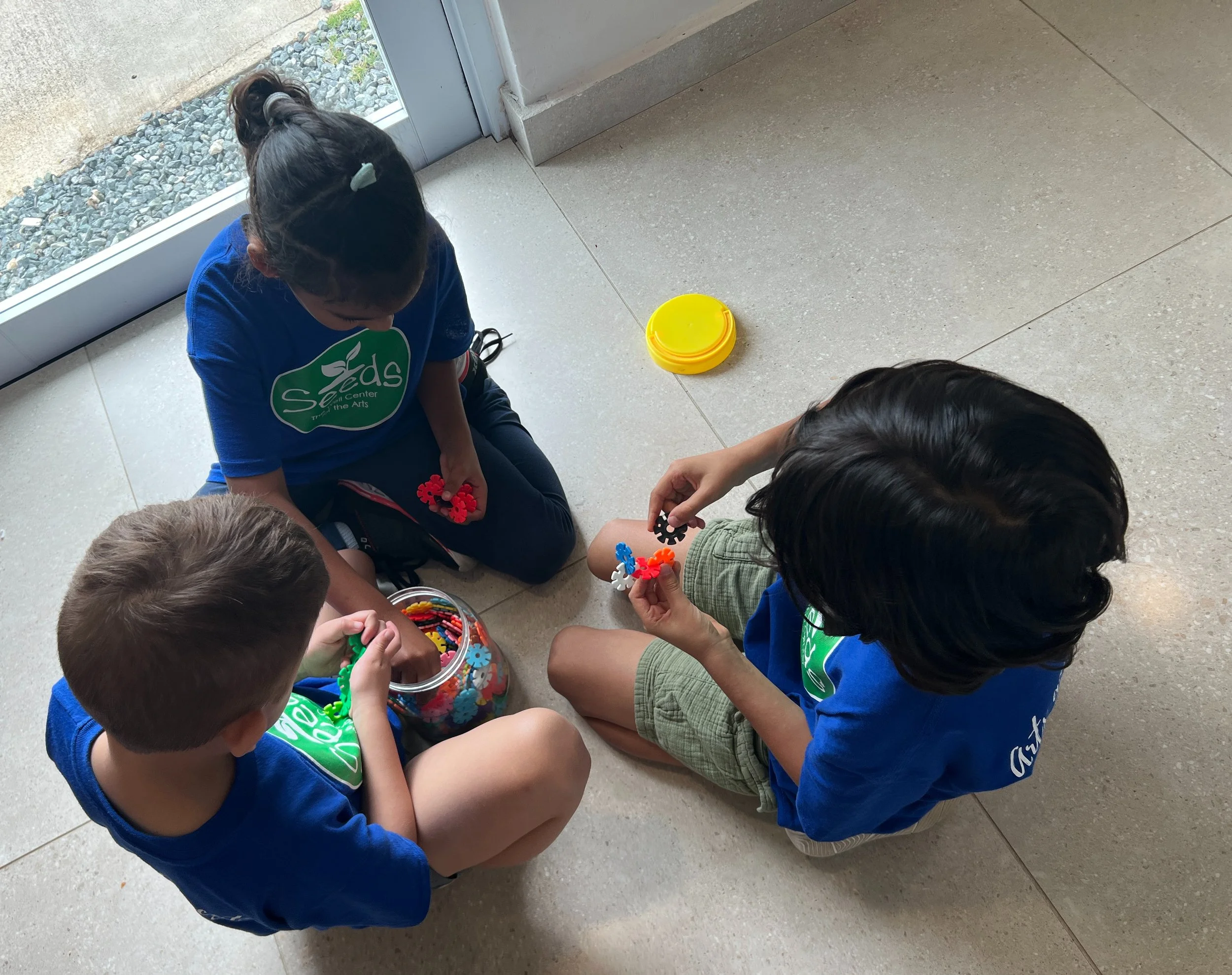
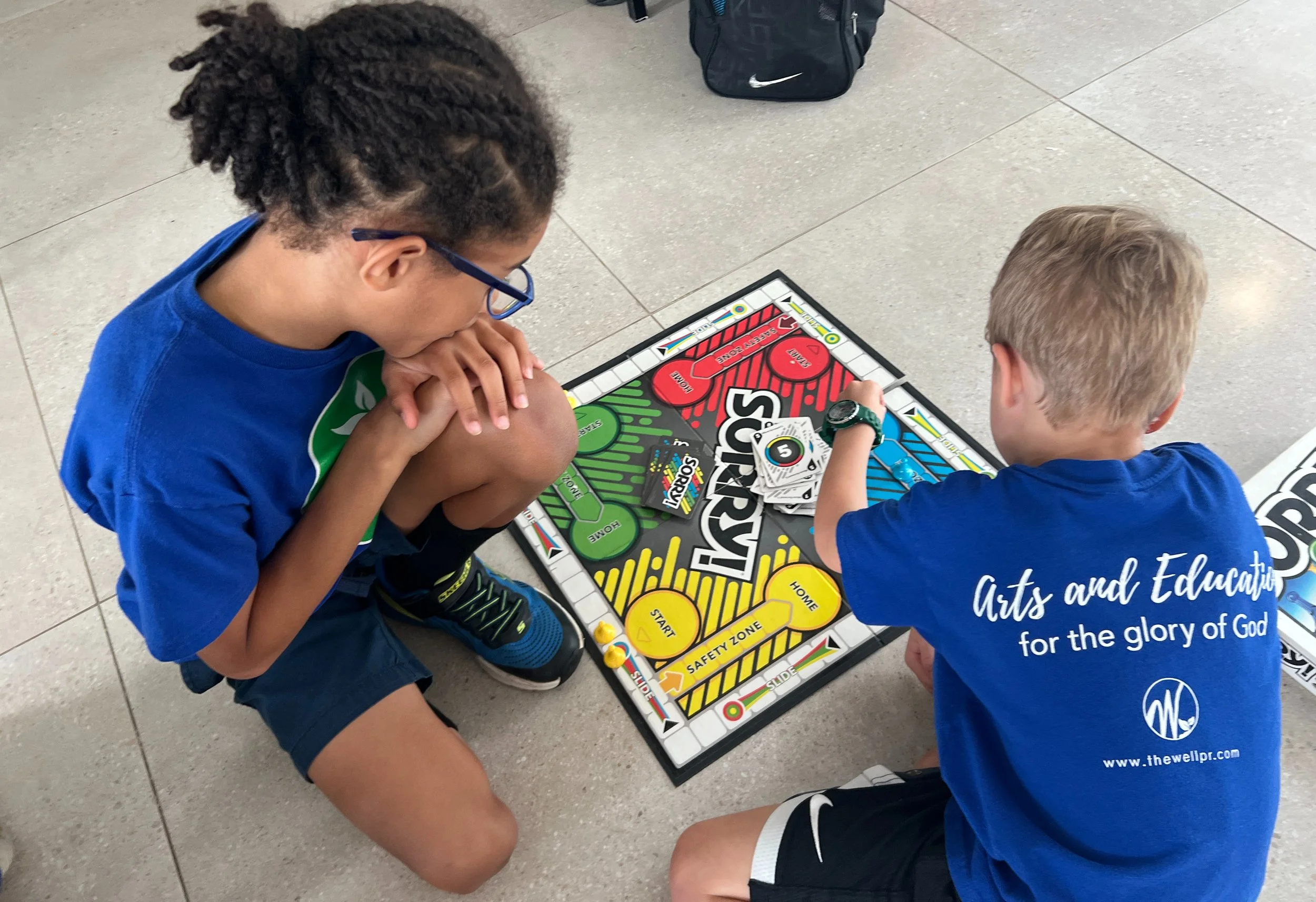
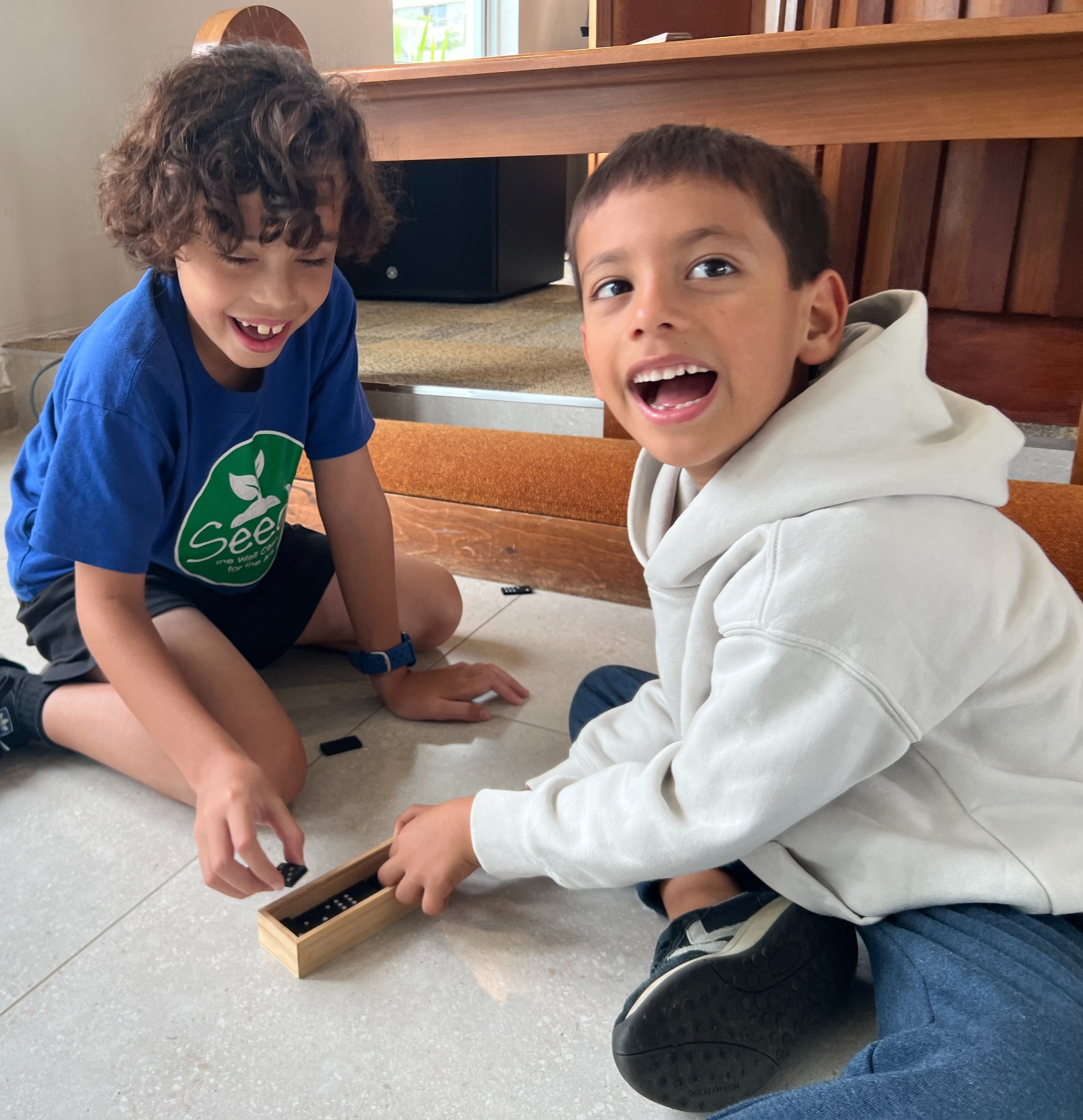
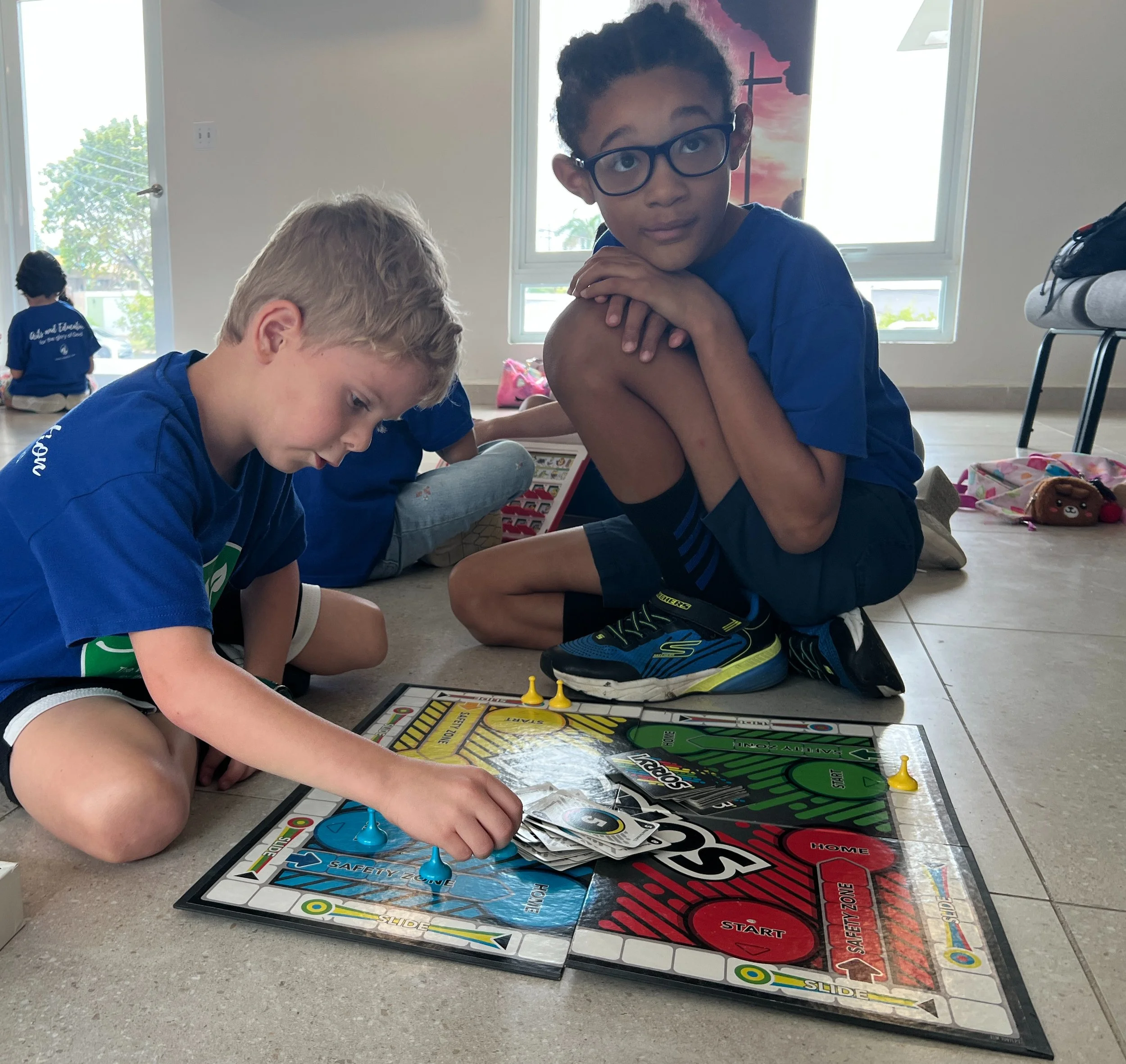
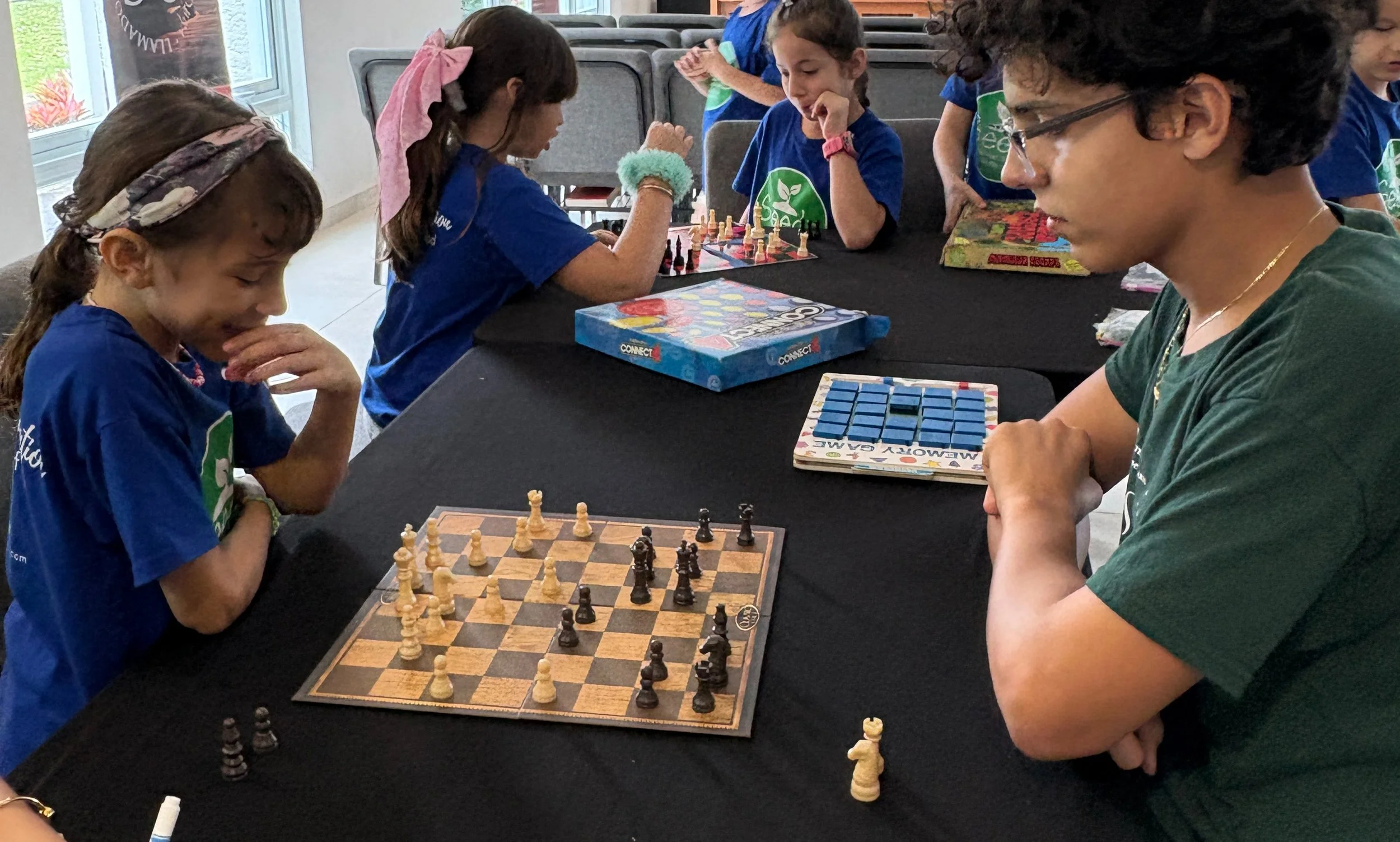
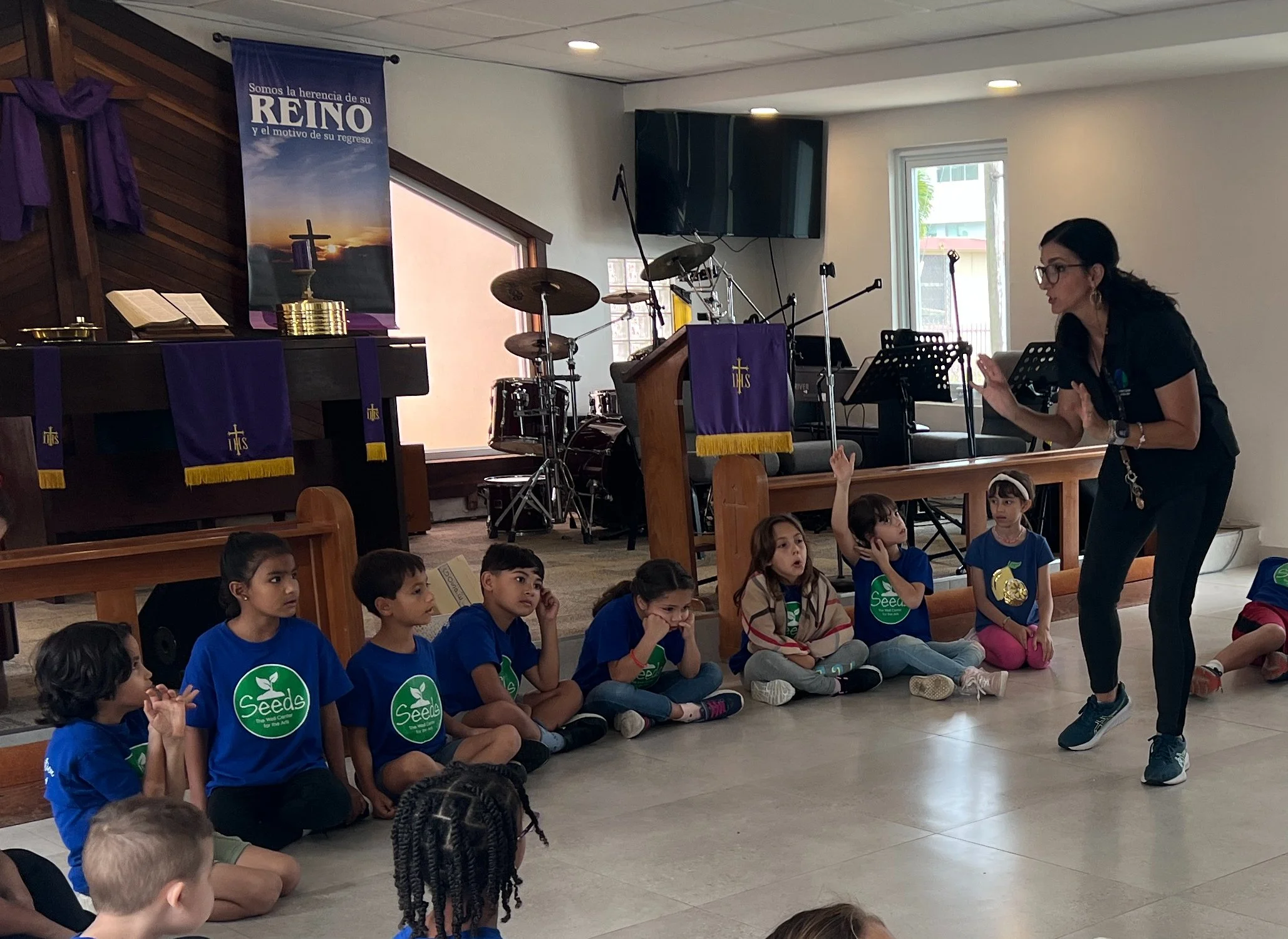
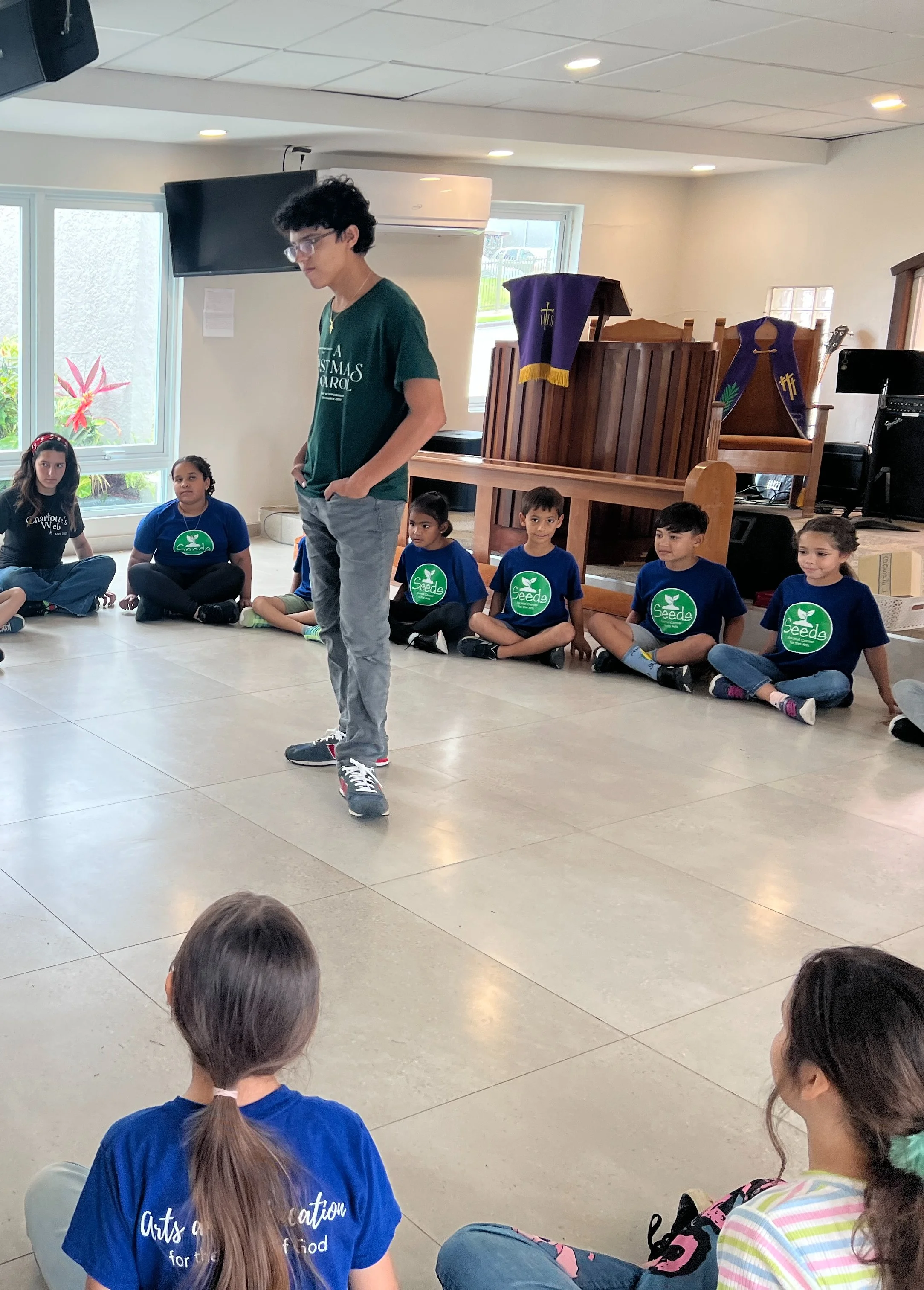
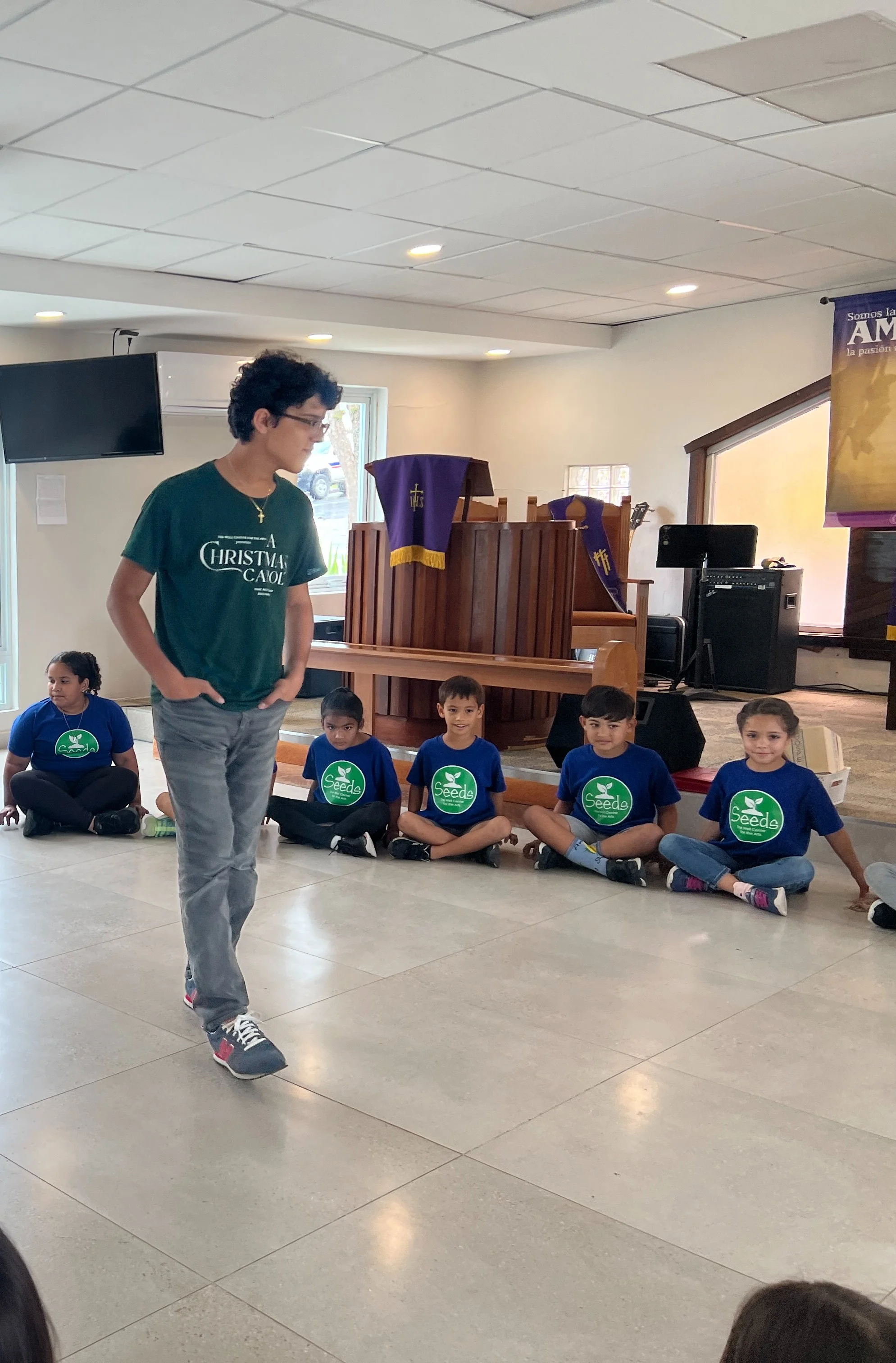
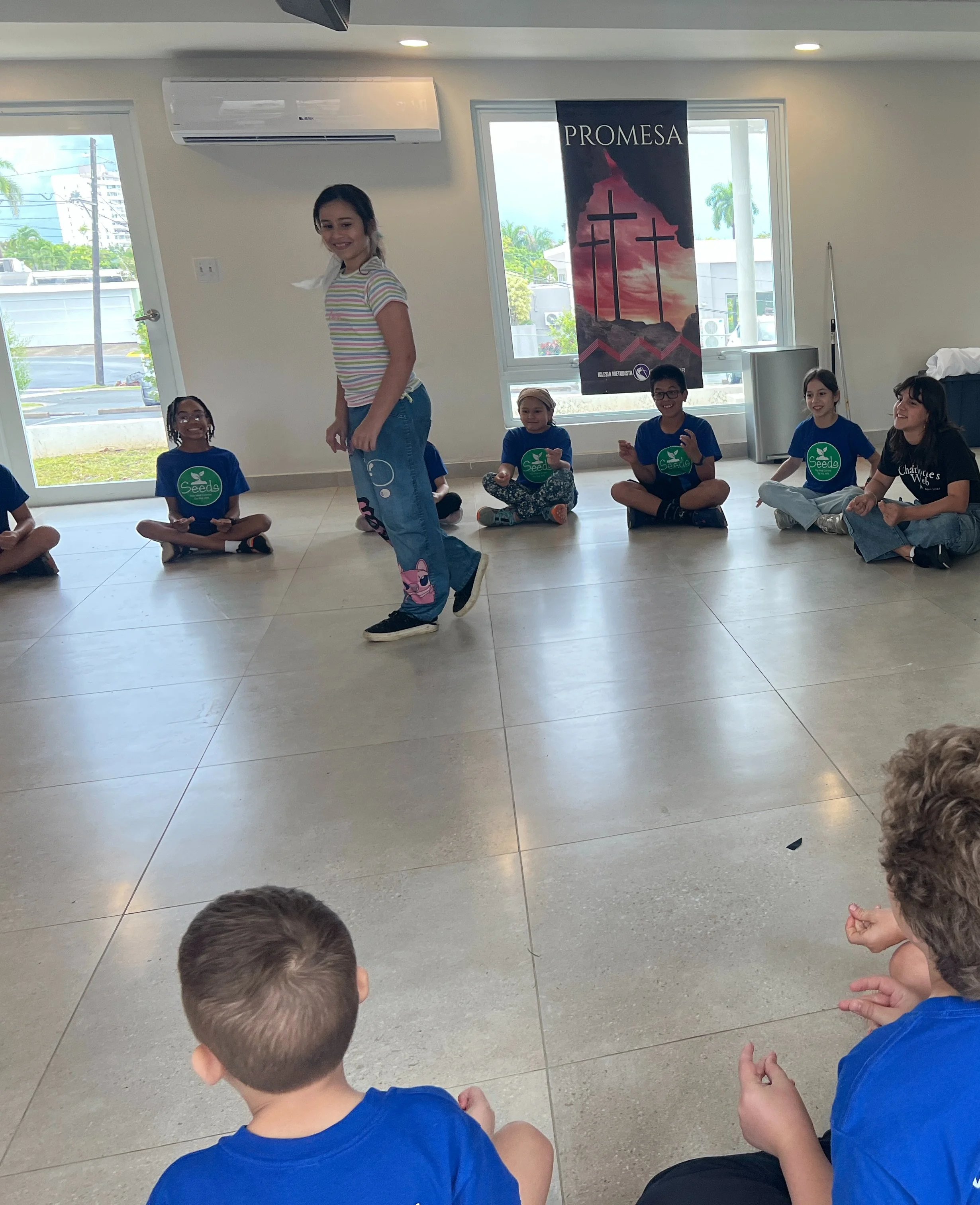
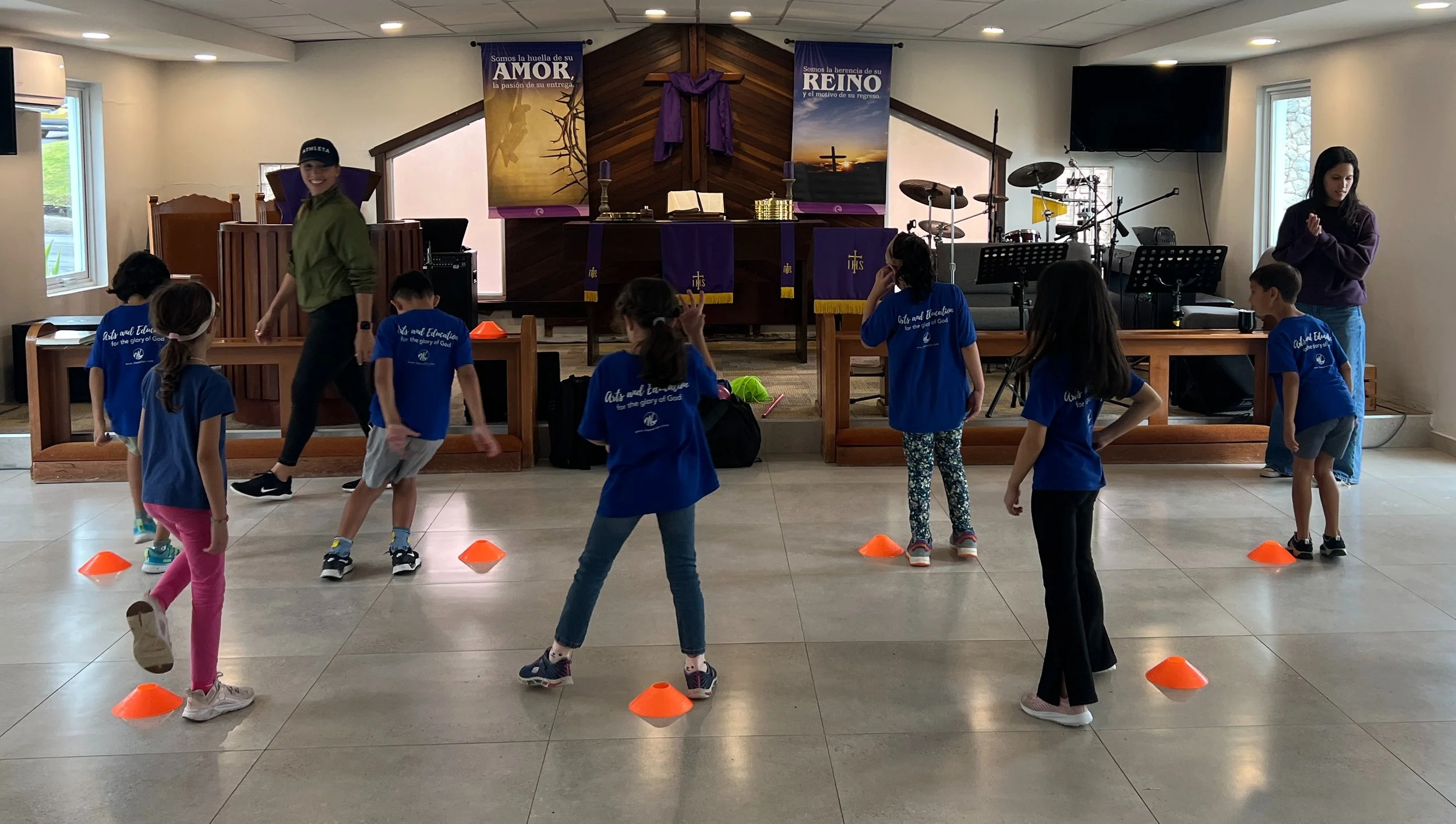
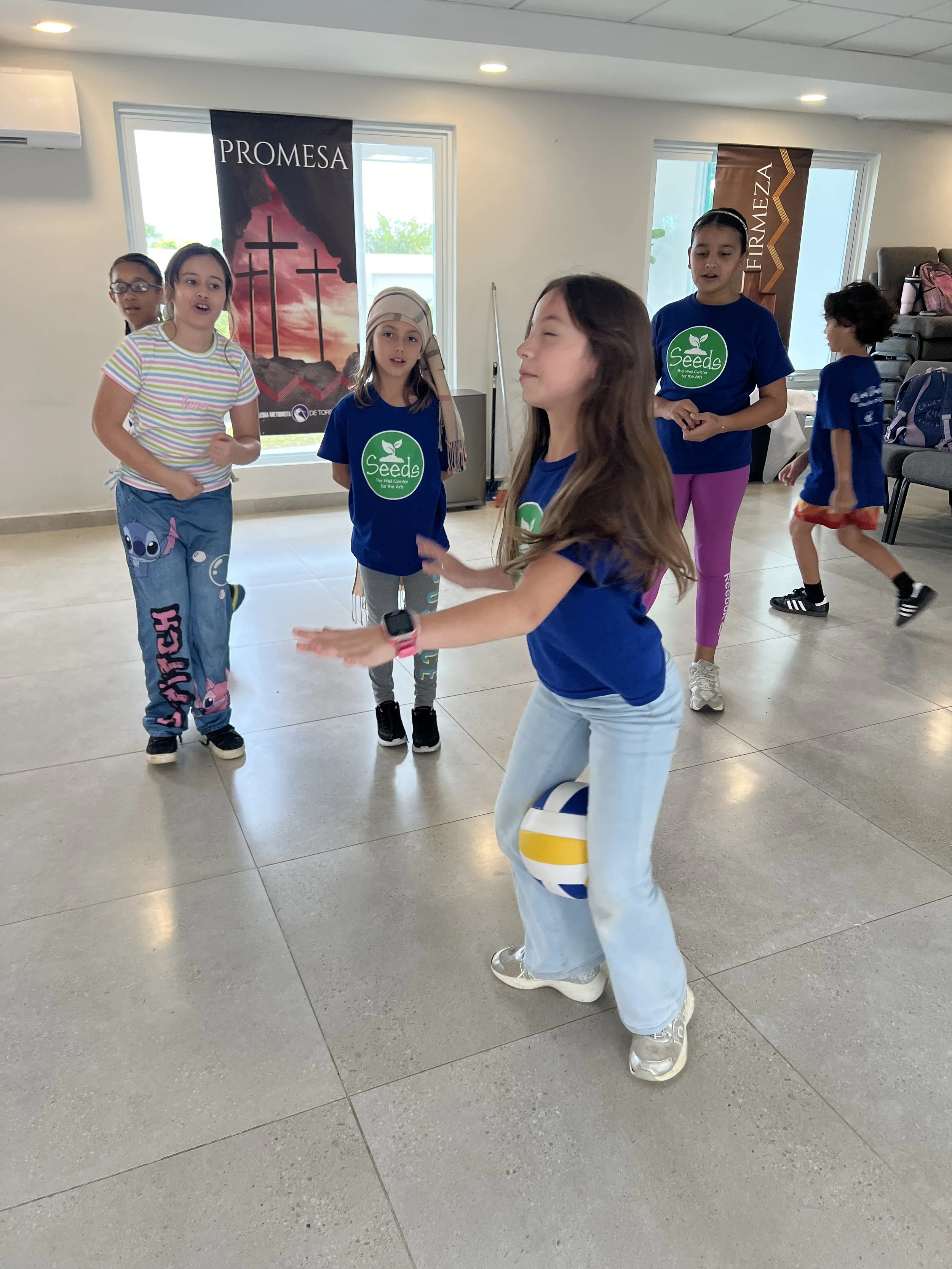
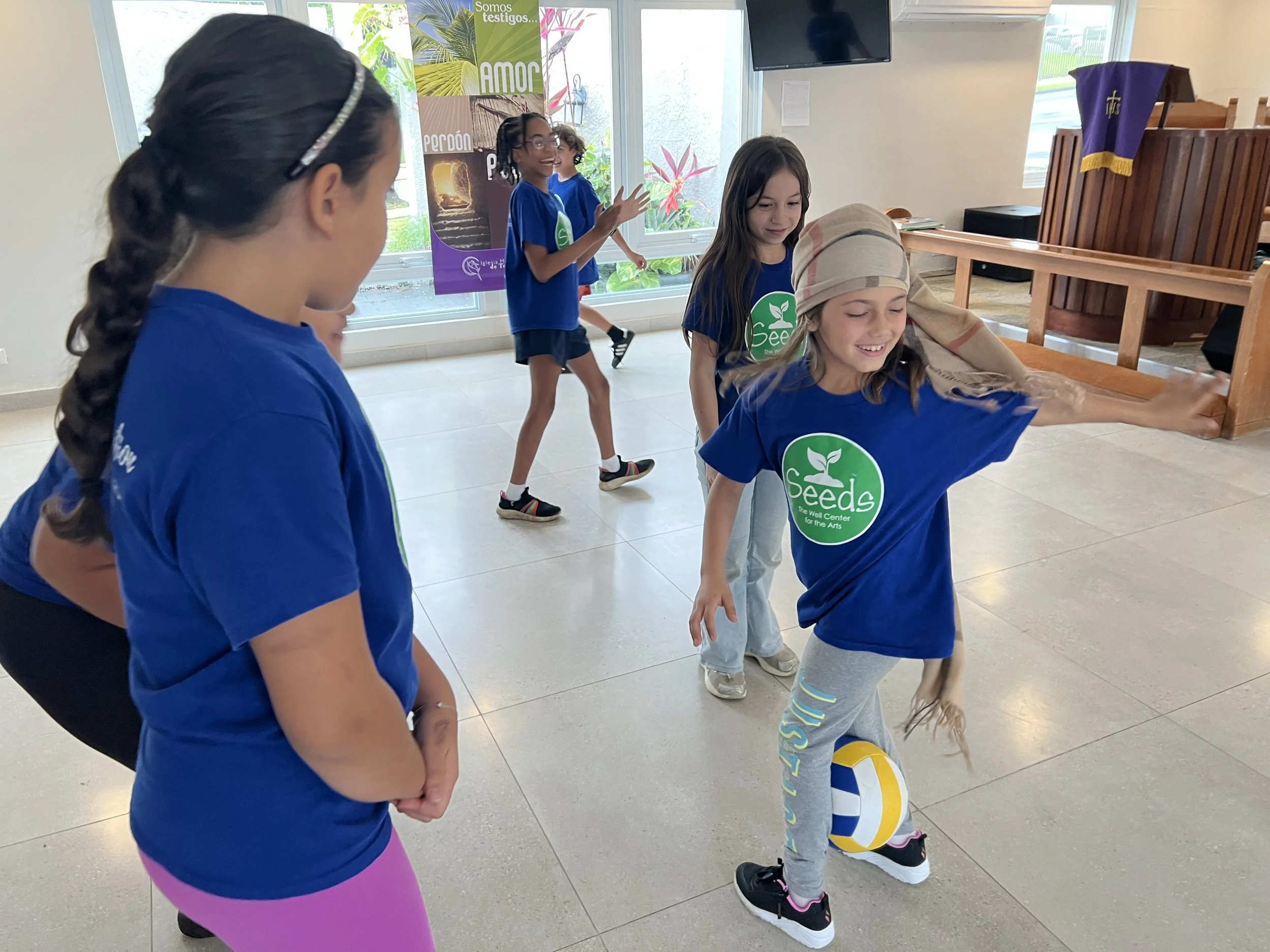
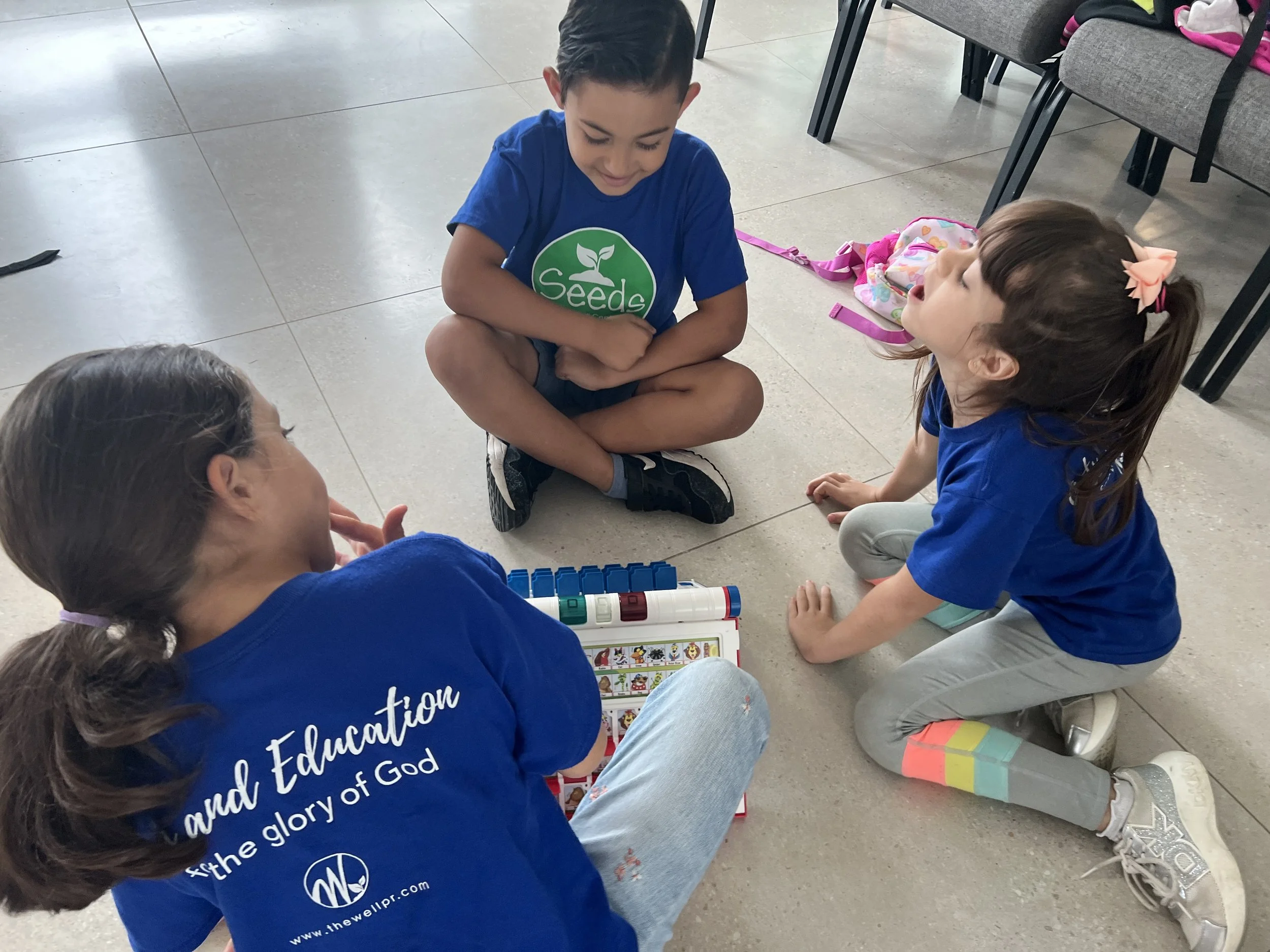
Mrs. Michelle was back again this week and she had a lot of fun games for the kids to play. There was an obstacle course and relay race that the kids enjoyed very much. Despite the rainy week, the kids were still able to get some great movement in. We were also able to enjoy some of our board games and play a few theater team-working games with our helpers Joshua, Olivia and Emma.
SCIENCE
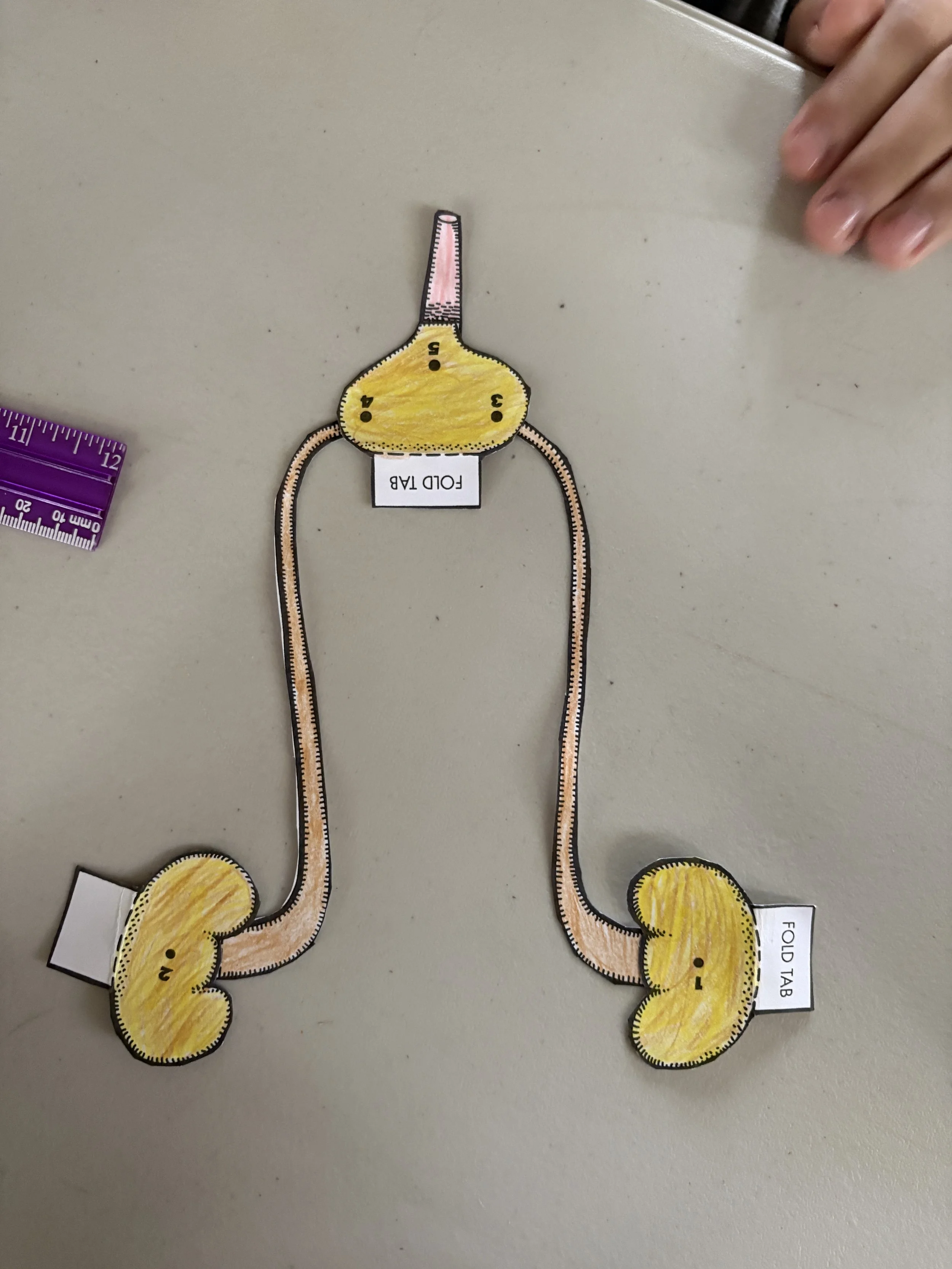
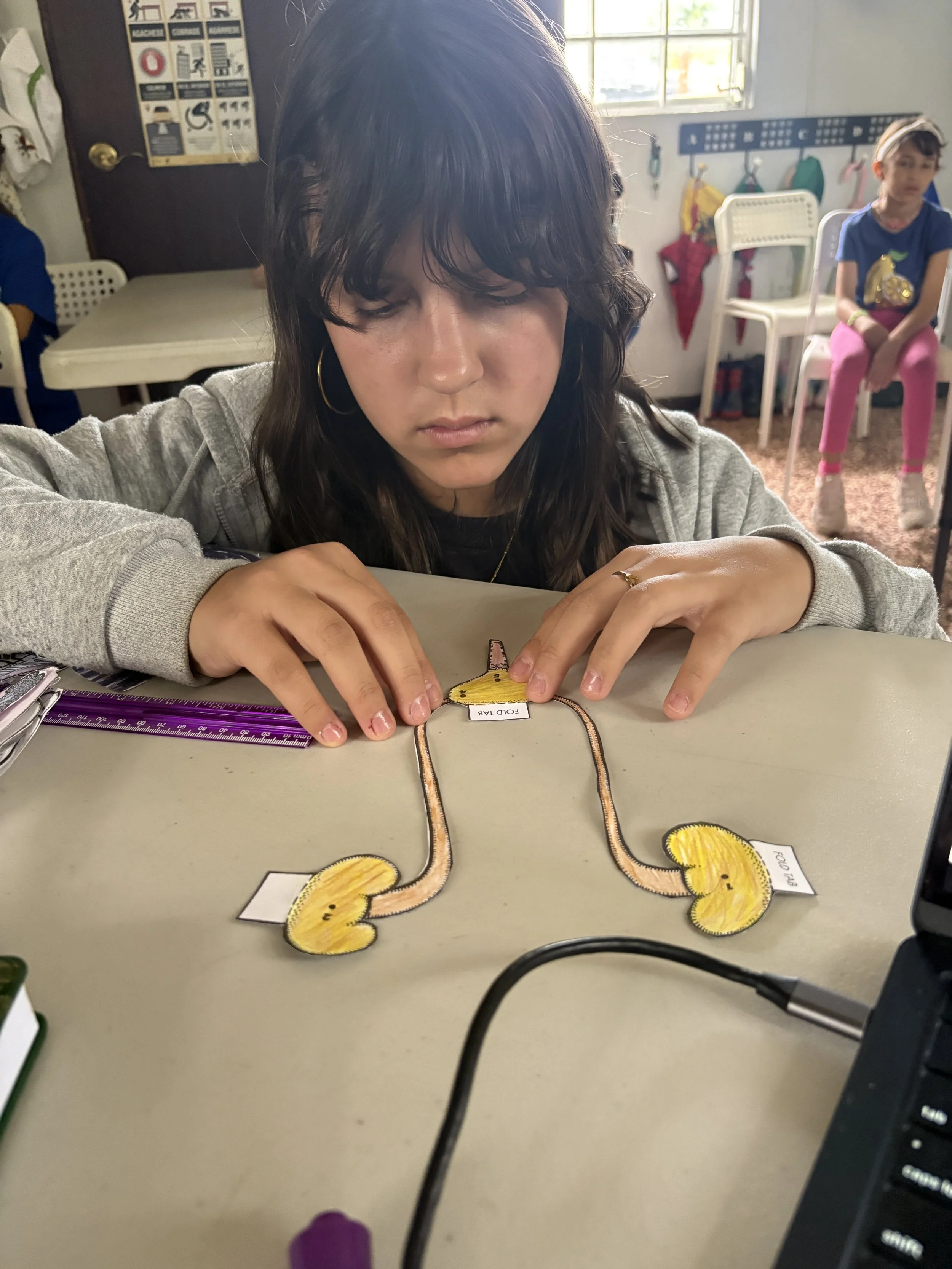
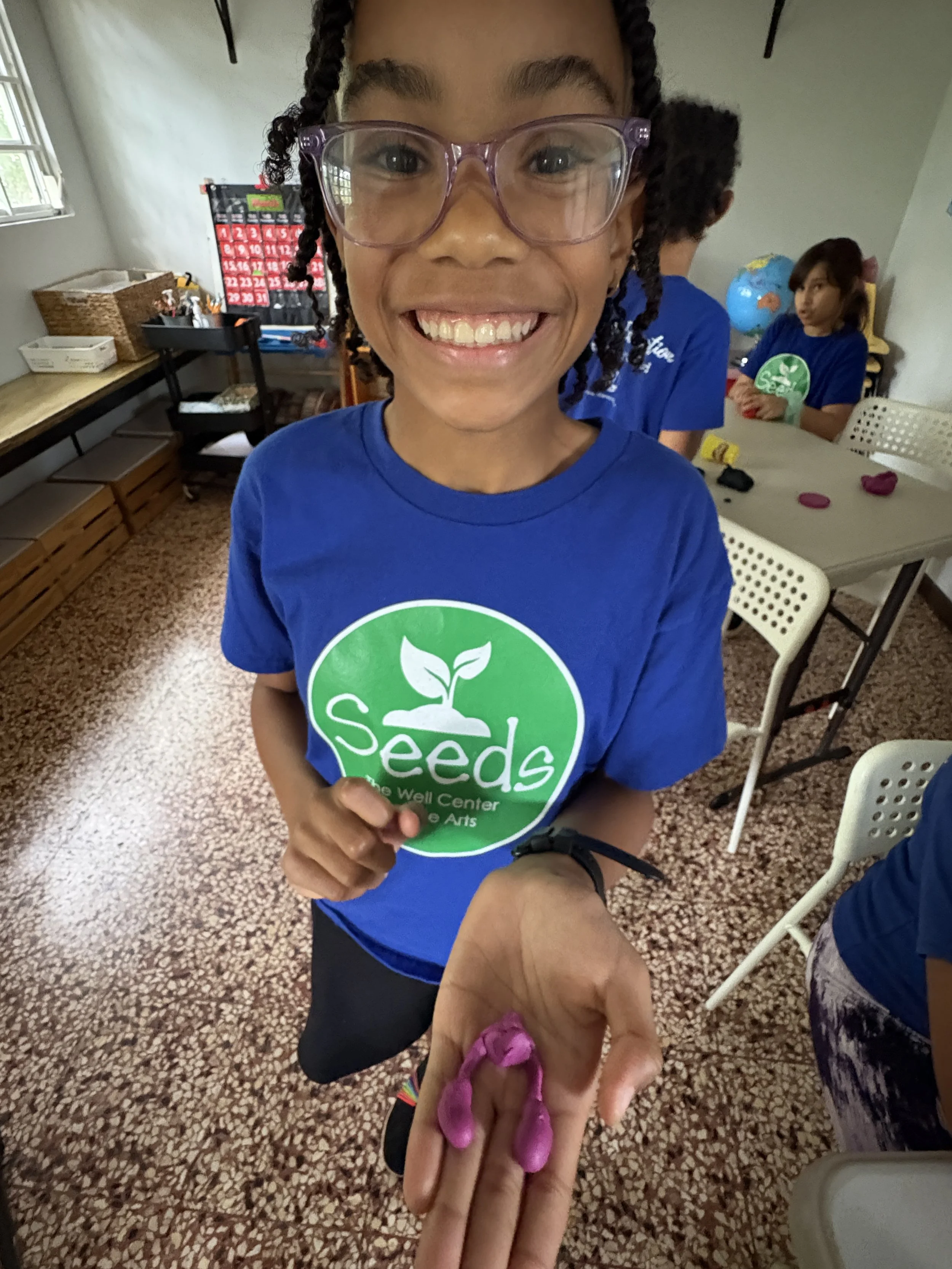
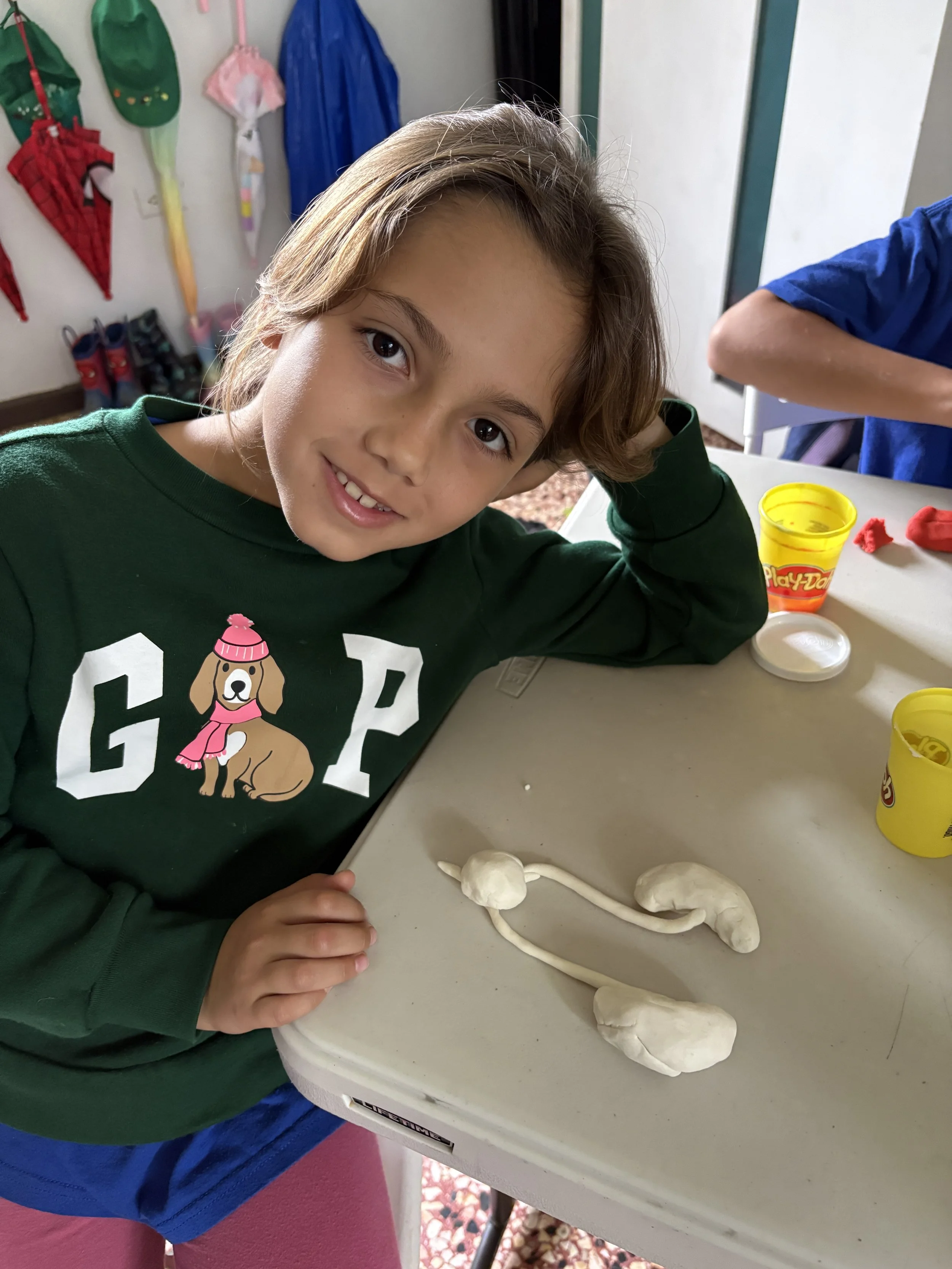
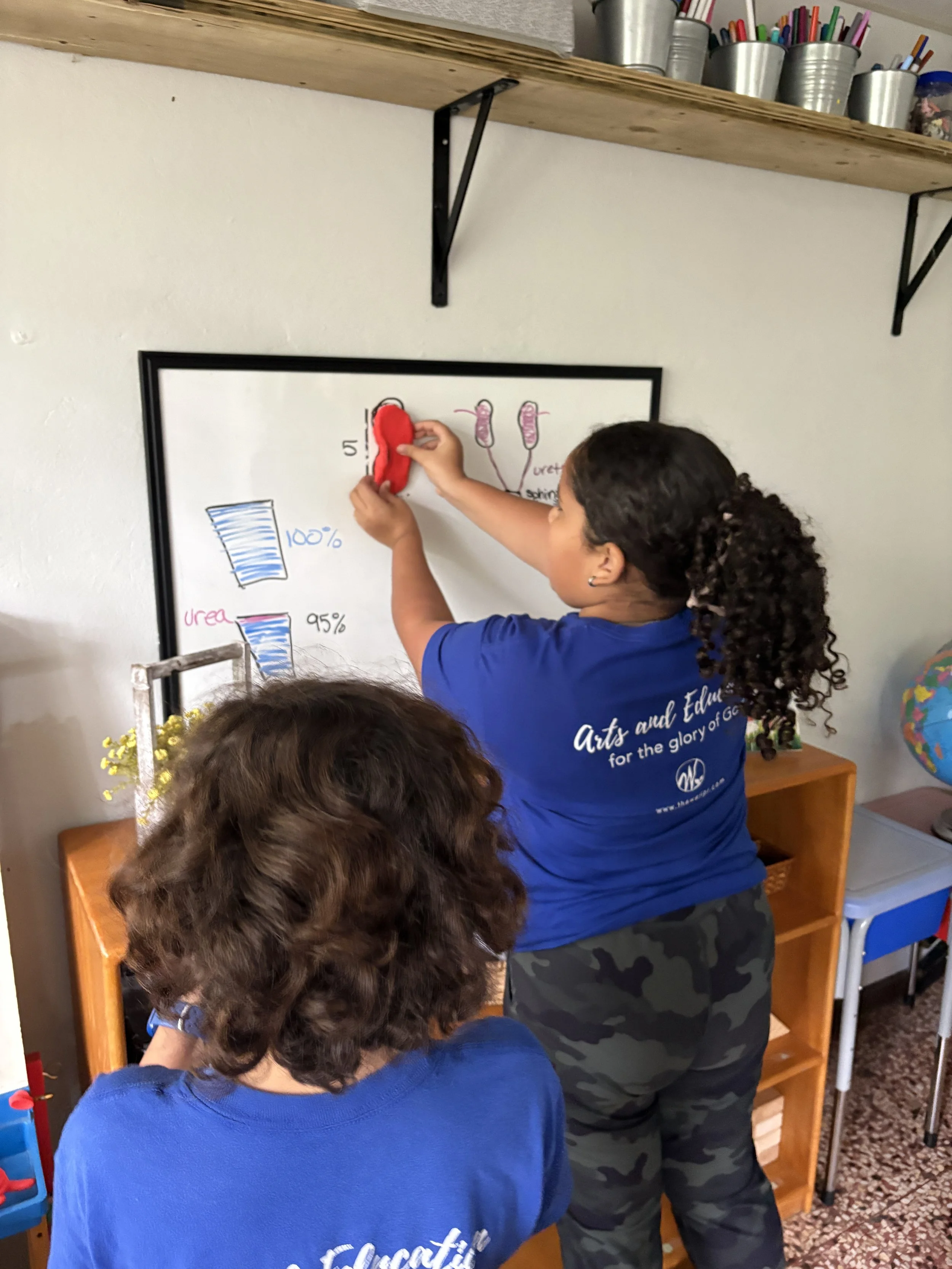
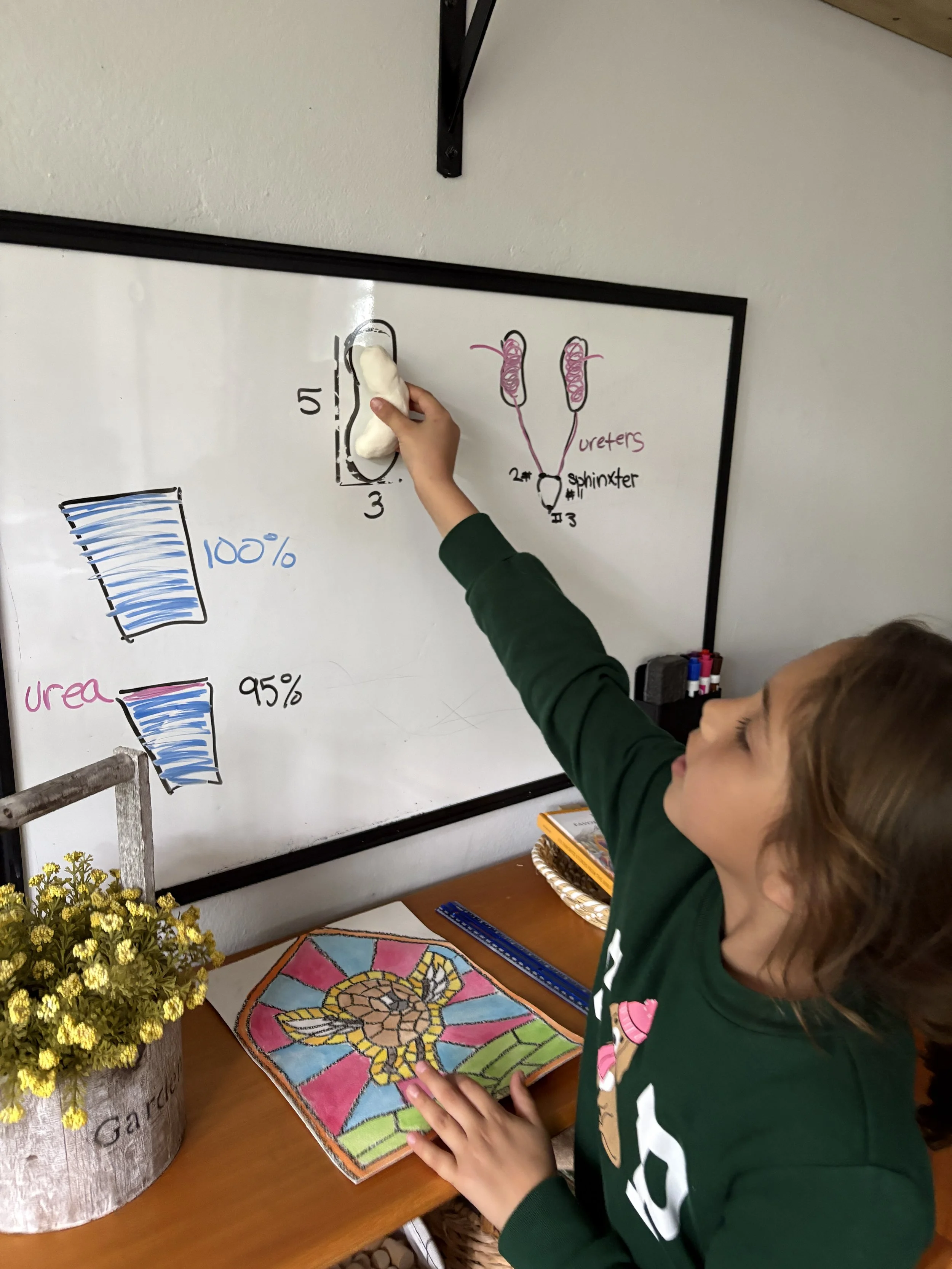
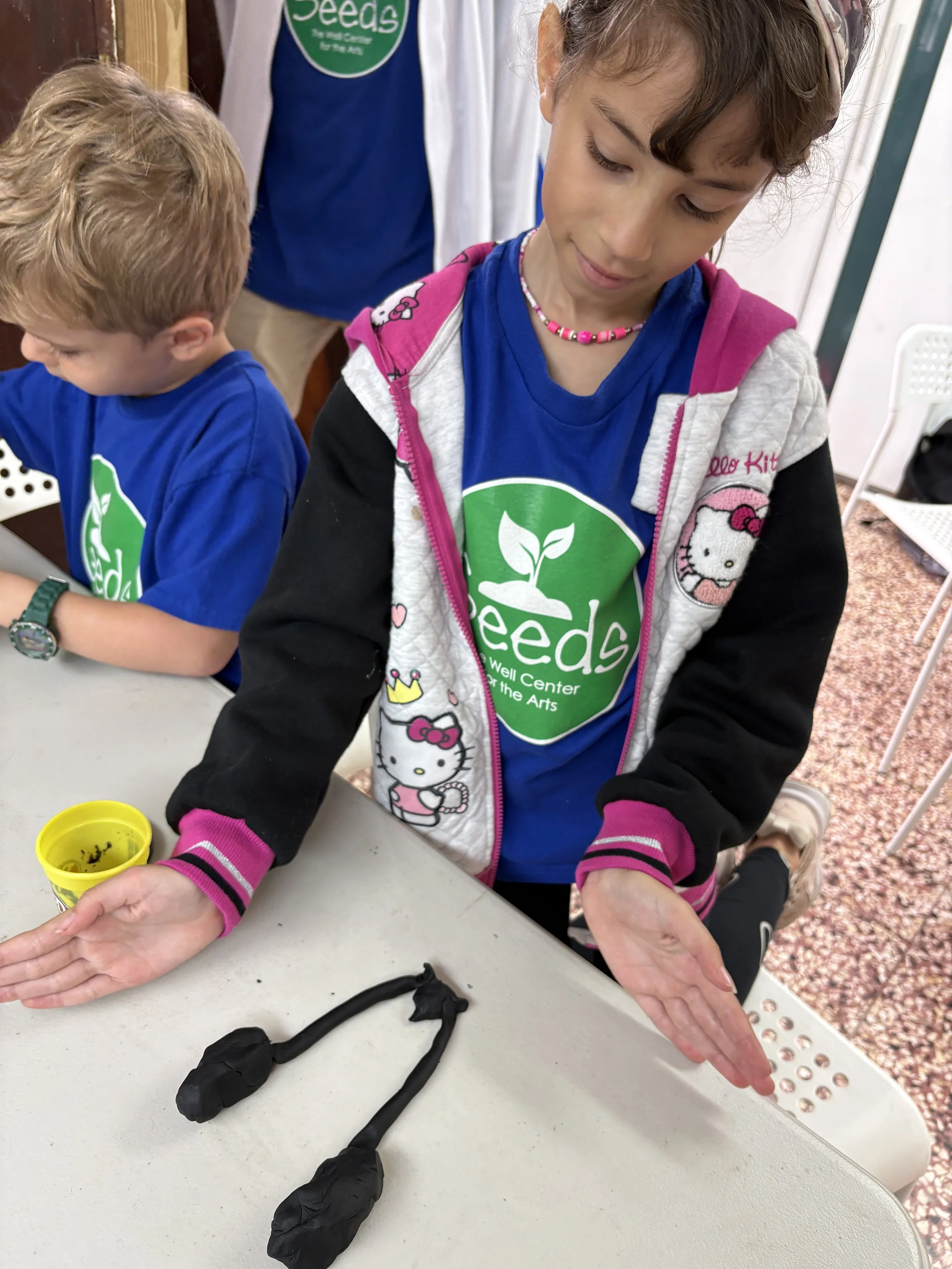
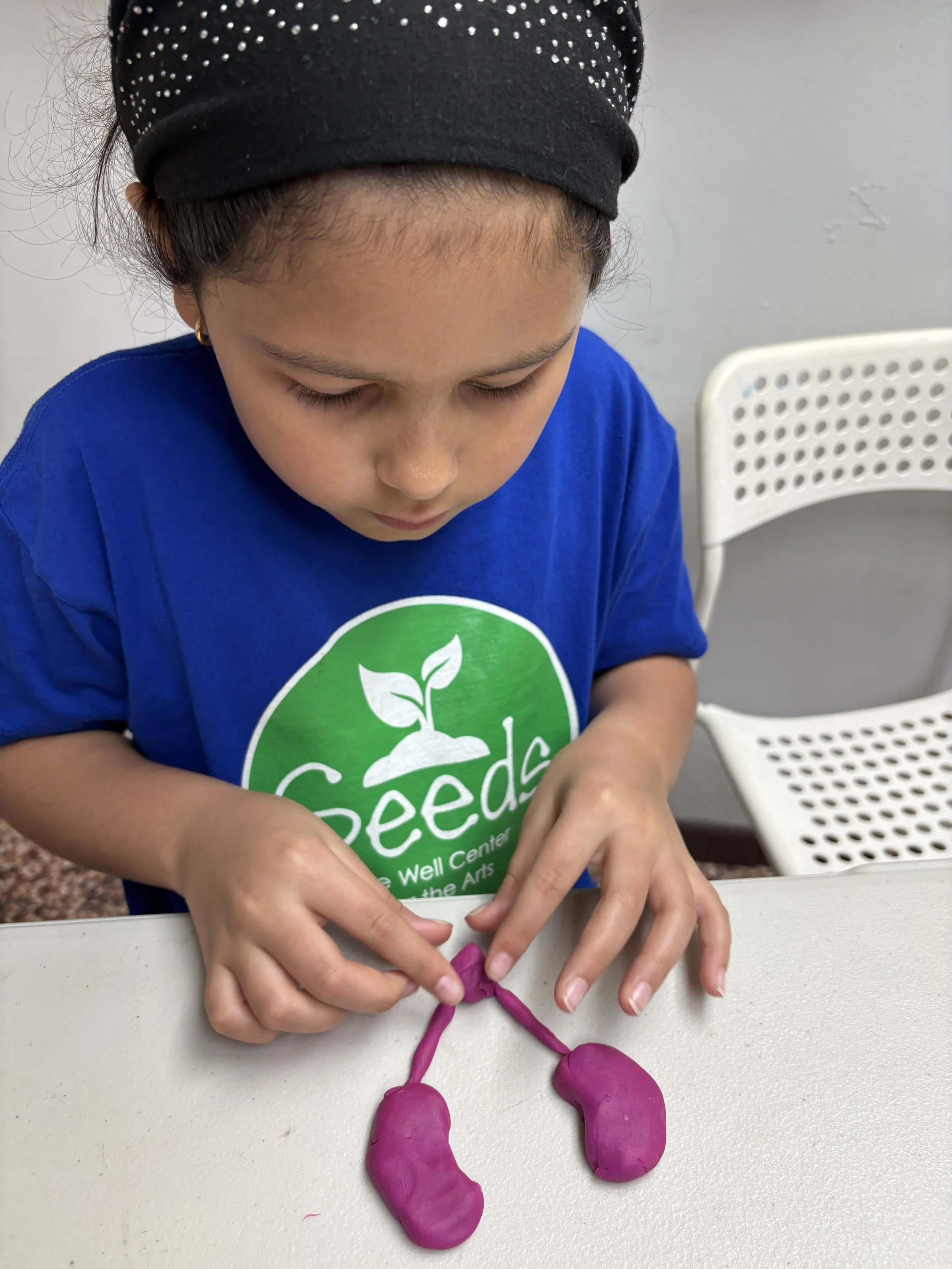
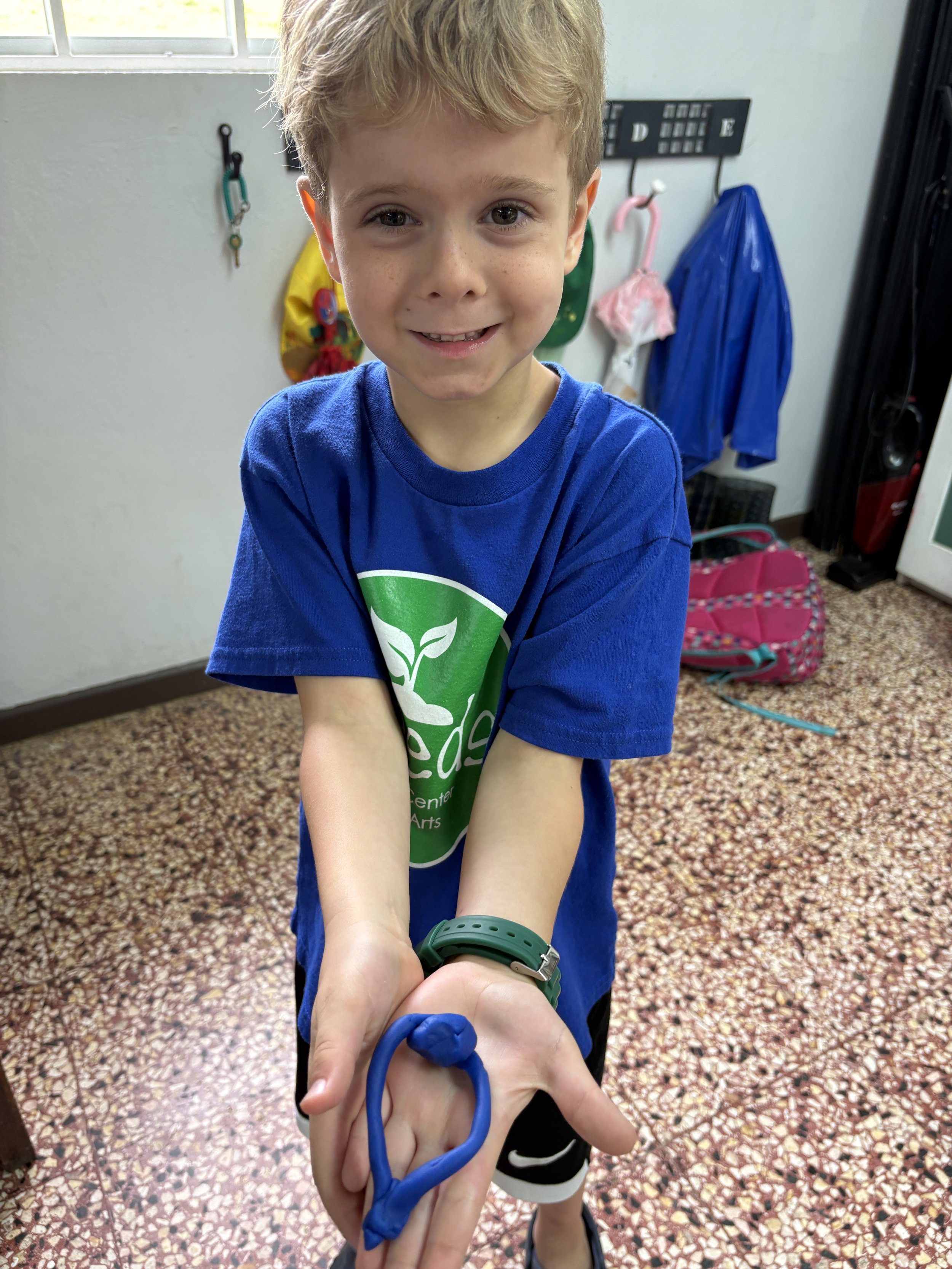
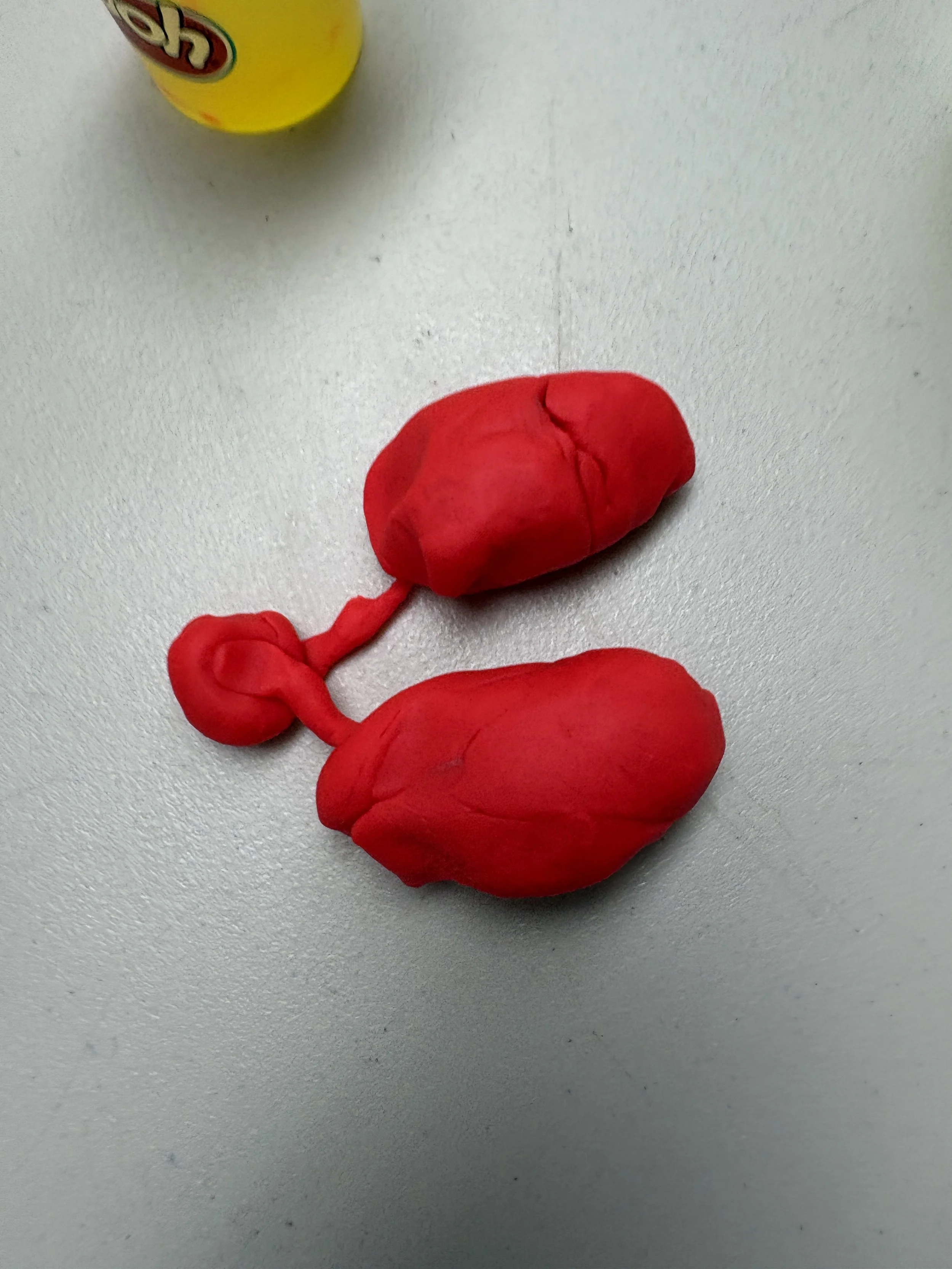
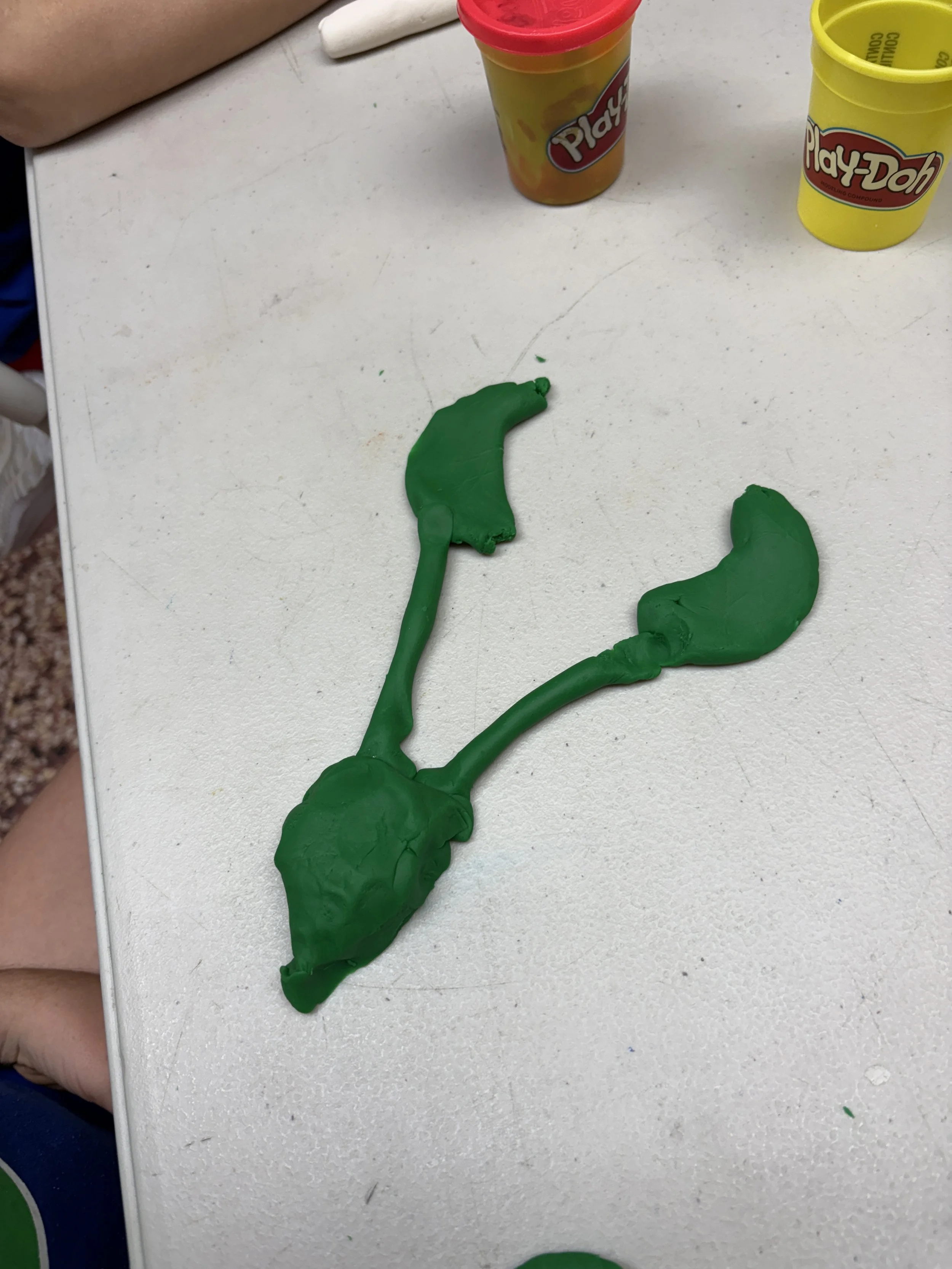
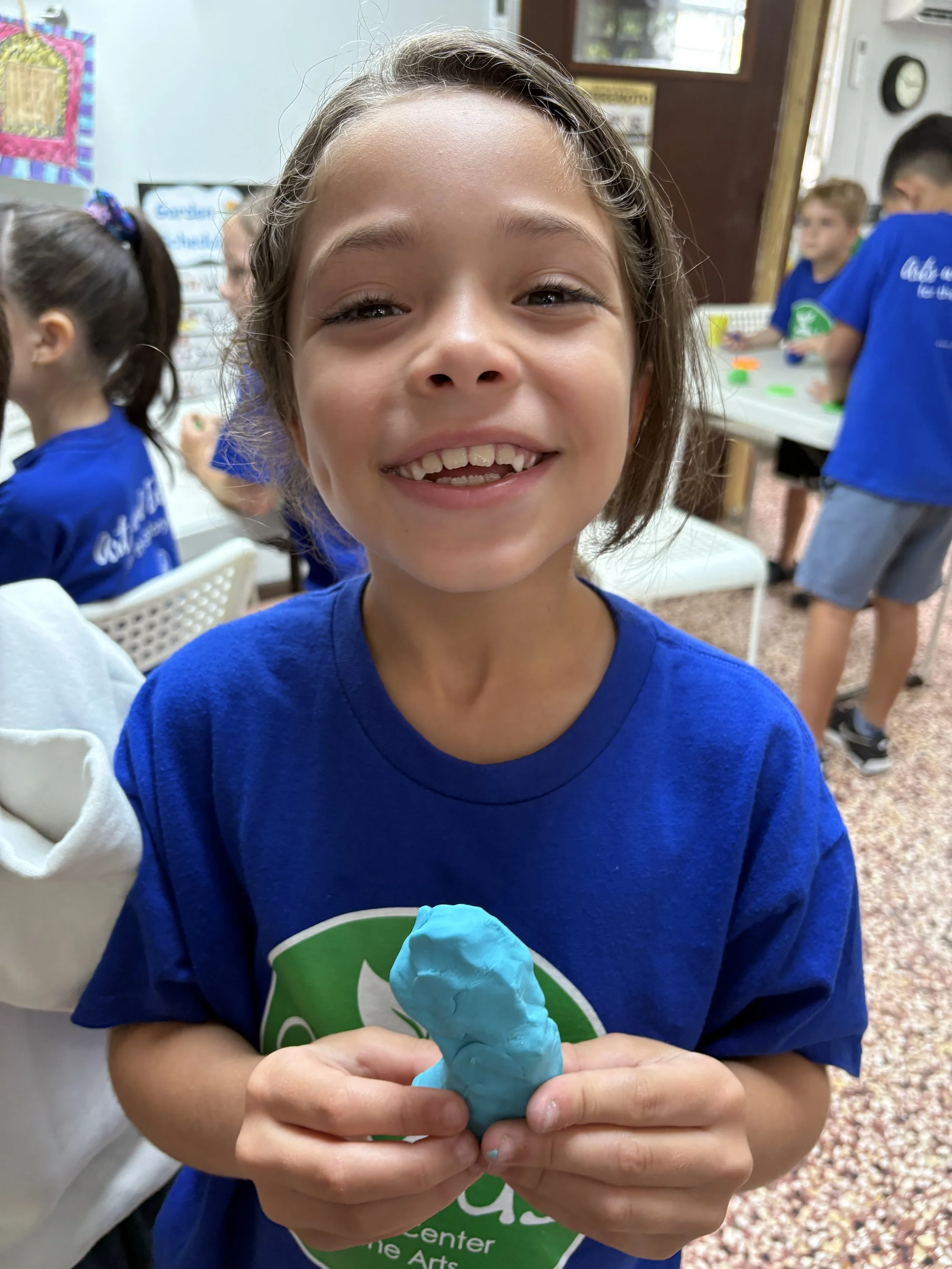
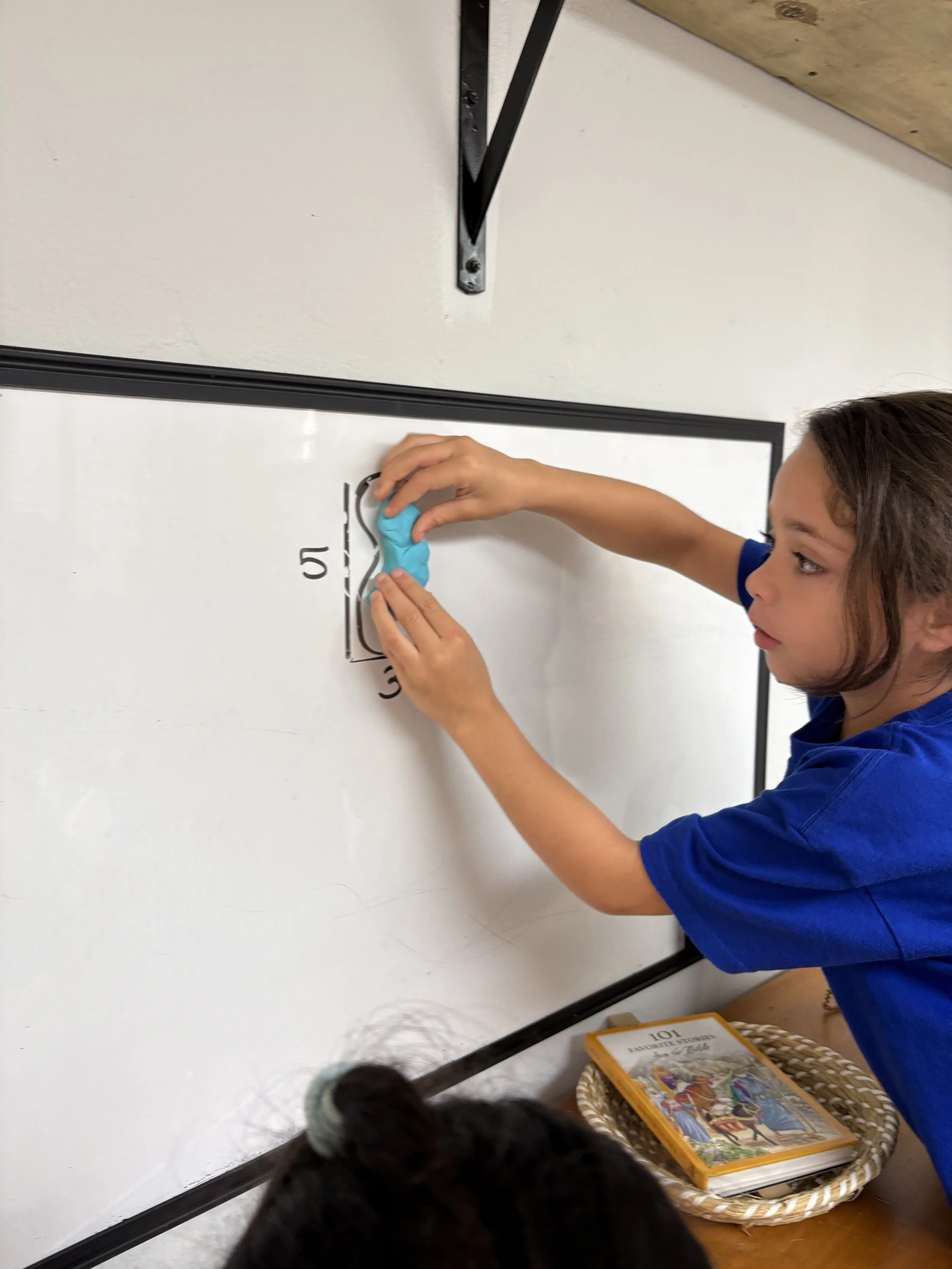
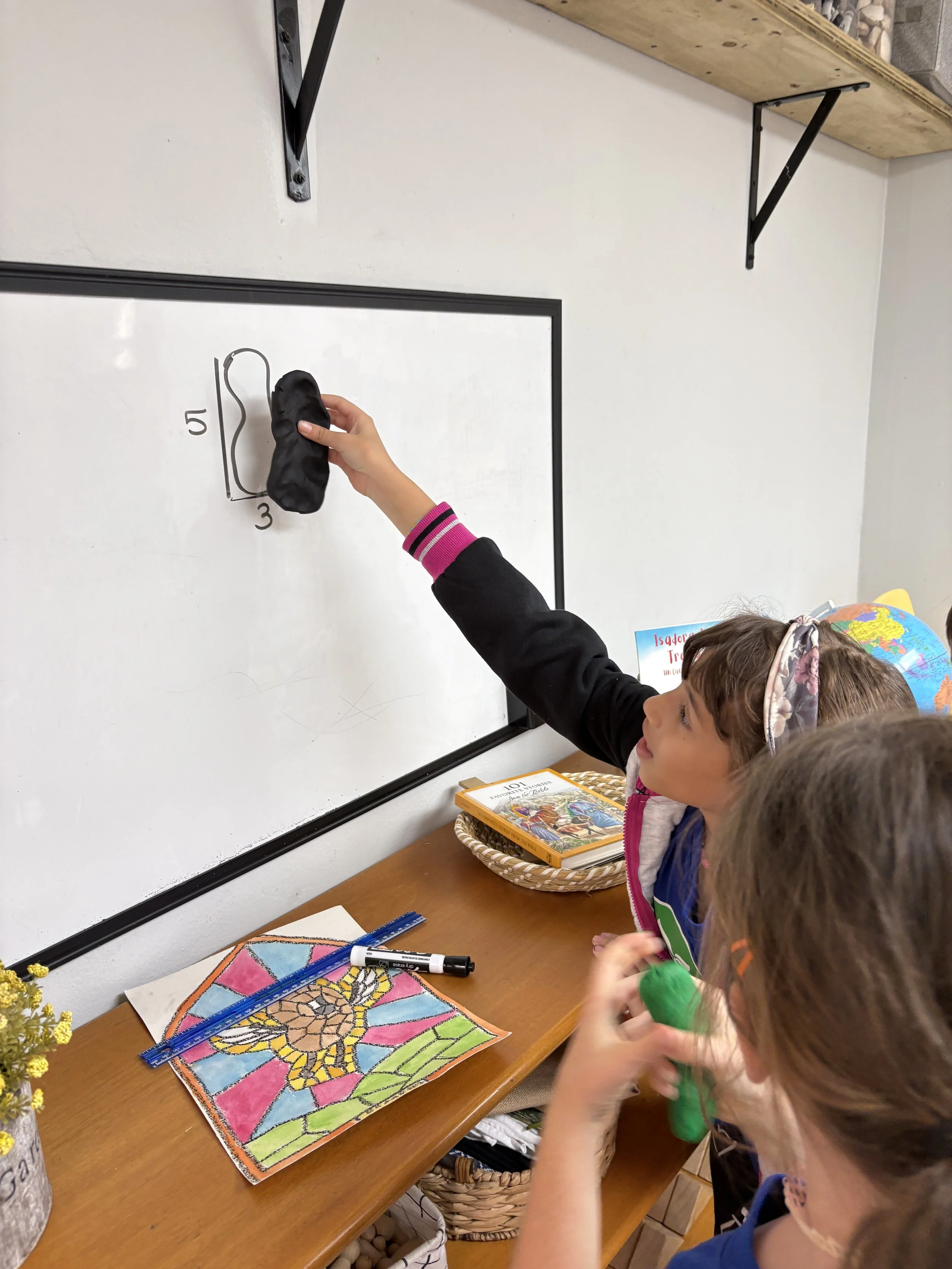
We are almost at the end of our study of the urinary system. Last week, we learned what the kidneys, ureters, and bladder do. We learned about the different sphincters in the bladder and how they work to hold in and relax to let out the liquid through the urethra. We enjoyed sculpting the parts of the system with play doh, especially trying to make a kidney the shape and size of an actual kidney (approximately 3 inches by 5 inches) and the length of a ureter (approximately 9 inches long).
SUGGESTED READINGS
Encyclopedia of the Human Body
p. 38-39
Seeds Memory Verse Song
“If I speak in the tongues of men and of angels, but have not love, I am a noisy gong or a clanging cymbal (Clang, clang, clang). If I have great power and understand, all mysteries, and all things, and if I have the faith to remove mountains, but have not love...I am nothing!
If I give away all I have and give up my body, but if I don’t have love, I gain nothing...I gain nothing!”
The Oaks Program
OAKS MEMORY PASSAGE (1 Corinthians 13:1-13):
1 If I speak in the tongues of men and of angels, but have not love, I am a noisy gong or a clanging cymbal. 2 And if I have prophetic powers, and understand all mysteries and all knowledge, and if I have all faith, so as to remove mountains, but have not love, I am nothing. 3 If I give away all I have, and if I deliver up my body to be burned, but have not love, I gain nothing. 4 Love is patient and kind; love does not envy or boast; it is not arrogant 5 or rude. It does not insist on its own way; it is not irritable or resentful; 6 it does not rejoice at wrongdoing, but rejoices with the truth. 7 Love bears all things, believes all things, hopes all things, endures all things. 8 Love never ends. As for prophecies, they will pass away; as for tongues, they will cease; as for knowledge, it will pass away. 9 For we know in part and we prophesy in part, 10 but when the perfect comes, the partial will pass away. 11 When I was a child, I spoke like a child, I thought like a child, I reasoned like a child. When I became a man, I gave up childish ways. 12 For now we see in a mirror dimly, but then face to face. Now I know in part; then I shall know fully, even as I have been fully known.
13 So now faith, hope, and love abide, these three; but the greatest of these is love.
SCIENCE
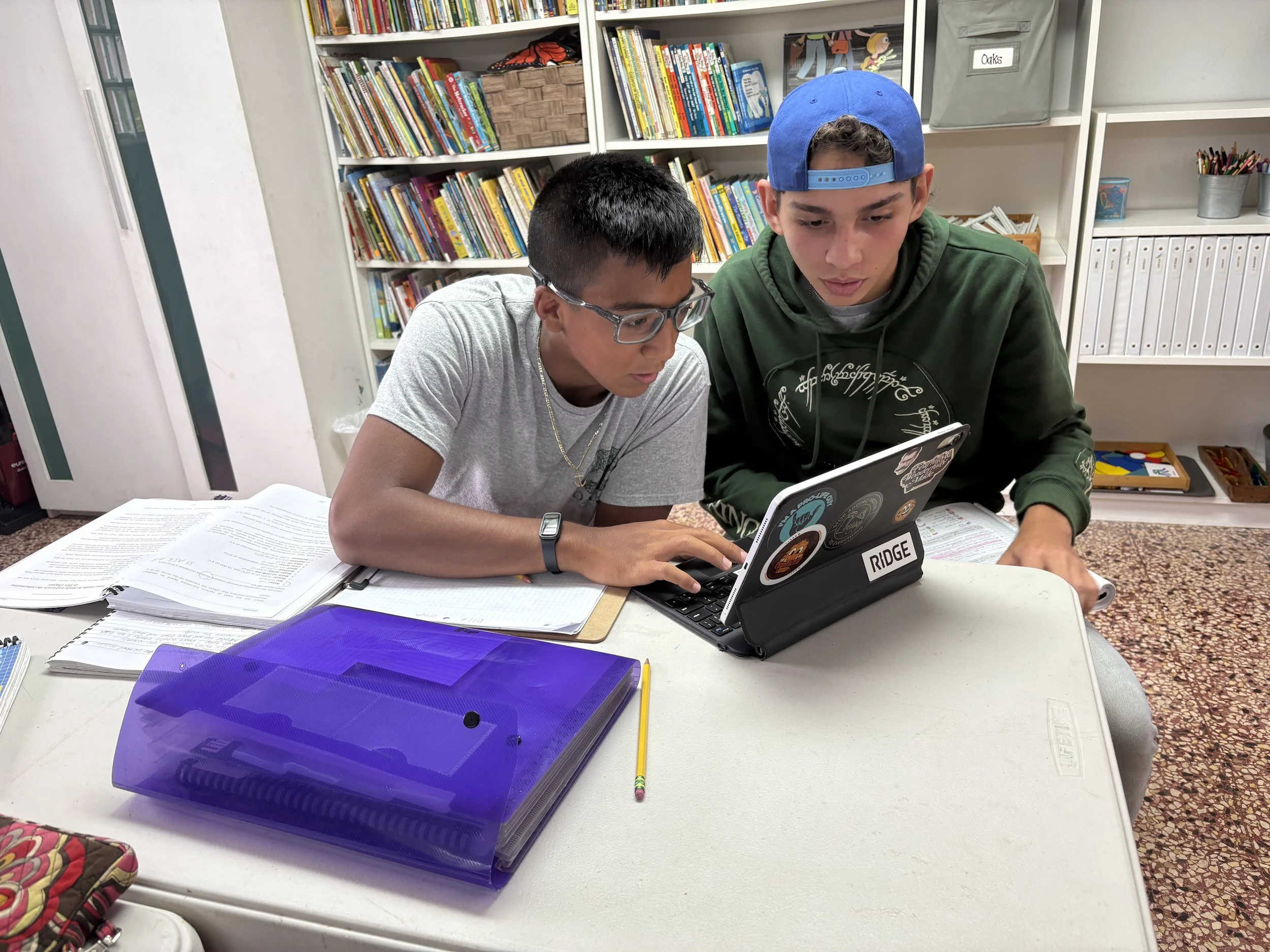
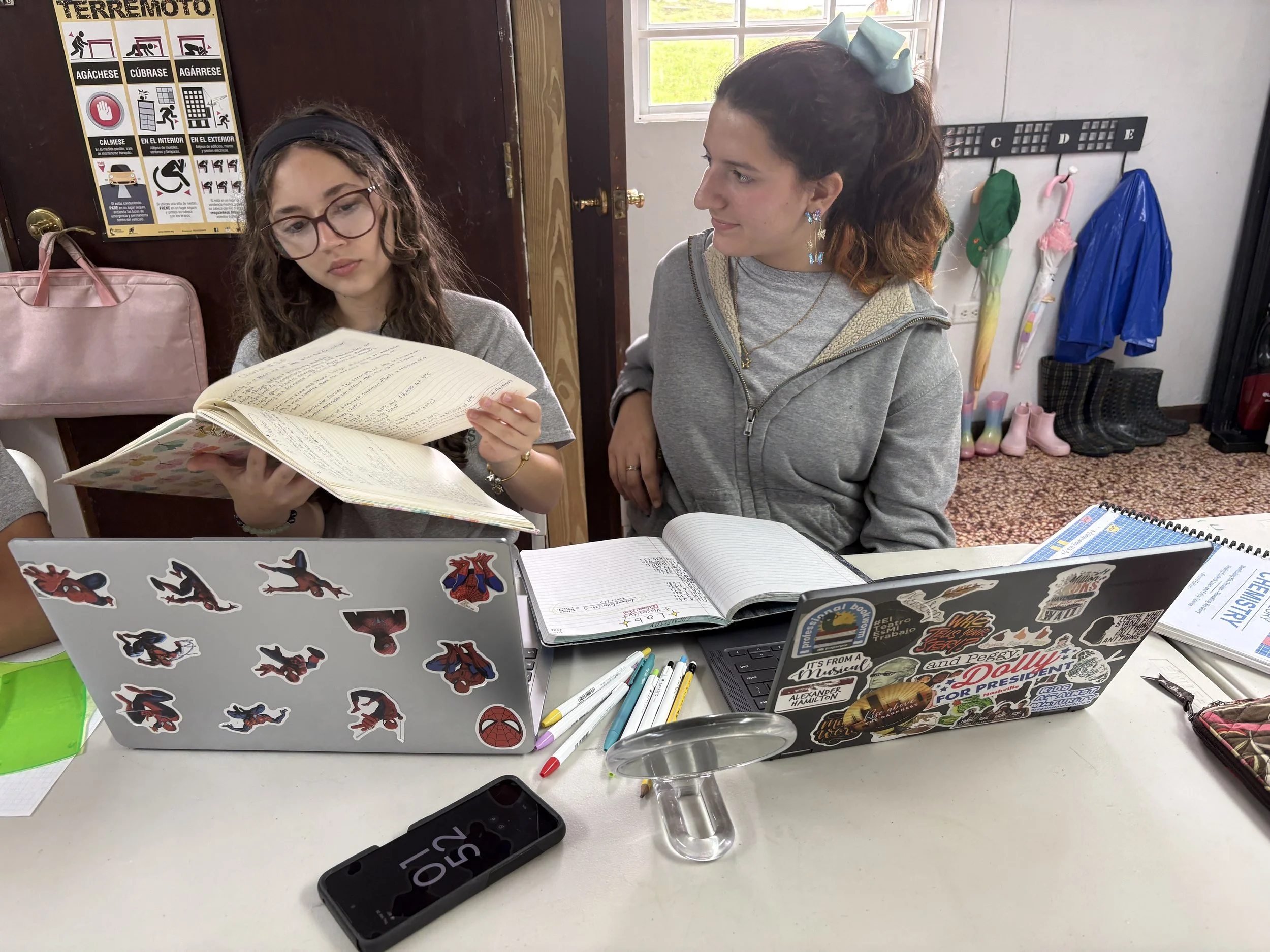
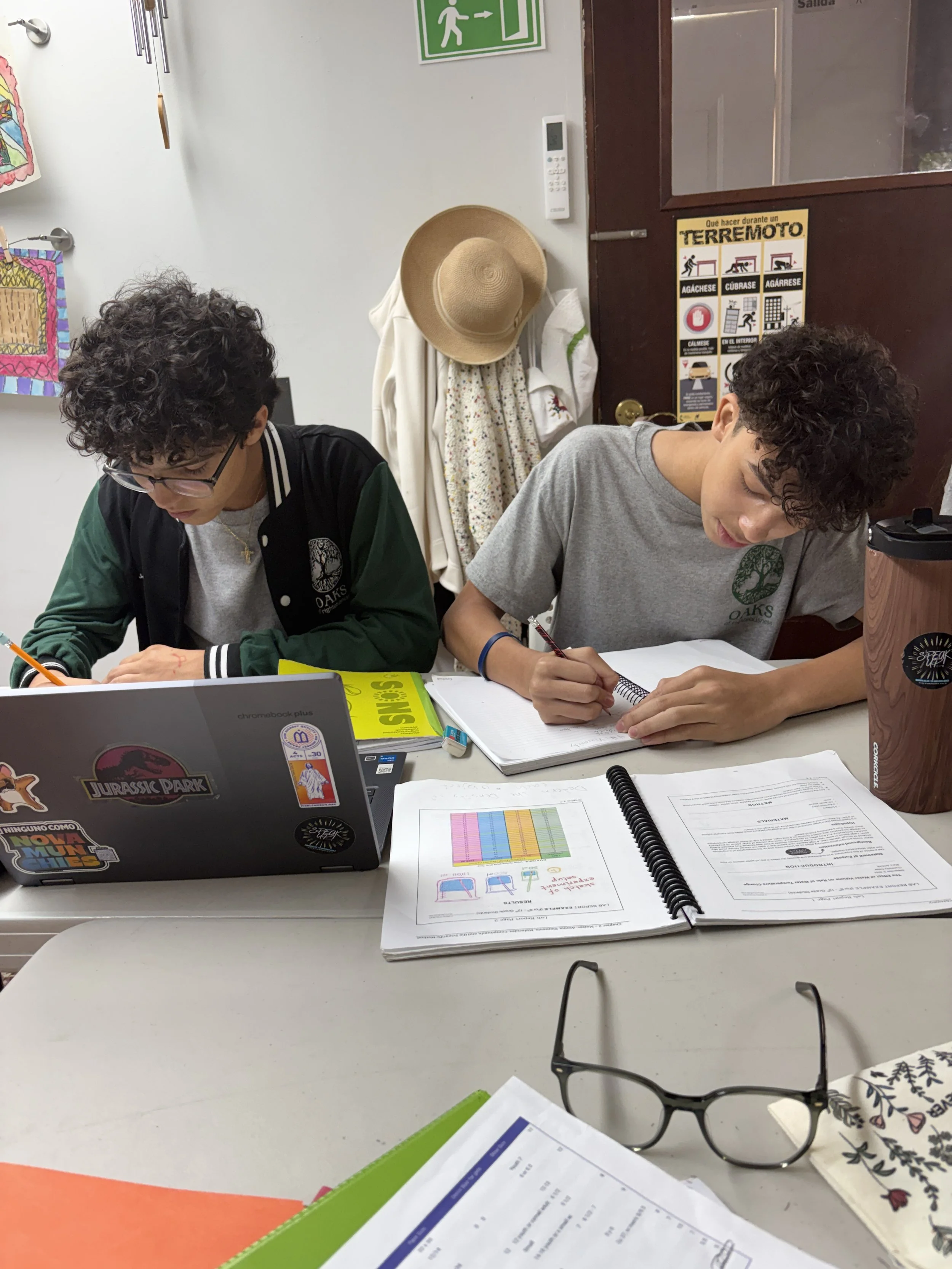
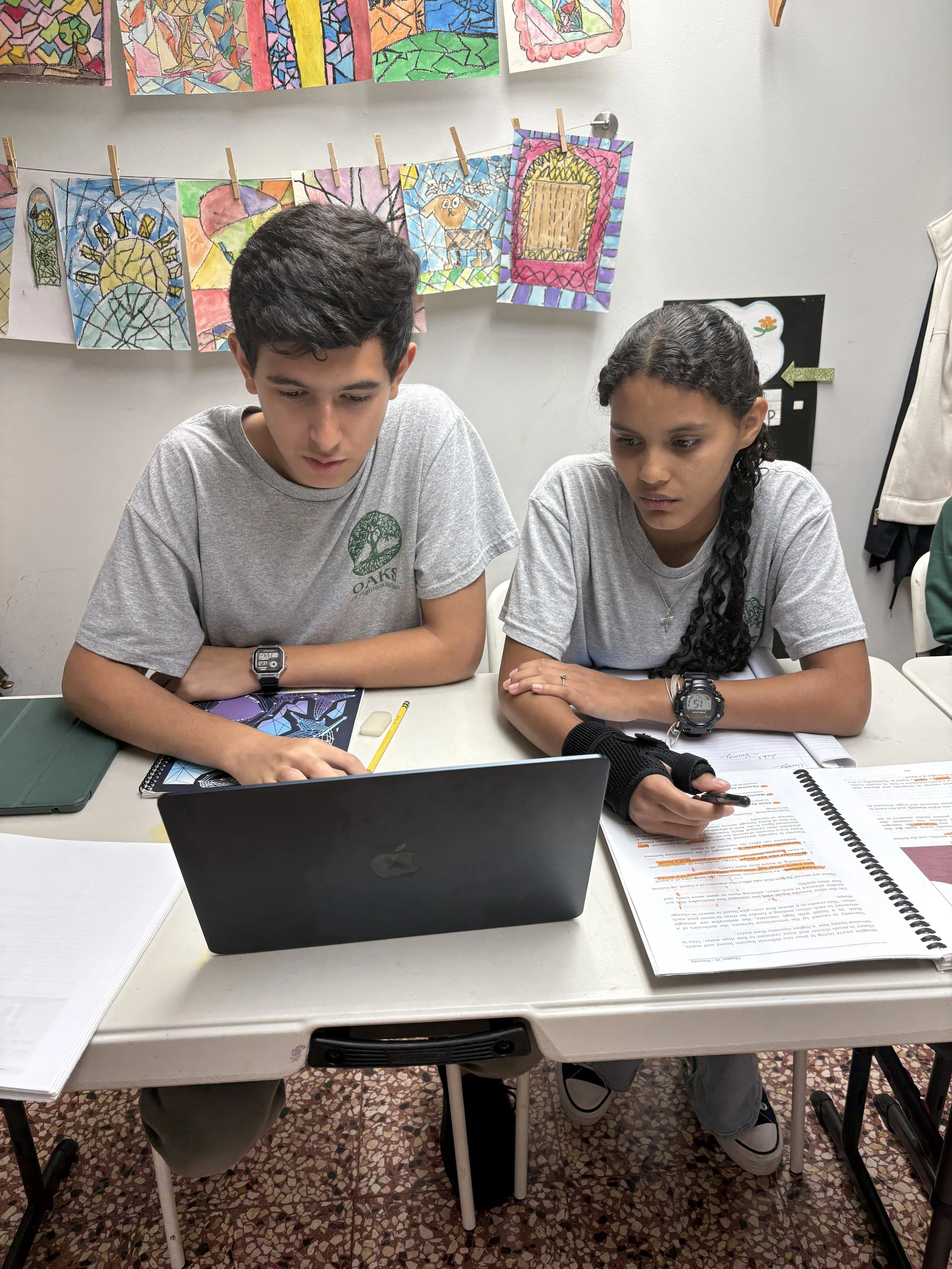
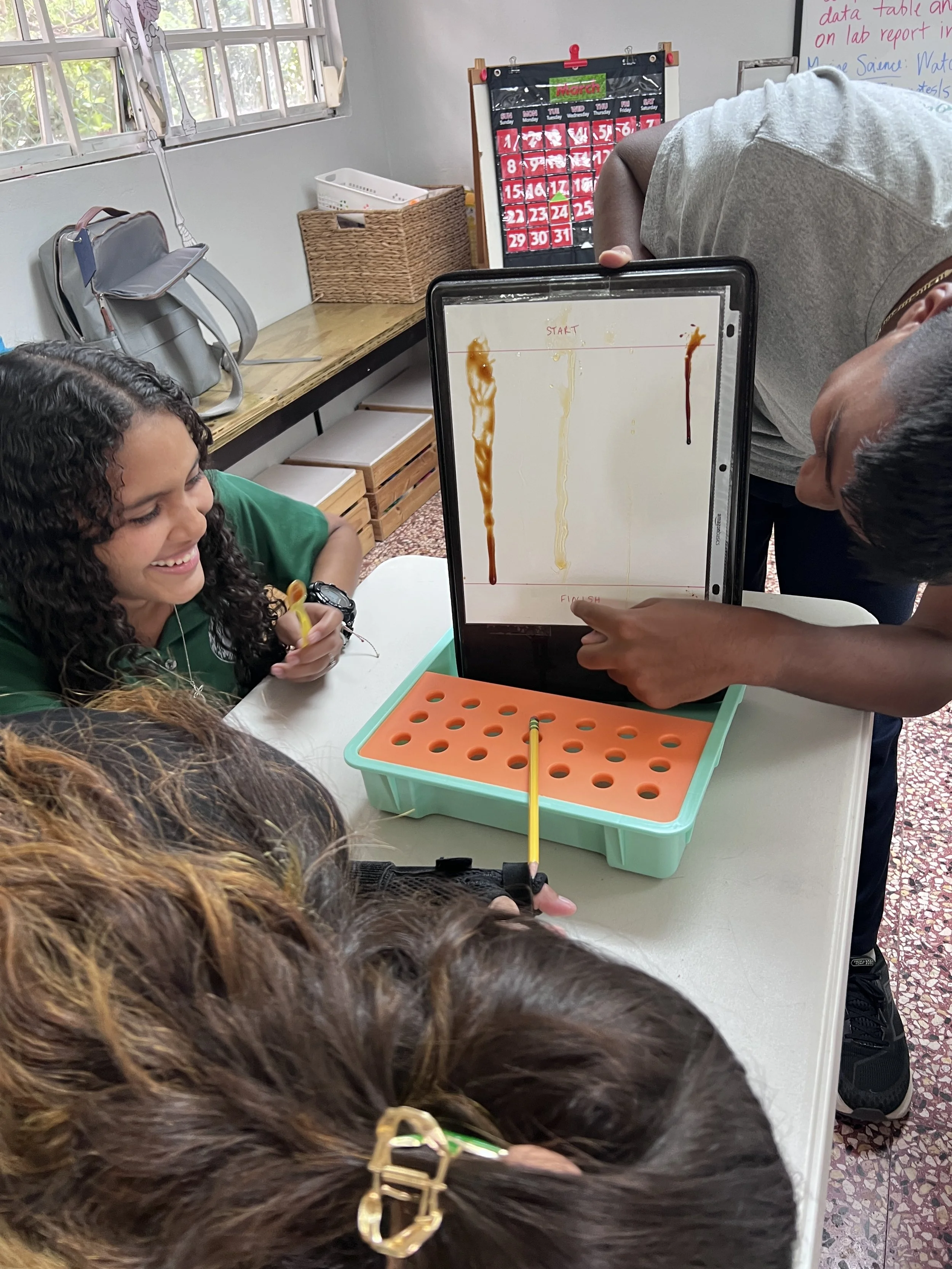
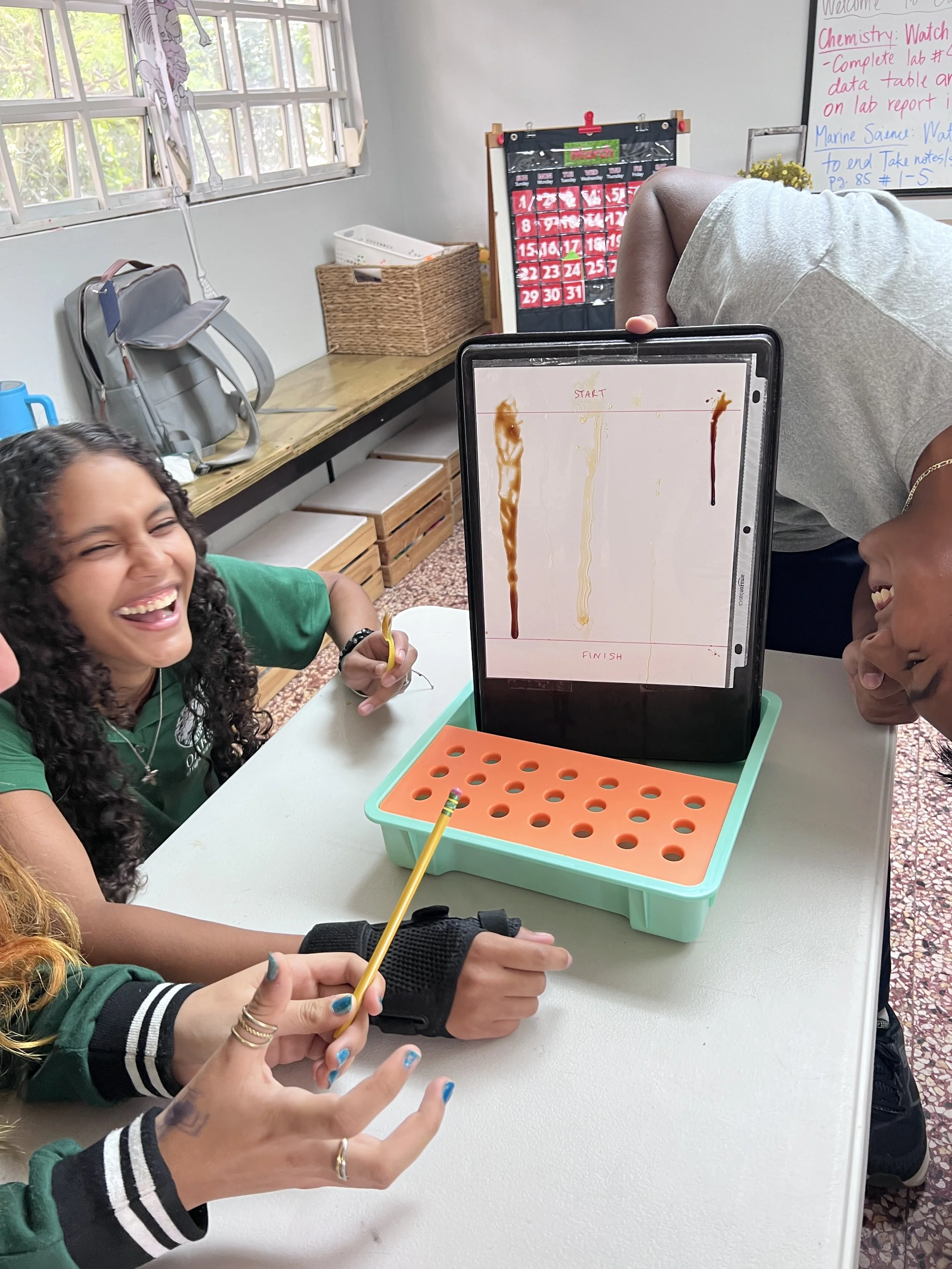
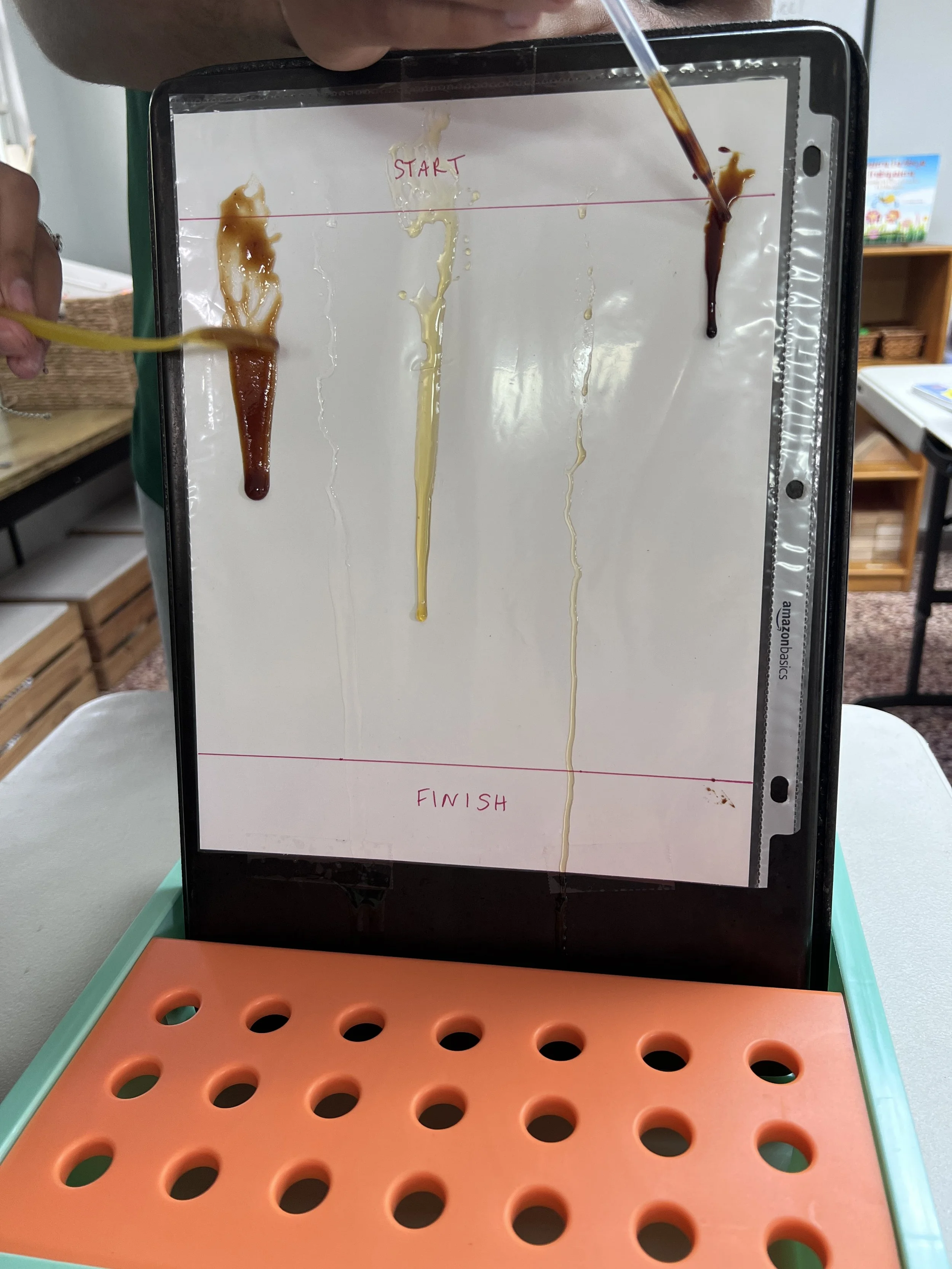
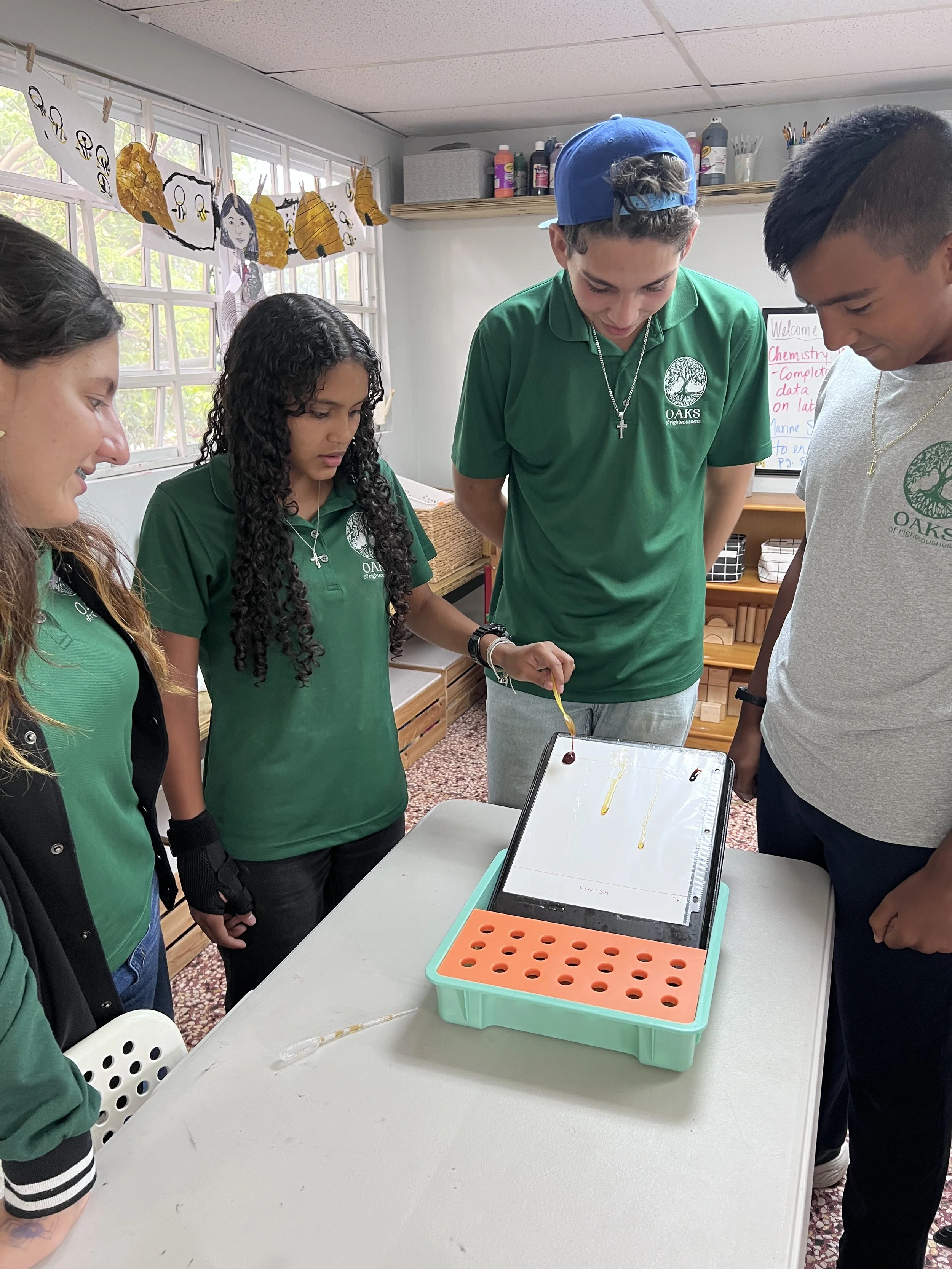
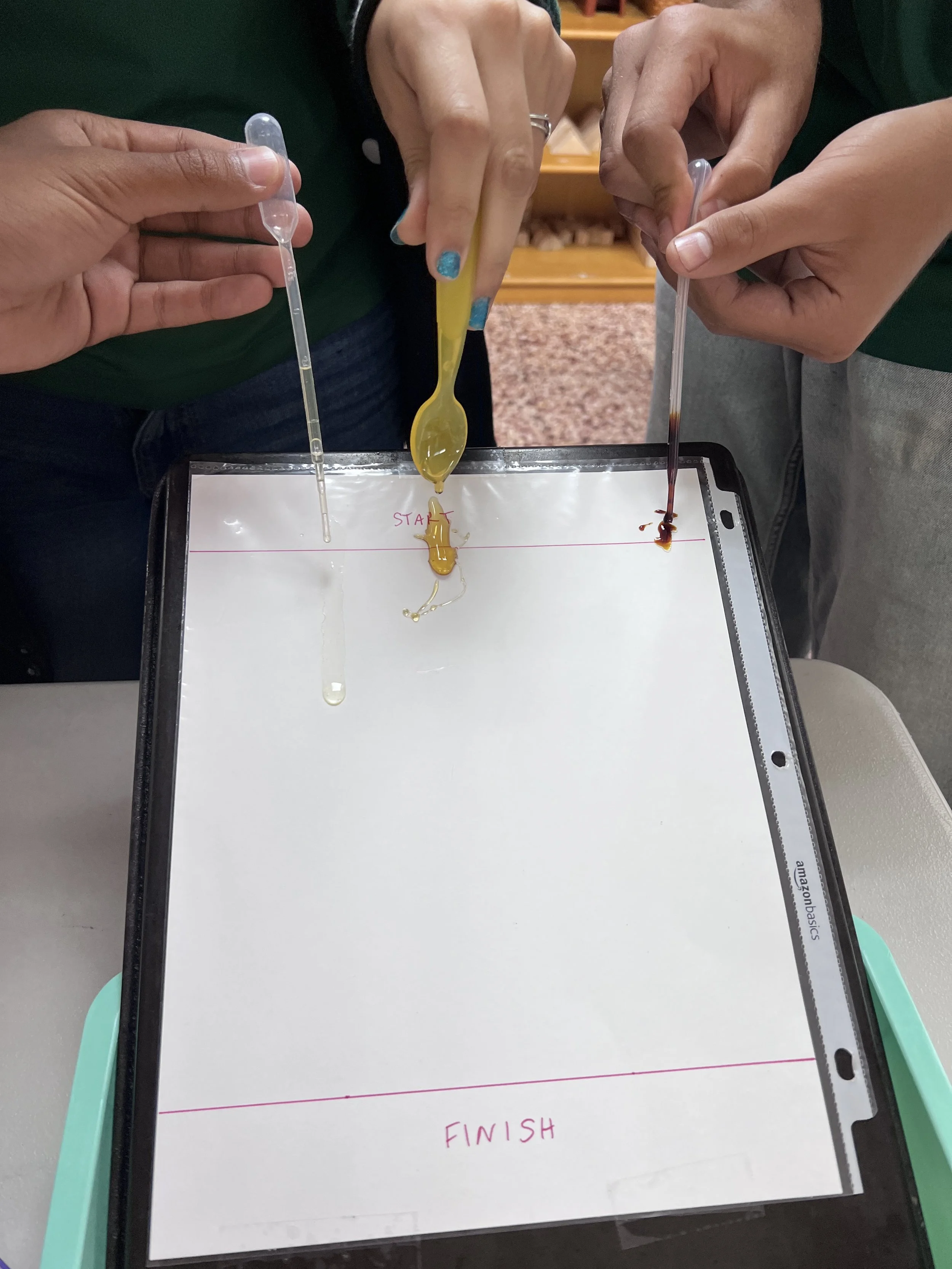
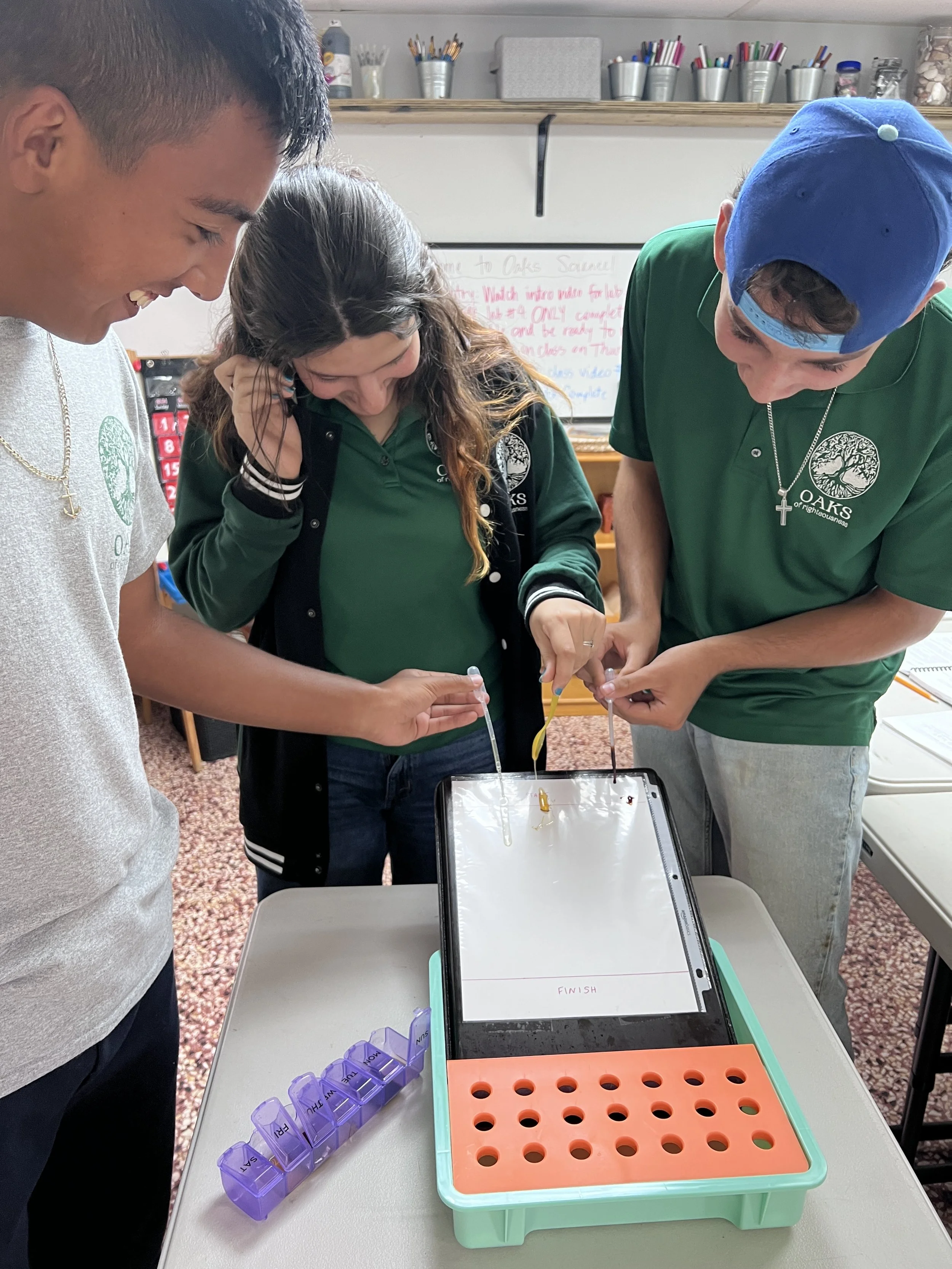
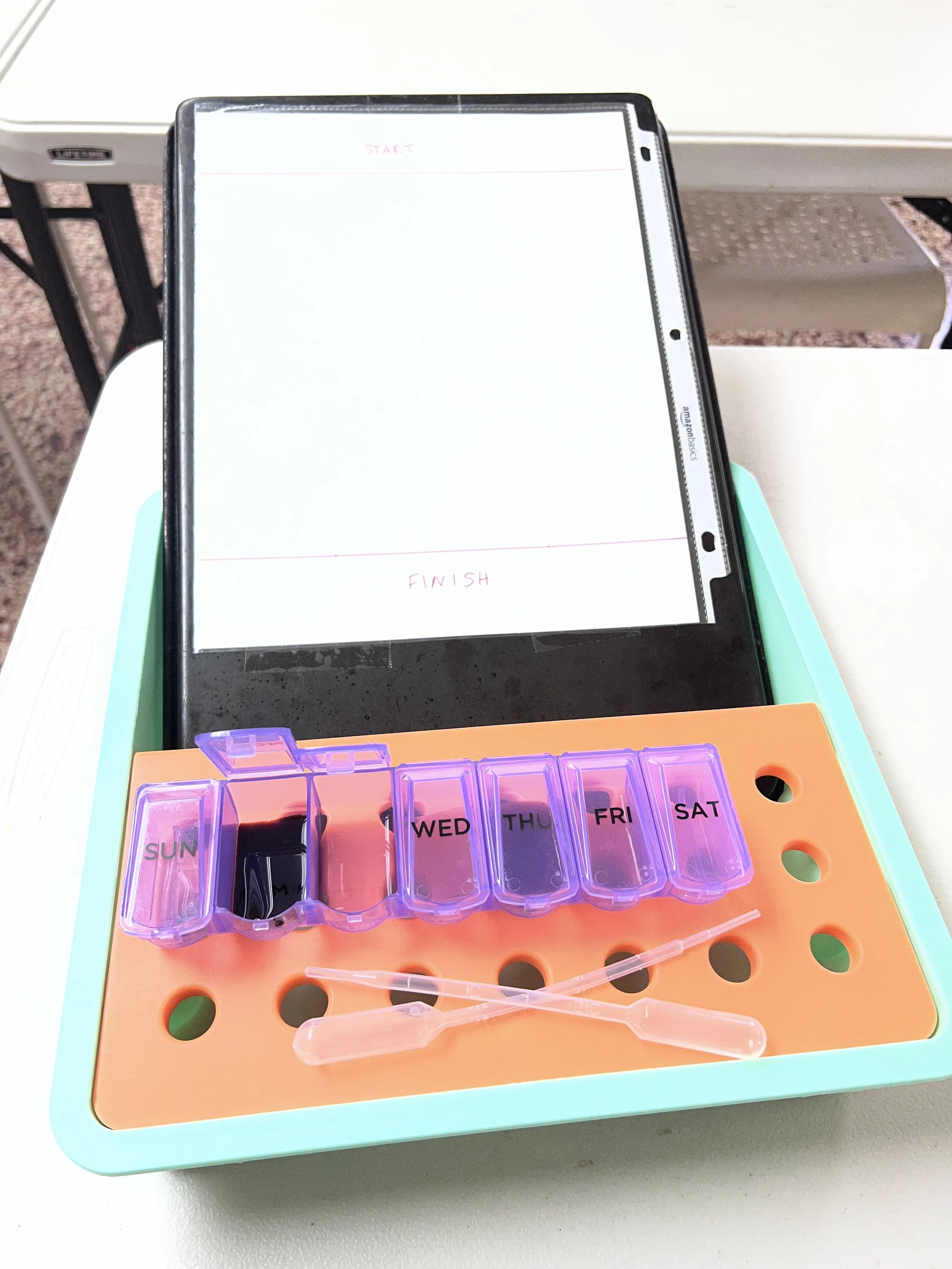
In Chemistry, the students learned all about viscosity--the measurement of the internal friction or resistance to flow of a liquid. To explore the concept more, we conducted a viscosity race in which the competitors were molasses, honey, maple syrup, dish soap, barbeque sauce, and avocado oil. Molasses won the prize of having the slowest flow and highest viscosity while avocado oil won the prize of having the fastest flow and lowest viscosity. The students also worked on a virtual viscosity lab in which they dropped a metal ball bearing into several types of liquids at different temperatures and calculated their viscosity scores.
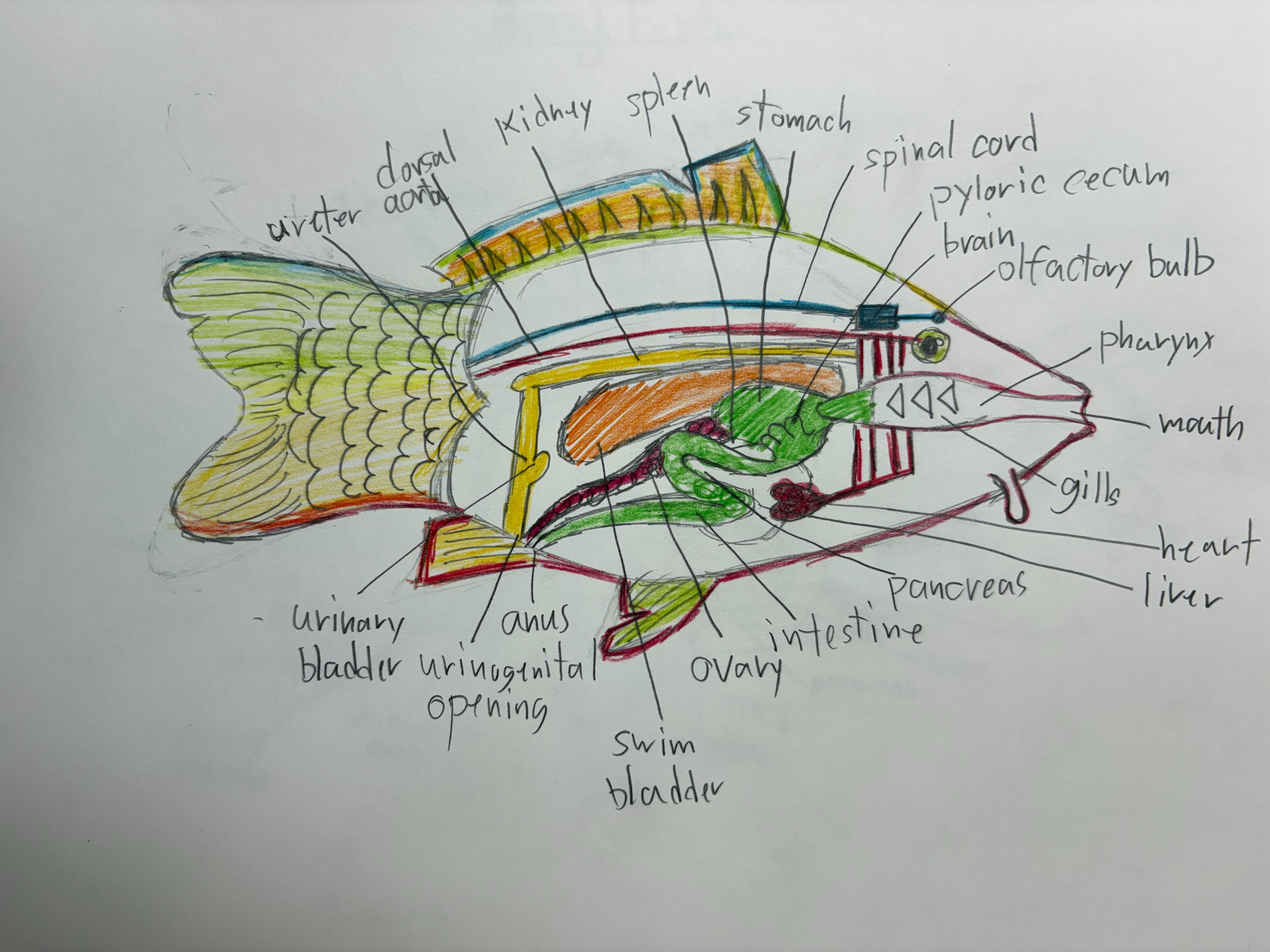
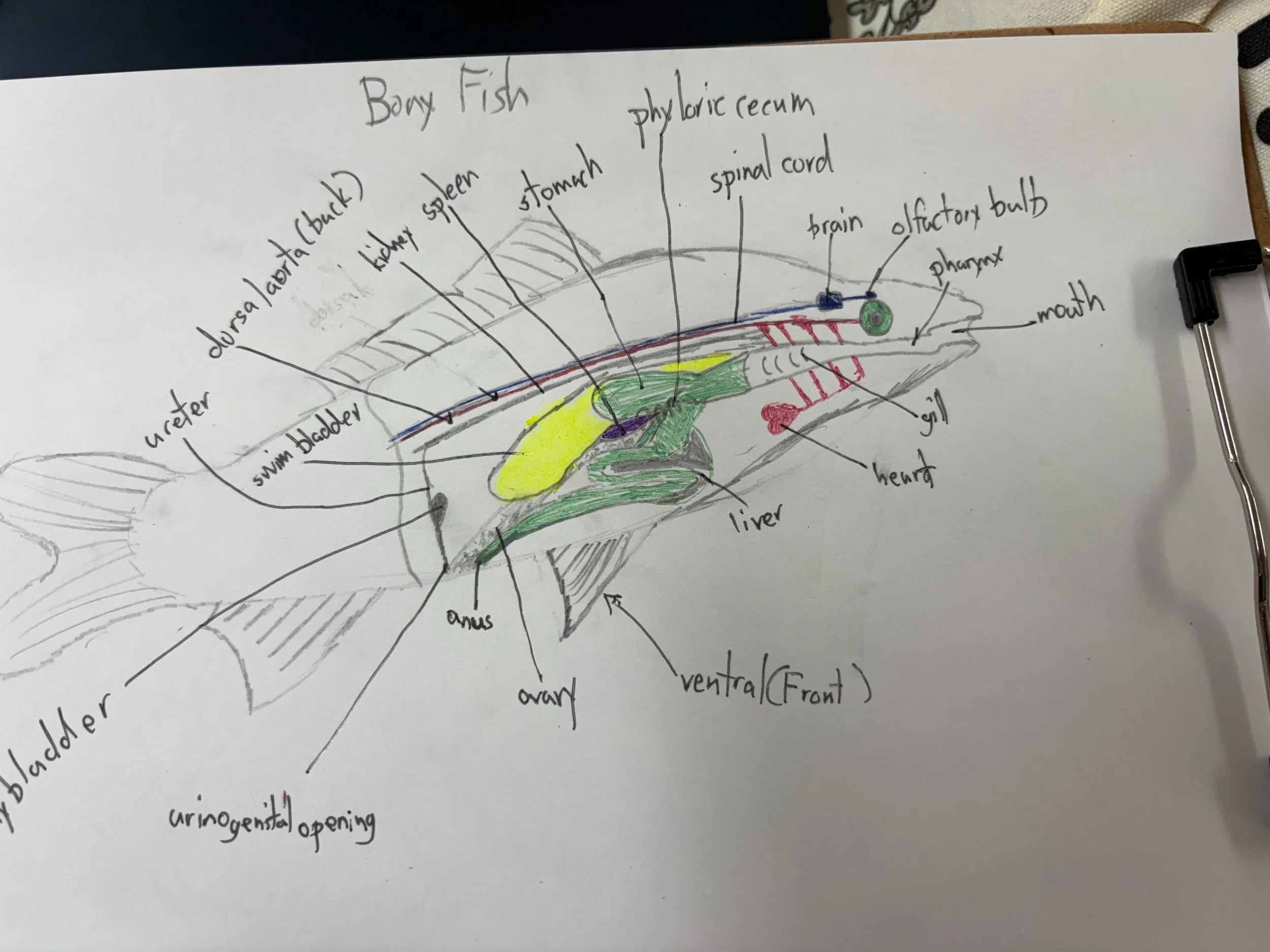
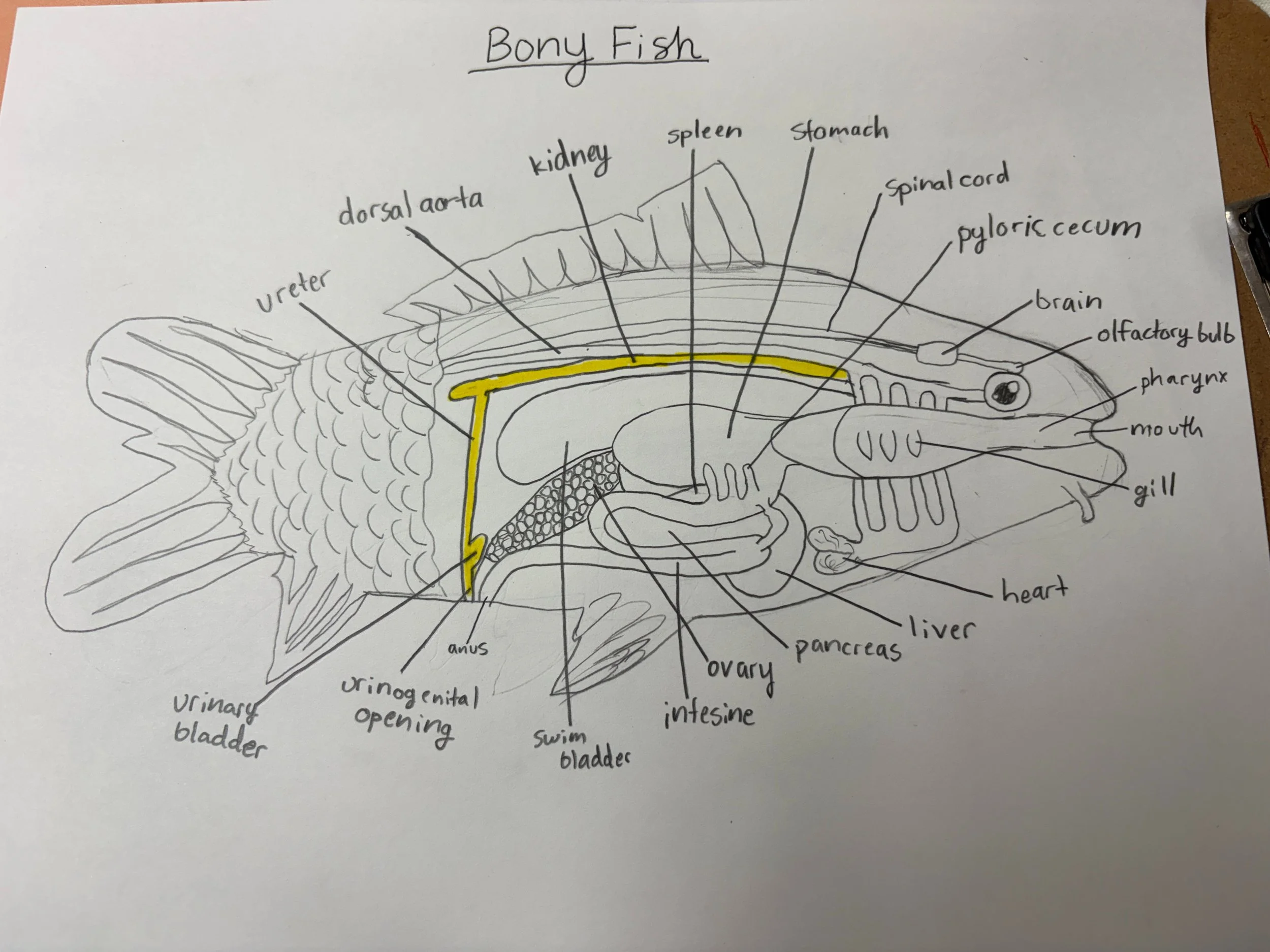
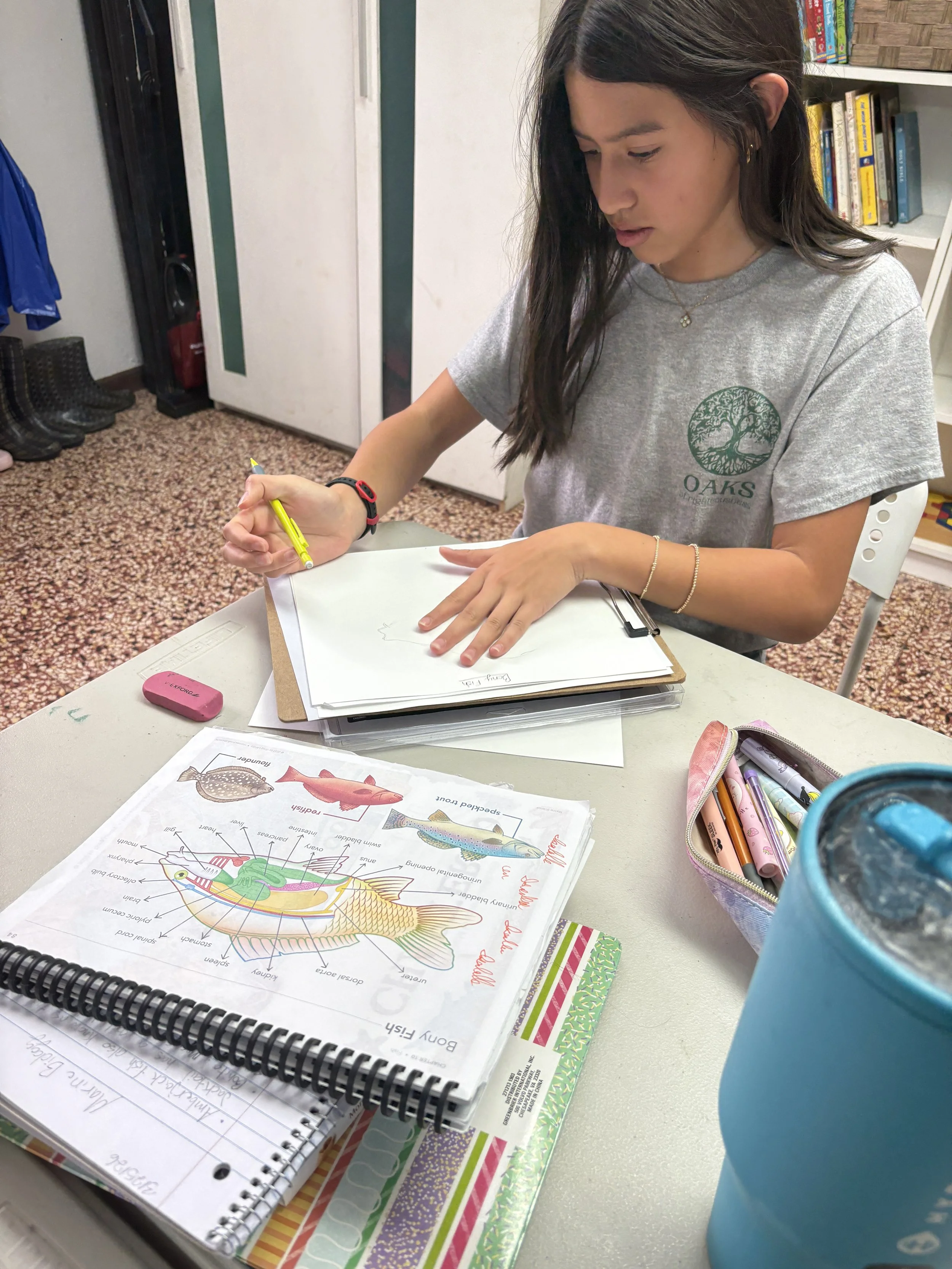
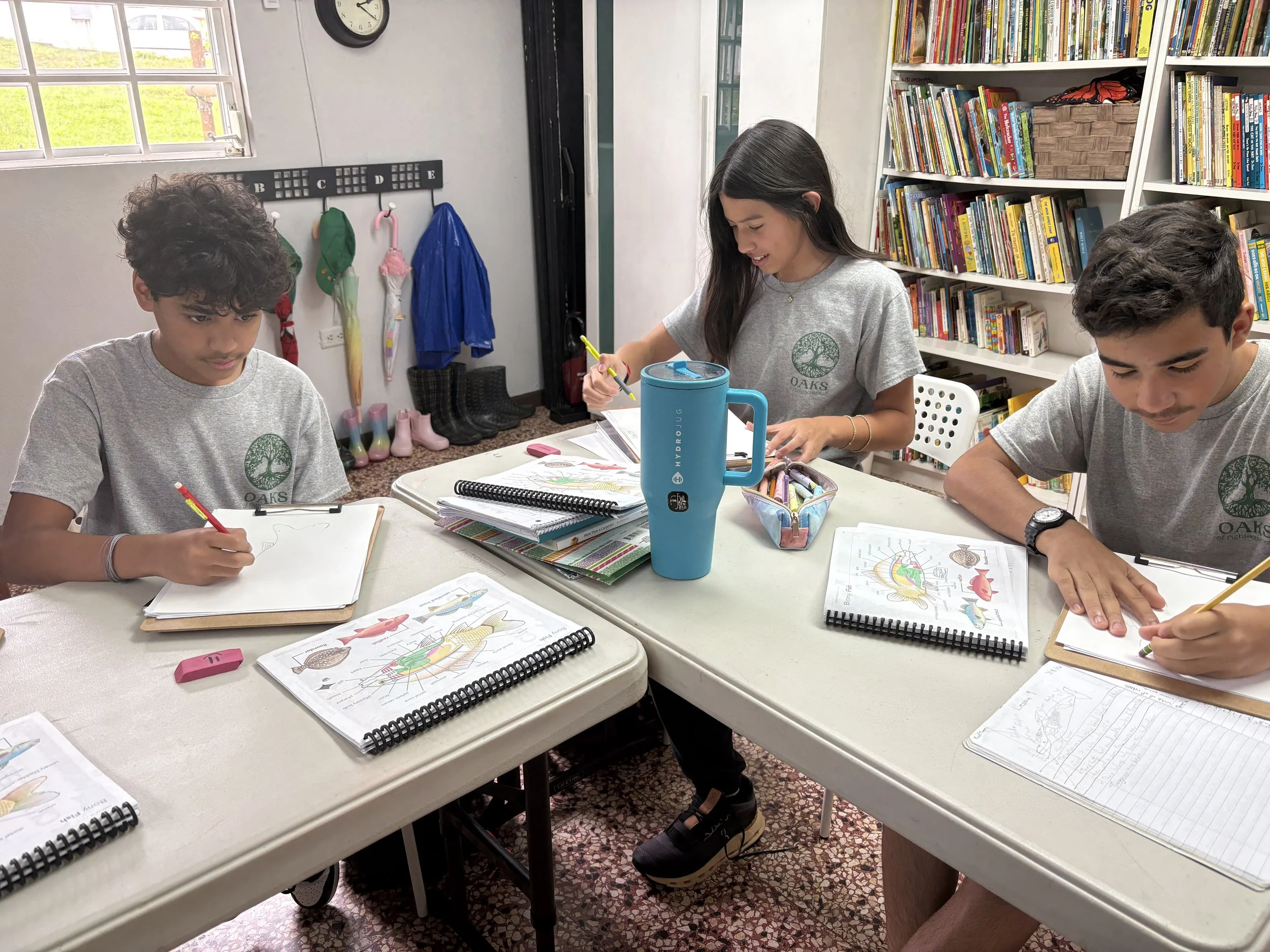
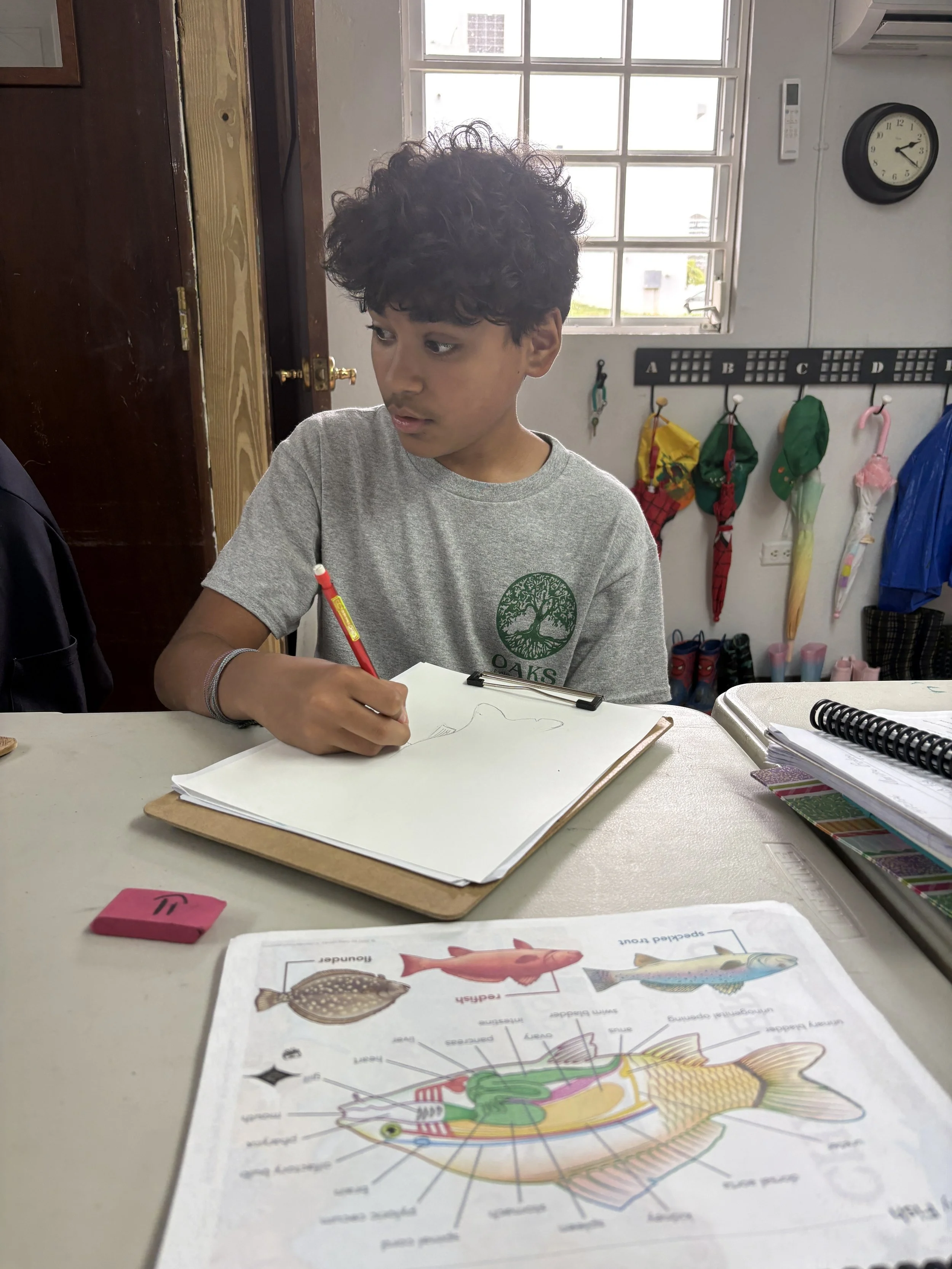
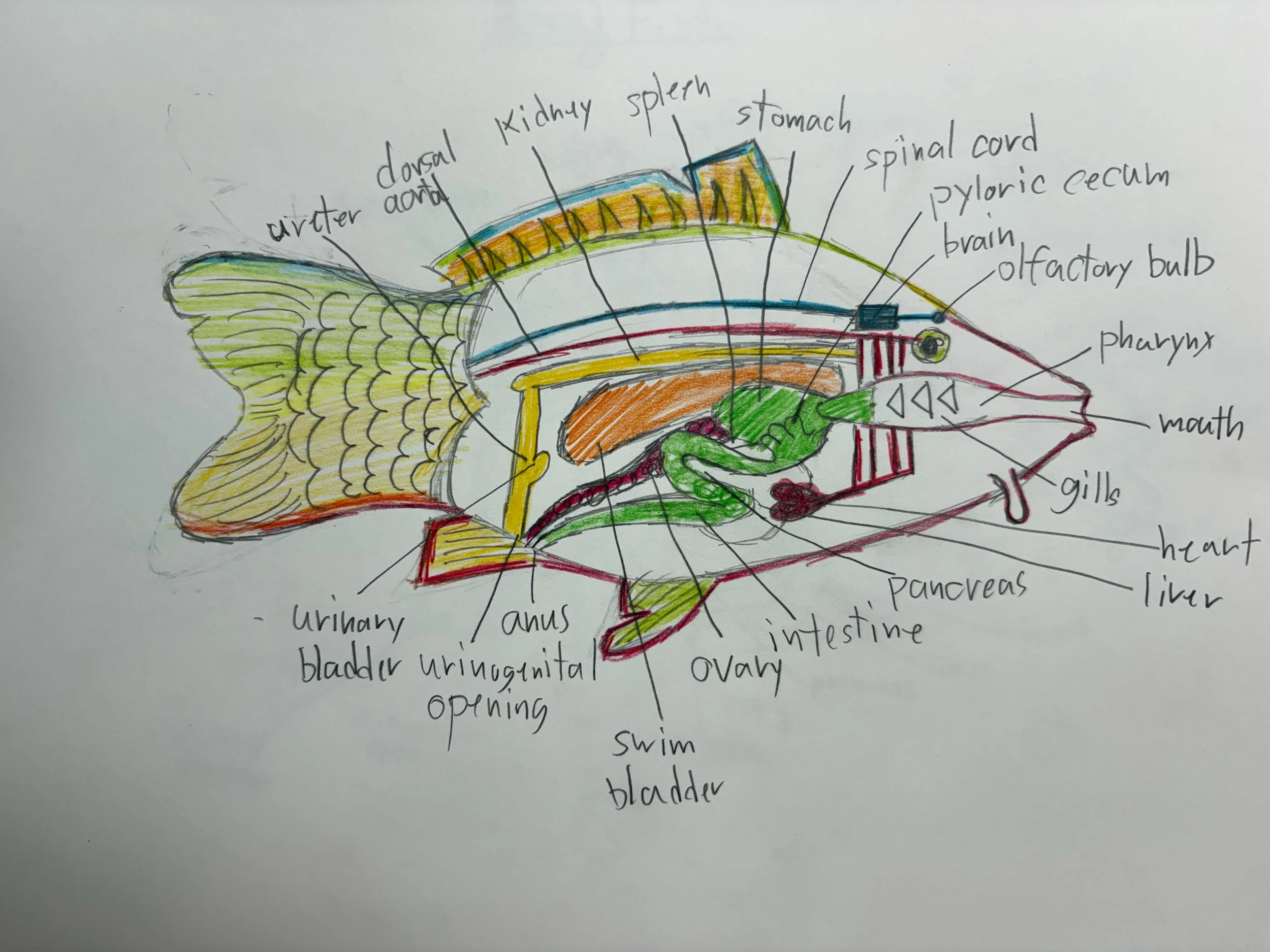
In Marine Science, the students learned about bony fish anatomy and physiology. Examples of bony fish are grouper, yellowfin tuna, and red snapper. One special organ that God gave bony fish is the swim bladder, which allows the fish to control the depth at which it swims by either inflating or deflating it. In preparation for their in-class dissection of a bony fish, the students worked on sketching and labeling a diagram of a bony fish and all its internal and external parts.
HISTORY
The Oaks students finished their readings on the Mongol Empire (which included a failed invasion of Japan) and then took notes this week on the travels of Marco Polo. In the Medieval period, before the Age of Exploration, there was not much known in Europe about China. Marco Polo’s writings about his travels to the region that lasted over 20 years, provided a lot of information previously unknown. His writings fascinated the European audiences at the time and caused many others to begin traveling there as well.
SUGGESTED READINGS
The Story of the World
P. 193 - Genghis Khan
P. 196 - The Mongol Conquest of China
P. 200 - Marco Polo goes to China
P. 204 - Forbidden City of the Ming
World History from Ancient to Modern Times
P. 156-157 - Mongol Invaders
P. 175 -Mongol Invaders, Ming Dynasty
P. 178-179 - Explorers and Sailors
Streams of Civilization
P. 331-333 - The Mongols rule China
P. 332 box - The Travels of Marco Polo